








By Lucia Mutikani
WASHINGTON, Oct 5 (Reuters) - US services sector activity slowed in September, while strong domestic demand stretched supply chains and pushed a measure of prices paid by businesses for inputs to its highest level in more than four years, suggesting inflation could remain elevated into 2027.
Complaints about higher fuel prices dominated responses to the Institute for Supply Management survey published on Monday.
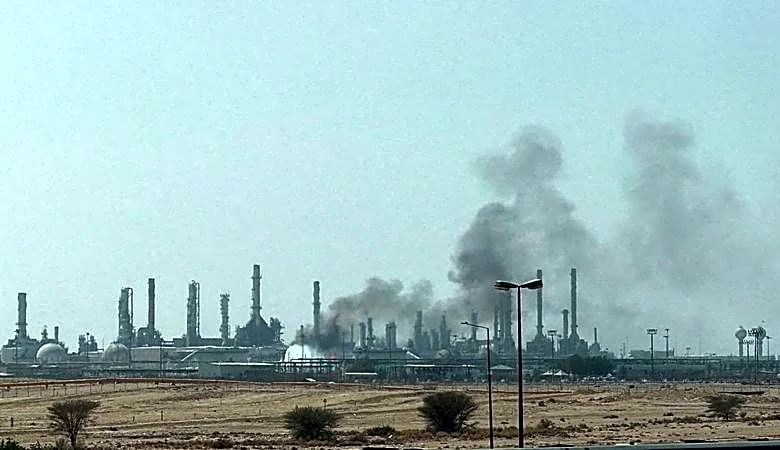
The US-Israeli war with Iran has raised prices of energy and related products
and led to shortages of commodities shipped through the Strait of Hormuz. Diesel prices are at record highs, hitting farmers and truckers. Economists warned that higher prices could soon spill over to other sectors and broaden inflation pressures.
Some analysts argued the rising price pressures underscored the need for the Federal Reserve to raise interest rates again this month and in December. Cooler-than-expected inflation readings for July and August as well as a sharp slowdown in nonfarm payroll growth in September, however, have reduced the chance of a rate hike at the US central bank's October 27-28 meeting.
"The prices index continues to trend markedly higher, and the uptick in supply chain stress and backlog of new orders suggest price pressures are building," said Matthew Martin, senior US economist at Oxford Economics. "With underlying growth strong, the economy can withstand additional policy tightening."
The ISM said its nonmanufacturing Purchasing Managers' Index fell to a still-high 54.9 last month from 55.4 in August. A reading above 50 indicates growth in the services sector, which accounts for more than two-thirds of US economic activity.
Economists polled by Reuters had forecast the PMI would be largely unchanged at 55.2. The PMI is at a level consistent with strong economic growth in the third quarter. The economy is being driven by robust domestic demand, mostly consumer spending and business investment in AI and related infrastructure.
Thirteen services industries reported growth last month, including wholesale trade, utilities, retail trade, information, transportation and warehousing as well as finance and insurance, accommodation and food services. Among the four industries reporting a contraction were mining and construction.
But supply chains are struggling to cope, a situation that has been worsened by the conflict in the Middle East.
Steve Miller, the chair of the ISM Services Business Survey Committee, said "tariffs and fuel cost impacts were the most cited issues impacting respondents' supply chain," noting that "fuel costs were mentioned twice as often as any other single issue impacting performance."
The survey's measure of supplier deliveries increased to 53.2 from 51.3 in August. A reading above 50 indicates slower deliveries. That measure has slowed for 22 consecutive months, boosting input prices. Supplier delivery performance was initially affected by tariffs on imports.
SUPPLY CHAINS STRETCHED
A range of products, including steel, fuel and memory components, was reported to be in short supply. Some farming businesses said expensive diesel had "increased the cost of freight dramatically," while others noted that prices of nitrogen for agronomic use were "near record highs." Some retailers said "shipping containers from overseas are double the cost, causing price increases."
Some utility service providers reported they were "increasingly having to place orders internationally to secure required materials." Others said strong demand was "putting additional pressure on supply, contributing to longer lead times, material availability issues and delays in project starts." But businesses in the mining sector welcomed the high oil and gas prices, saying they encouraged more production.
The survey's measure of new orders received by services businesses eased to 59.8 last month after surging to 60.9 in August, which was the highest reading since February 2023.
But order backlogs rose to the highest level since July 2022. They grew for the eighth straight month, the longest such stretch since February 2023.
The ISM's gauge of prices paid by businesses for materials and services jumped to 74.0, the highest level since July 2022, from 72.6 in August. Copper, diesel, steel, petroleum-based products and memory products were among the commodities whose prices increased. The rise in services input prices mirrored a similar increase in the ISM's manufacturing survey.
The two surveys together pointed to higher inflation down the road. The US central bank last month raised its benchmark overnight interest rate by 25 basis points to the 3.75%-4.00% range, its first hike in three years, and flagged further increases in borrowing costs ahead. Financial markets were pricing in a roughly 26% chance of a rate increase at the Fed's meeting this month, down from about 71% last week, CME Group's FedWatch tool showed.
The ISM survey showed growth in services sector employment after contracting for two straight months. At face value, this change, together with an increase in manufacturing employment reported by ISM last week, supported economists' assessment that the labor market remained stable despite the underwhelming payroll gains last month.
The survey's measure of services employment climbed to 50.1 from 47.8 in August. Some companies said they were "filling positions that have been vacated due to promotions or retirements," but others said they were "restructuring due to efficiencies gained using AI tools."
"We regard September's reading as consistent with our outlook for moderate job gains in the fourth quarter," said Jonathan Millar, a senior economist at Barclays.
(Reporting by Lucia Mutikani; Editing by Chizu Nomiyama and Paul Simao)