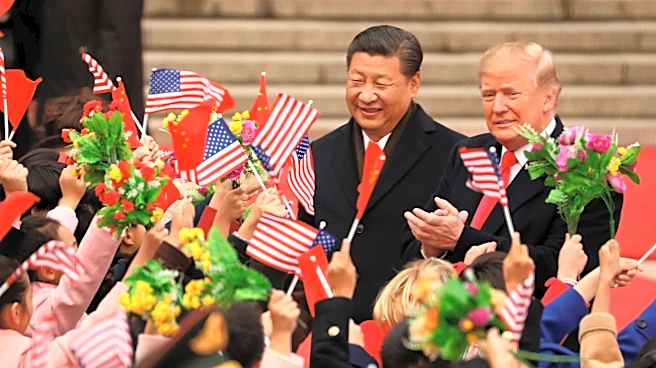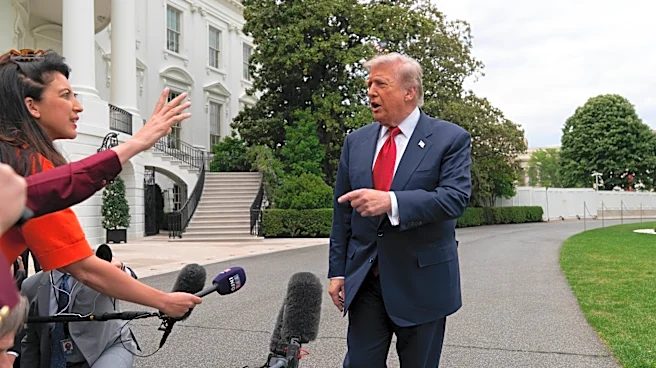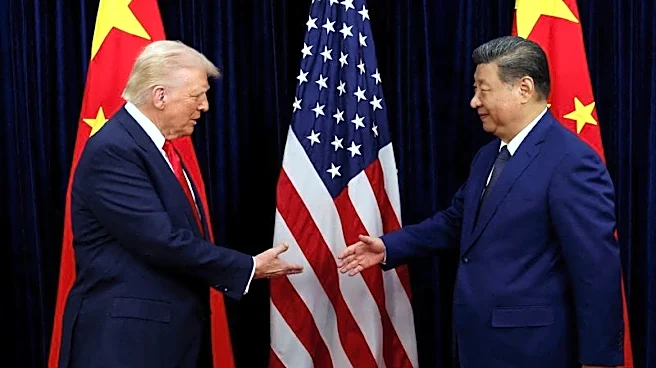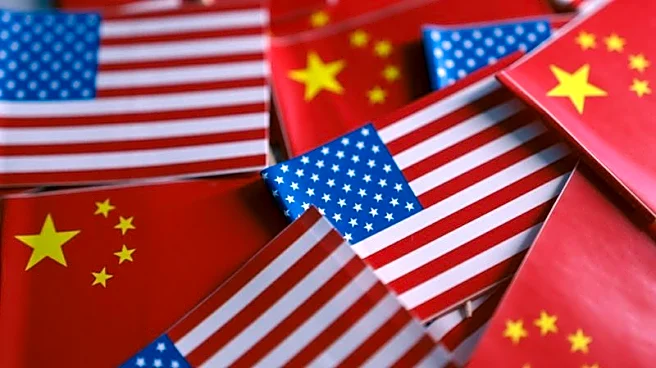




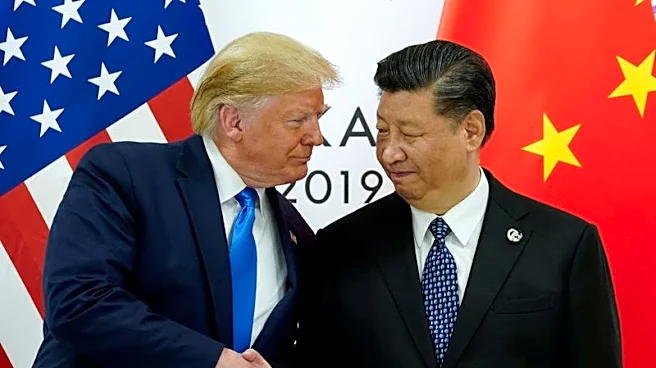

May 12 (Reuters) - U.S. President Donald Trump will meet Chinese counterpart Xi Jinping this week for talks in Beijing certain to feature the issue of democratically-governed Taiwan, which China claims as its territory, although Taipei rejects those claims.
Here are key developments in ties between the United States, China and Taiwan:
1949 - Mao Zedong's communists take power in Beijing after defeating Chiang Kai-shek's Republic of China government in a civil war, which then flees to Taiwan.
1950 -
Taiwan becomes an ally of the United States, which is at war with China in Korea. The United States deploys a fleet in the Taiwan Strait to protect its ally from possible attack by Mao.
1954-1955 - First Taiwan Strait Crisis: Beijing launches artillery attacks on some Taiwan-controlled islands off China's southeastern coast. Taipei loses control of some islands and moves remaining forces and residents to Taiwan.
1958 - Second Taiwan Strait Crisis: Beijing launches months-long artillery attacks on the Taiwan-controlled outlying islands of Kinmen and Matsu, both close to the Chinese coast. Taipei fights back with U.S.-supplied weapons. China does not seize control of any Taiwan-held islands.
1979 - The United States endorses the "One China Policy" and switches diplomatic ties to Beijing from Taipei. Chinese leader Deng Xiaoping offers the concepts of "one country, two systems" and "peaceful reunification" as possible alternatives to taking Taiwan by force.
1979 - The United States' Taiwan Relations Act makes clear that its decision to establish diplomatic ties with Beijing rests on the expectation of peaceful means to determine Taiwan's future. It obliges Washington to help provide Taiwan with the means to defend itself.
1982 - U.S. President Ronald Reagan adopts the Six Assurances to Taiwan, including a pledge not to alter the Taiwan Relations Act.
1995 - Taiwan President Lee Teng-hui visits the United States for a reunion at Cornell University, drawing criticism from Beijing and escalating tensions.
1996 - Third Taiwan Strait Crisis: Taiwan holds its first direct presidential vote. In reaction, Beijing launches missiles into waters near Taiwan; Washington sends aircraft carries to the region. Lee wins by a landslide in March.
2000 - Chen Shui-bian is elected Taiwan president, bringing the Democratic Progressive Party (DPP) to power for the first time with a peaceful transfer from the Kuomintang (KMT).
2005 - Beijing adopts an anti-secession bill in March that makes secession by Taiwan illegal. In April, leaders of the KMT and China's ruling Communist Party meet for the first time since 1949.
May 2008 - The KMT's President Ma Ying-jeou, who favours closer ties with China, comes into power. He sets aside political disputes with China to reach deals in areas from tourism to direct commercial flights.
2016 - The DPP's Tsai Ing-wen wins the presidential race in January on a platform of standing up to China. In June, China suspends all official communications with Taiwan.
December 2016 - Then-U.S. President-elect Donald Trump breaks decades of U.S. diplomatic precedent by speaking directly, by telephone, with Tsai.
March 2018 - Trump signs legislation that encourages the United States to send senior officials to Taiwan to meet Taiwanese counterparts and vice versa, again infuriating China.
July 2022 - U.S. President Joe Biden and Xi have a two-hour telephone call in which Biden underscores that U.S. policy has not changed and the United States strongly opposes unilateral efforts to change the status quo or undermine peace and stability across the Taiwan Strait.
August 2022 - U.S. House Speaker Nancy Pelosi visits Taipei despite Beijing's warning. China holds war games around Taiwan after she leaves.
April 2023 - China holds three days of drills around Taiwan, after Tsai's return to Taipei following a meeting in Los Angeles with Kevin McCarthy, U.S. House speaker at the time. China said its drills tested integrated military capabilities under combat conditions, practising precision strikes and blockading the island.
May 2024 - Shortly after Lai Ching-te's inauguration as president, China launches "punishment" drills around Taiwan in what it said was a response to "separatist acts".
December 2025 - The Trump administration approves arms sales of $11 billion to Taiwan, the largest ever. Later that month, China launches its most extensive war games around Taiwan yet, aimed at showcasing Beijing's ability to cut off outside support in a conflict.
(Reporting by Ben Blanchard; Editing by Clarence Fernandez)