






By Mohammed Ghobari and Timour Azhari
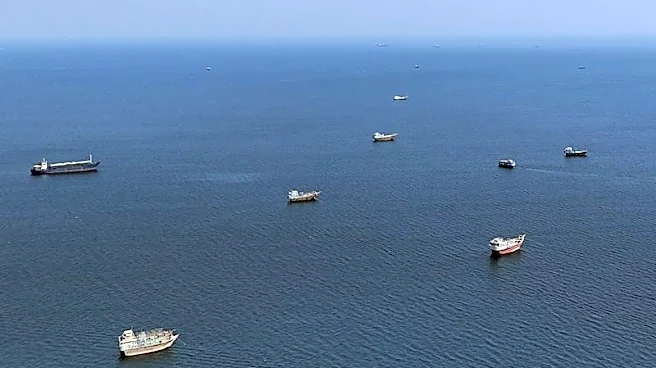
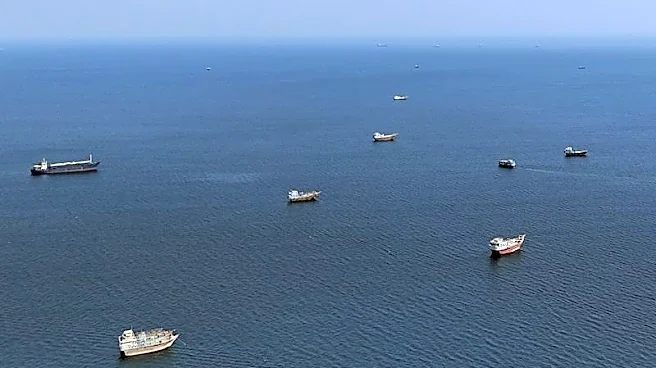
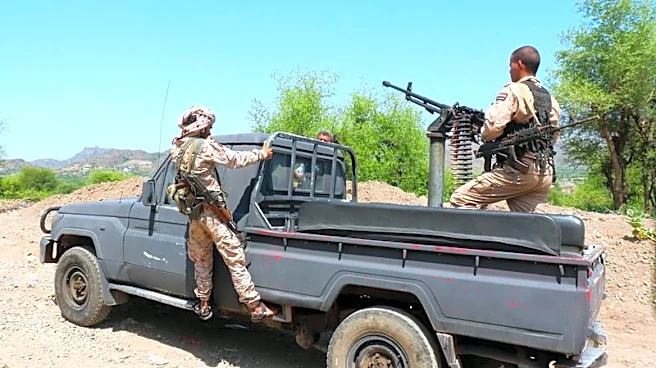
Oct 5 (Reuters) - Saudi-backed Yemeni government forces seized key positions on the Bab el-Mandeb Strait on Monday, military and government sources said, as they fought to reverse last month's advances by the Iran-backed Houthis and drive them from the vital waterway.
The government forces have taken large parts of Dhubab district, which overlooks Bab el-Mandeb, and are asserting full control over the area with heavy air support from a Saudi-led coalition, three
military sources and one government source told Reuters.
Houthi-aligned media earlier denied that government forces had made advances in the area, describing such claims as "completely untrue".
Meanwhile, the Houthis late on Sunday advanced onto sections of the mountain road to the major city of Taiz, besieging government forces there, according to five government sources. One other government source denied the road had been cut.
KEY ENERGY EXPORT ROUTE UNDER THREAT
Fighting has raged along several frontlines in Yemen for weeks after a dormant civil war erupted in a spillover from the US-Iran conflict, with the Houthis seeking to control the vital Bab el-Mandeb Strait and firing missiles and drones at Saudi cities and infrastructure.
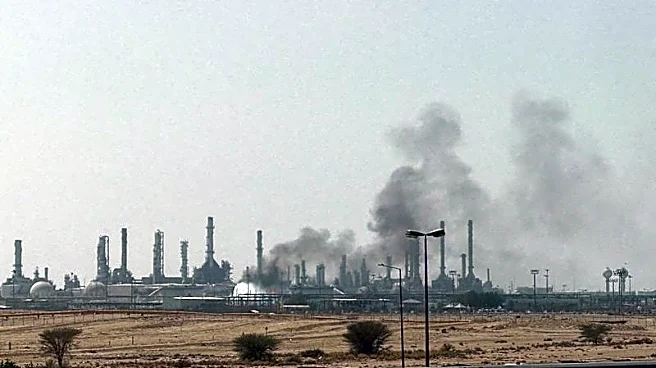
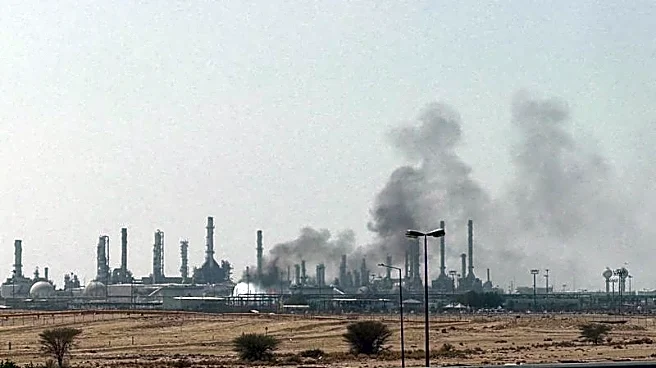
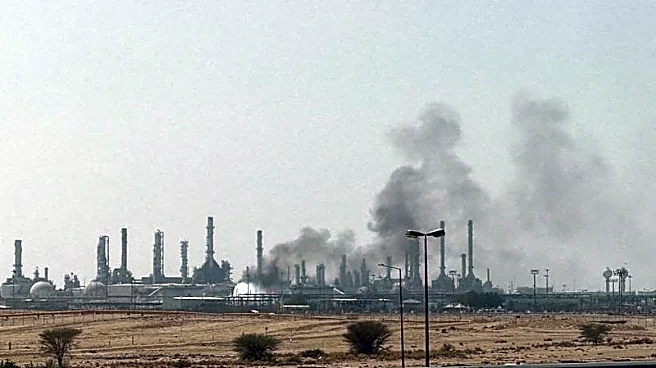
With Gulf energy exports already restricted by Iran's closure of the Hormuz Strait, the fighting in Yemen has threatened another major oil export route, pushing up global prices and raising new risks in a region already aflame.
The internationally recognised Yemeni government announced on Sunday the launch of its offensive to recapture territory, with President Rashad al-Alimi swearing to fight "until the country is liberated from the grip of the terrorist militia".
Saudi Arabia, which arms and trains Yemeni government forces, is backing the military campaign with air power and has sought logistical help from allies to push back the Houthis, restore free traffic in the Red Sea, and end the group's attacks on its territory.
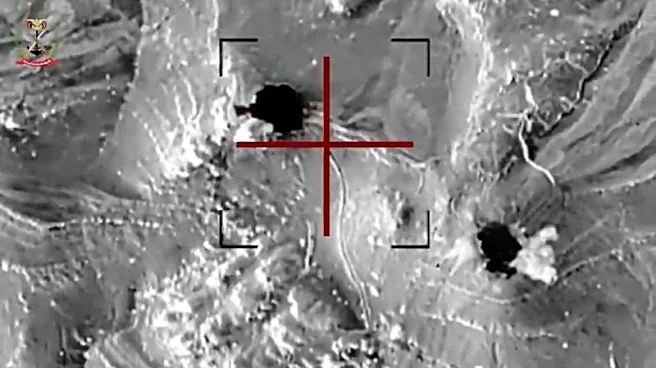
Riyadh said on Monday it had attacked hundreds of targets in Yemen to provide air cover for the Bab el-Mandeb Strait and Yemeni ground forces.
The Yemeni government said it had launched attacks on several fronts including in the province of Sanaa, the Yemeni capital.
HEAVIEST FIGHTING IS IN SOUTHWEST YEMEN
While the war has raged on several frontlines in Yemen, the heaviest fighting has been in the southwest, both in the coastal area near the strait and in the hills around Taiz, where the Houthis have been battling to surround government forces.
Last week Houthi attacks damaged a culvert on the Taiz-Aden road, making it impassable.
On Sunday night the group's fighters made new advances into the town of al-Turbah, sitting atop a high promontory on the road, five government military sources said, though another government source denied this.
A Houthi-run news agency on Monday meanwhile cited a military source as saying that the group had driven government forces from the al-Mawasit district of Taiz province, reaching the home of Alimi, head of Yemen's interim presidential council.
Those fresh advances leave Taiz, Yemen's third-largest city with a population of over half a million and a garrison of thousands of government fighters, surrounded by Houthi forces, the government military sources said.
The city, nestled among Yemen's southern highlands, has been on the frontlines since early in the civil war, often under Houthi shell and sniper fire.
Yemen's conflict began after the Houthis seized the capital Sanaa in 2014, prompting a Saudi-led coalition to intervene in the following year with an air campaign aimed at restoring the government and ousting the Iran-backed group.
The fighting quickly ground to a bloody stalemate, with most frontlines stalled, leading to a major humanitarian crisis in what was already the poorest Arab state, until a ceasefire was agreed in 2022 that held until this summer.
(Reporting by Timour Azhari, Mohammed Ghobari and Jana Choukeir; Writing by Angus McDowall; Editing by Aidan Lewis and Gareth Jones)