



By Renee Maltezou, Yannis Souliotis and Jonathan Saul
ATHENS, Jan 15 (Reuters) - Greece has warned its shipping fleet to upgrade security measures to the highest possible when sailing to Russian Black Sea ports after drone attacks on two Greek-operated tankers this week, according to shipping ministry advisories.
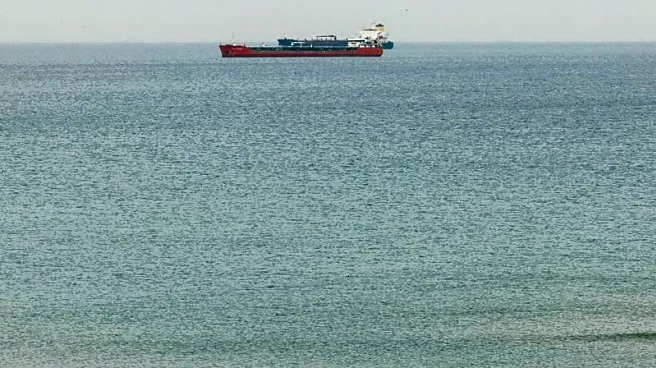
Drones struck two oil tankers on Tuesday, including one chartered by U.S. oil major Chevron, as they sailed towards the marine terminal of the Caspian Pipeline Consortium (CPC) on Russia's
Black Sea coast.
Greek-operated ships are among the world's largest fleets of tankers and are pivotal for trade across the Black Sea region, whose waters are shared by Bulgaria, Georgia, Romania and Turkey, as well as warring Russia and Ukraine, which Moscow invaded in February 2022.
"It is recommended that all Greek ships that are either docked or anchored or are about to dock at the terminal in question take the highest possible security measures. These measures include avoiding being outside the ship," the shipping ministry said in a document released on Thursday and seen by Reuters.
In earlier documents released this week, after the attacks, the ministry recommended that the security managers of shipping companies and Greek ships proceed with an updated threat assessment for vessels located in the Black Sea and the maritime areas close to it.
War insurance costs for ships sailing to the Black Sea have jumped this week, reflecting the worsening risk environment.
One of the tankers targeted on Tuesday, Matilda, was managed by Greece's Thenamaris and hit by two drones.
While there were no injuries or serious damage to the vessel, a Thenamaris official said the company had since stepped up additional precautionary security measures and advised crew on their vessels to increase vigilance and avoid unnecessary exposure, mainly movement on the deck.
In its previous advisories, the ministry also referred shipping companies to a document it published in April 2022 that recommended additional protective security measures be maintained for a certain period as a result of increased risk for the Russian Black Sea ports of Novorossiysk, Taman, Tuapse and Kavkaz.
(Reporting by Renee Maltezou, Yannis Souliotis and Jonathan Saul, Editing by Mark Heinrich and Timothy Heritage)