




By Andrew Chung
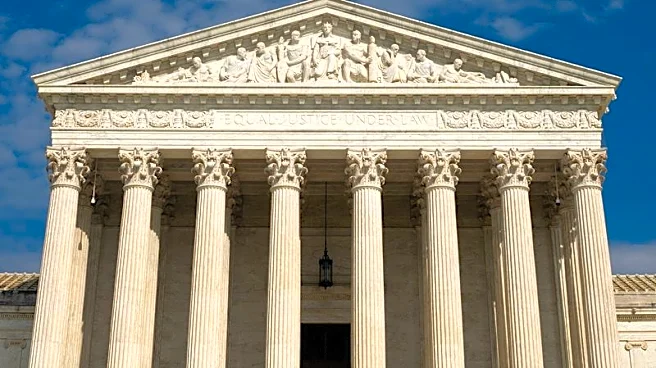
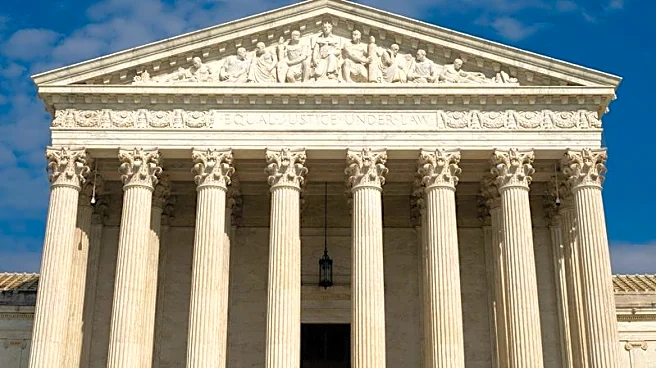
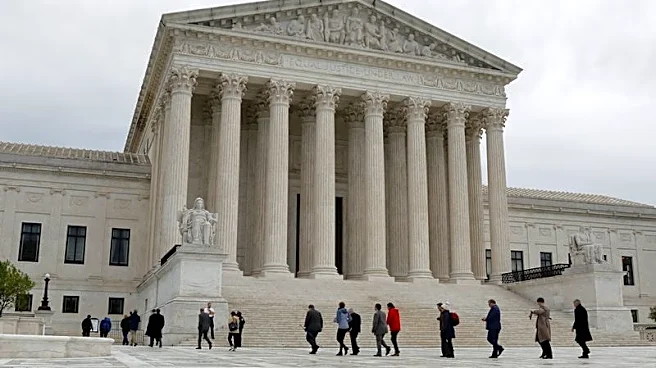
Oct 2 (Reuters) - The US Supreme Court begins its new nine-month term on Monday much as it ended its last one, confronted with more cases involving President Donald Trump's far-reaching policies and aggressive uses of power that will keep testing how far the justices will let him expand his authority.
The court, which has a 6-3 conservative majority, wrapped up its last term in June, one dominated by legal battles centered on Trump's exertion of presidential powers. The justices gave
the Republican president several major wins and a few big losses.
Considering the array of new cases that the administration is teeing up for review by the top US judicial body, the new term promises to feel familiar. Already, the court has agreed to hear disputes over two key policies underpinning Trump's hardline stance on immigration and pursuit of mass deportation — mandatory detention without a bond hearing, and the rapid expulsion of deportees to countries other than their own.
The administration also has filed appeals defending Trump's ban on transgender people in the military, cuts to academic grants, efforts to install federal prosecutors, and suspension of asylum at the US-Mexico border. The court will decide whether to hear those cases in the weeks and months ahead.
PUSHING BOUNDARIES
In the Trump era, the work of the court continues to be defined by how it handles cases involving a president willing to move quickly and push boundaries.
"The Supreme Court has consistently facilitated the Trump administration's efforts to radically transform the scope of presidential power in the United States," Syracuse University College of Law professor Jenny Breen said.
"Trump's losses have frequently been tied to concerns related to fears of economic destabilization among some justices. ... But outside of that fairly limited universe of cases, losses for the president have been few and far between," said Breen, citing the court's rulings against Trump's sweeping global tariffs and his bid to fire a Federal Reserve governor.
Last term, the court also handed Trump losses on his bids to curtail birthright citizenship and send National Guard troops to the Chicago area.
Despite those losses, the court has repeatedly allowed Trump to pursue consequential policies — restricting immigration, targeting transgender people, cutting research grants, and more — that lower courts had impeded, while challenges to their legality play out.
In a landmark decision that overturned a 1935 precedent, it let Trump assert control over independent government regulators, vastly expanding presidential power.
Legal experts said the court is willing to endorse a strong executive branch, but has limits when Trump moves too far beyond the laws that Congress has passed.
"In those rare instances when the Supreme Court has stood up to President Trump, it has been by enforcing federal laws," said Harvard Law School professor Daphna Renan, an expert in presidential power.
"By contrast, when the court has defied or invalidated federal laws that touch on the presidency ... it has emboldened Trump and enabled his own law-breaking," Renan said, citing Trump's victory over independent regulators as an example.
NOT RUBBER STAMP, NOT RESISTANCE
"It's not a rubber stamp, and it's not the resistance," said Morgan Ratner, a lawyer who has argued numerous cases before the Supreme Court.
Ratner said the court is focusing strongly on maintaining the structural balance between the three branches of government — executive, legislative and judicial — set out by the US Constitution. How Trump fares at the Supreme Court will shift based on that issue, Ratner said.
Presidential power over executive branch officials will "cut strongly in his favor," Ratner said. "But when we're talking about the president doing things that push closer to Congress's domain or that expand on narrow grants of statutory authority, that's going to cut against him."
Donald Verrilli, who served as US solicitor general under Democratic former President Barack Obama, said, "The court is asserting its independence from the president."
"It's doing so at a time in which there really is a pretty darn serious ... constitutional clash going on, in which the president is asserting an enormous amount of executive authority or trying to do so," Verrilli said during a recent panel discussion at Georgetown University.
TRUMP LASHES OUT
Trump himself has not taken the losses he suffered lightly. He continues to castigate the justices for ruling against him in various cases.
He has recently focused his ire on Neil Gorsuch, Brett Kavanaugh and Amy Coney Barrett, the three conservative justices he appointed during his first term in office, suggesting they are insufficiently loyal to him. Trump has said they are "merely a shell of their original selves," and that he regrets nominating them.
Their appointments to the court built its current conservative supermajority that has steered a dramatic rightward course since 2020. The court has rolled back abortion rights, expanded gun and religious rights, rejected race-conscious collegiate admissions policies, and limited the power of federal agencies, among other decisions.
The court, which chooses the cases it takes up to resolve, is expected to give itself more chances to define the scope of Trump's authority.
Among the issues on which the court may again side with Trump is in a case testing the legality of his ban on transgender troops. The administration is appealing a judicial decision concluding that the policy appeared to be driven by an unconstitutional desire to harm a politically unpopular group.
The court's conservative majority, acting in a separate challenge to the ban, last year let the policy take effect while that legal challenge proceeded.
Since last year, the court's majority also has ruled against transgender student athletes, allowed the administration to bar passport applicants from designating their gender identities for the document, and allowed states to ban gender-affirming medical care for transgender youth.
In a case to be heard this term, Trump's administration is backing a bid by parents in Washington state to challenge laws protecting the rights of transgender runaway children who seek gender-affirming care at shelters.
In another major case to be argued in December, Trump's administration is backing a challenge to the legality of state-level restrictions on assault-style rifles, a case that could give the justices another chance to expand gun rights.
(Reporting by Andrew Chung in New York; Editing by Will Dunham)