






By Oliver Griffin, Marcela Ayres and Gabriel Araujo
SAO PAULO/BRASILIA, Oct 5 (Reuters) - Brazil's main stock exchange surged to a record high on Monday as the country's markets cheered on right-wing Senator Flavio Bolsonaro's better-than-expected finish in the first round of Sunday's presidential election.
Brazil's Bovespa index settled at 206,911.89 points, a new closing record, after a 7.7% jump, the largest since March 24, 2020.
The eldest son of former right-wing President Jair Bolsonaro won 47%
of the votes cast on Sunday and will face leftist incumbent President Luiz Inacio Lula da Silva, who secured about 45% of the vote, in a runoff on October 25. Polls had forecast Lula would lead the first round of voting by around three percentage points.
Investors cheered on Monday as Bolsonaro's strong showing was matched by gains for his allies in Congress. Analysts say a friendlier legislature would make it easier for him, if elected, to push through a pro-business agenda of tighter public spending, privatizations and tax cuts.
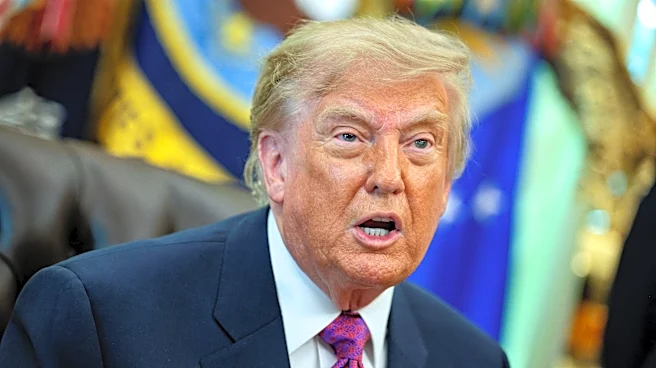
In Washington, President Donald Trump joined the celebration, calling his first-place finish a "very, very big victory" and predicting a close runoff.
"Brazil wants change," Bolsonaro said on Sunday evening, heralding the "end of the era of (Lula's) Workers' Party."
Reuters exclusively reported on Monday that Lula is considering tapping Vice President Geraldo Alckmin to be his next finance minister if re-elected, in a bid to bolster the government's fiscal credibility and win over centrist voters in the wake of Bolsonaro's first-round success.
Retailer Magazine Luiza, conglomerate Cosan and stock exchange operator B3 were among the main gainers, with each jumping more than 20%, while oil company Petrobras rose just over 8% and lender Bradesco was up over 13%.
The benchmark index had its best daily performance since March 2020, when markets faced extreme volatility at the start of the COVID-19 pandemic.
US-traded shares of Brazilian companies also soared, with brokerage XP up 33%, digital lender Nu Holdings up 13%, and fintech firms StoneCo and PagBank each up more than 20%.
The cost of buying insurance on Brazilian government debt through credit default swaps fell 20 basis points as traders bet on an improvement in the country's finances.
J.P. Morgan upgraded Brazil's equities to "overweight" on Monday, saying a more favorable political backdrop after recent election developments had improved the outlook for the region's largest market and could drive a period of outperformance.
Sunday's vote sent the country's currency strengthening 4.1% to around 5 per dollar, putting it on track for its biggest one-day gain in four years since the elder Bolsonaro performed better than expected against Lula in the first round of the 2022 election.
He went on to lose to Lula in the second round of that election and was subsequently convicted of trying to carry out a coup to overturn the result. The former president was sentenced to about 27 years in prison and is currently under house arrest.
Brazil's international debt also rallied on Monday, while broader fixed-income markets were jittery. The 2056 bond was up 1.4 cents on the dollar to bid at 93.5 cents, Tradeweb data showed.
'THE MARKET WANTS CHANGE'
Bolsonaro has pitched himself as a "more centered" version of his father to investors concerned about Brazil's burgeoning fiscal pressures.
"It remains to be seen whether the senator would ultimately prove more fiscally responsible than Lula would be in a fourth non-consecutive presidential term. However, markets are likely to give him the benefit of the doubt," said Thierry Larose, portfolio manager at Vontobel.
If he is elected, Bolsonaro would enjoy some room to maneuver with Congress after his Liberal Party emerged as the biggest winner in congressional races on Sunday.
His Liberal Party (PL) increased its representation in the Senate from 15 to 28 seats, the strongest result for a party since Brazil's constitution was enacted in the late 1980s, following the country's return to democracy.
It also is projected to secure 121 seats in the 513-seat lower house, up from its current 98 seats.
"The likelihood of advancing reforms is much greater," said Pedro Paulo Silveira, an analyst at Terra Investimentos. He noted that during the previous Bolsonaro government, reforms often depended on costly political bargaining or stalled altogether.
Analysts also expect the real to continue strengthening into 2027. Societe Generale forecast that it would move to 5.10 by the end of 2026, with scope to move below 5.00 in the first half of 2027. Morgan Stanley forecast the real could strengthen past 4.90 and toward 4.50 in the first quarter of next year.
"The market wants change, it wants reform, it doesn't want a high public deficit; with the current government, all of this will continue," said Pedro Galdi, investment analyst at the AGF Investments platform.
Bolsonaro's strong showing is likely to boost market confidence in the near term, said Bryan Harris, a managing partner at Sabio.
"The market will be looking for clear signals from Bolsonaro that he is serious about tackling the country's problems," Harris said.
Heading into Sunday's vote, most private polls, which largely underestimated the younger Bolsonaro's strength, had shown the 45-year-old senator and Lula, who will turn 81 later this month, about even in a runoff vote.
(Reporting by Oliver Griffin, Luciana Magalhaes and Fabricio de Castro in Sao Paulo and Marcela Ayres in Brasilia; Additional reporting by Libby George and Marc Jones in London; Gabriel Araujo in Sao Paulo and Lisandra Paraguassu; and Rashika Singh in Bengaluru; Writing by Brendan O'Boyle, Oliver Griffin, and Karin Strohecker; Editing by Alexander Smith, Chizu Nomiyama, Paul Simao and Aurora Ellis)