



By Andrew Chung
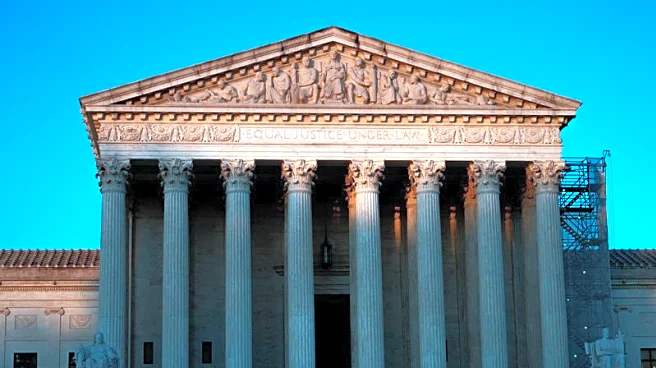
WASHINGTON, Jan 9 (Reuters) - The U.S. Supreme Court could issue at least one ruling on Friday as several major cases remain pending including litigation testing the legality of President Donald Trump's sweeping global tariffs.
The court may release opinions in argued cases when the justices take the bench during a scheduled sitting at 10 a.m. ET (1500 GMT), according to the court's website. The court does not announce ahead of time which rulings it intends to issue.
The challenge to
Trump's tariffs marks a major test of presidential powers as well as of the court's willingness to check some of the Republican president's far-reaching assertions of authority since he returned to office in January 2025. The outcome will also impact the global economy.
During arguments heard by the court on November 5, conservative and liberal justices appeared to cast doubt on the legality of the tariffs, which Trump imposed by invoking a 1977 law meant for use during national emergencies. Trump's administration is appealing rulings by lower court that he overstepped his authority.
Trump has said tariffs have made the United States stronger financially. In a social media post on January 2, Trump said a Supreme Court ruling against the tariffs would be a "terrible blow" to the United States.
Trump invoked the International Emergency Economic Powers Act to impose so-called "reciprocal" tariffs on goods imported from individual countries - nearly every foreign trading partner - to address what he called a national emergency related to U.S. trade deficits. He invoked the same law to impose tariffs on China, Canada and Mexico, citing the trafficking of the often-abused painkiller fentanyl and illicit drugs into the United States as a national emergency.
The challenges to the tariffs in the cases before the Supreme Court were brought by businesses affected by the tariffs and 12 U.S. states, most of them Democratic-governed.
Other important cases are also awaiting rulings at the court, which has a 6-3 conservative majority, including a challenge to a key section of the Voting Rights Act, the landmark 1965 federal law enacted by Congress to prevent racial discrimination in voting. Another involves a challenge on free speech grounds to a Colorado law banning psychotherapists from conducting "conversion therapy" that aims to change an LGBT minor's sexual orientation or gender identity.
(Reporting by Andrew Chung in New York; Editing by Will Dunham)