





By Nobuhiro Kubo and Tamiyuki Kihara
TOKYO, Nov 13 (Reuters) - Japanese officials have warned defence contractors of deep cuts to expected orders as fiscal constraints threaten to scale back a military buildup that Prime Minister Sanae Takaichi's government says is needed to counter China, four people familiar with the matter said.
Finance Ministry officials last week proposed spending between 50 trillion and 60 trillion yen ($313 billion to $376 billion) on defence over the five years starting in April
2027, the people familiar with the proposal told Reuters.
While more than the 43 trillion yen allocation in the current five-year plan, it falls well short of the 80 trillion yen budget that some defence officials and ruling Liberal Democratic Party lawmakers had assumed and used in negotiations with contractors.
The lower proposed spending could mean cuts of up to half in planned purchases of some missiles and aircraft from domestic and overseas suppliers, including US-built F-35 stealth fighters, the people said, speaking on condition of anonymity because they were not authorised to speak to the media about the matter.
Japan's biggest defence contractors include Mitsubishi Heavy Industries (MHI) <7011.T>, Mitsubishi Electric Corp (MELCO) <6503.T> and Kawasaki Heavy Industries (KHI) <7012.T>. MHI and MELCO declined to comment, while KHI did not immediately respond to a request for comment.
"The advisory panel on security and defence has not yet discussed matters at that level of detail either, so I don’t think we are at a stage where I should comment," Finance Minister Satsuki Katayama told reporters when asked about the spending proposal.
"Nothing has been decided on the size of the next defence buildup plan. Our position is to determine what Japan needs for its defence and build up the budget accordingly," a Defence Ministry spokesperson said.
FUNDING GAP
The proposed spending of up to 60 trillion yen would leave Japan short of its target of raising defence outlays to 2% of gross domestic product, according to Reuters calculations, as US President Donald Trump presses Washington's allies to spend more on their militaries.
The 2026 US National Defense Strategy calls for allies worldwide to spend 3.5% of GDP on their armed forces and a further 1.5% on broader security needs.
Japan is bolstering its military to counter China's growing military power, amid concerns about the possibility of a Chinese attack on Taiwan. Tokyo worries such a conflict could threaten its nearby islands and vital sea lanes.
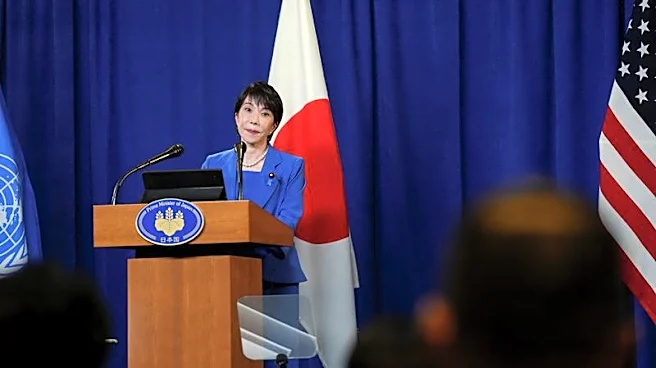
Takaichi has pledged to accelerate the buildup, with her government expected to unveil a revised national security strategy and defence plan by year-end. Japan is seeking to expand munitions stockpiles and deploy military drones to deter attacks and prepare for a prolonged conflict.
Drone orders would not be affected by the revised funding proposal, one of the people said.
SALES TAX CUT WOULD SQUEEZE REVENUE
Finance Ministry officials argue that a steep increase would be difficult to fund alongside Takaichi's commitments to invest in economic growth and cut the sales tax on food, which would squeeze government revenue, three of the sources said.
The sales tax cut would leave an annual 4.3 trillion yen revenue shortfall that would have to be filled through other funding sources, potentially including foreign exchange reserves.
The Finance Ministry's lower-than-expected defence proposal is likely to face resistance from security hawks in Takaichi's party, setting up a clash over how much Japan can afford to spend to bolster its defences.
"A contingency could occur at any time. If the goal is to build the capabilities necessary to deter and prevent such a contingency, a figure in the 50-trillion-yen range is out of the question," one ruling party official familiar with the discussions said, speaking on condition of anonymity because of the sensitivity of the issue.
($1 = 159.6400 yen)
(Reporting by Nobuhiro Kubo and Tamiyuki Kihara, additional reporting by Yoshifumi Takemoto and Makiko Yamazaki; Writing Tim Kelly; Editing by Stephen Coates and John Mair)