

By Ernest Scheyder and Jarrett Renshaw
Jan 28 (Reuters) - The Trump administration is stepping back from plans to guarantee a minimum price for U.S. critical minerals projects, a tacit acknowledgment of a lack of congressional funding and the complexity of setting market pricing, multiple sources told Reuters.
The shift, which comes as a U.S. Senate committee is reviewing a price floor extended last year to MP Materials, marks a reversal from commitments made to industry and could set Washington apart
from G7 partners discussing some form of joint price support or related measures to bolster production of critical minerals used in electric vehicles, semiconductors, defense systems and consumer electronics.
At a closed-door meeting earlier this month hosted by a Washington think tank, two senior Trump officials told U.S. minerals executives that their projects would need to prove their financial independence without government price support, three attendees told Reuters.
"We're not here to prop you guys up," Audrey Robertson, assistant secretary of the U.S. Department of Energy and head of its Office of Critical Minerals and Energy Innovation, told the executives. "Don't come to us expecting that."
Robertson was joined by Joshua Kroon, the deputy assistant secretary for textiles, consumer goods, materials, critical minerals and metals at the U.S. Department of Commerce's International Trade Administration.
Both Kroon and Robertson told the meeting that Washington is no longer in a position to offer price floors, according to the sources.
Kroon and Robertson did not respond to requests for comment.
The administration's current stance is in contrast to a closed-door meeting held last July, where two separate officials told minerals executives that a floor price extended to MP Materials days prior was "not a one-off" and that the administration was working on price supports for other projects.
Since then, the administration has taken equity positions in Lithium Americas, Trilogy Metals, USA Rare Earth and others. None were offered price floors, sparking questions about the government's commitment to that financial tool.
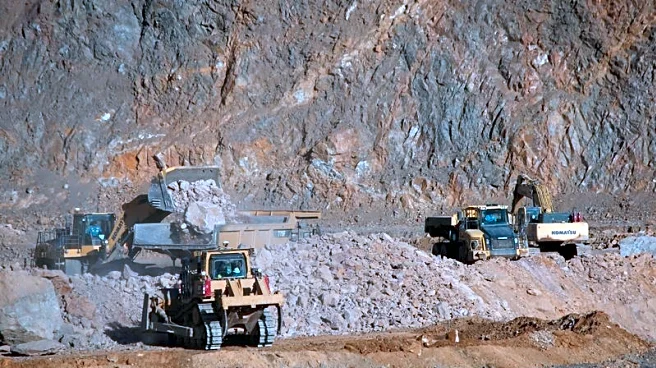
U.S. mining and processing companies have pushed for price floors and other government backstops to help them compete with China. Industry executives argue China's state-backed producers can slash prices to punish rivals, undercut projects and deter private investment.
The White House declined to say whether it plans to issue any new price floors, but said it will continue to pursue deregulation, tax cuts and targeted investments in the high-priority sector "while being good stewards of taxpayer dollars."
Critics of price floors warn they could expose U.S. taxpayers to significant financial risk by forcing the government to subsidize minerals when market prices fall, potentially locking in long-term liabilities if prices remain depressed.
Legal experts also caution that guaranteeing minimum prices could face challenges under U.S. procurement, trade and budget laws, particularly if such support is seen as market distortion or lacks explicit congressional authorization.
Moving away from price floors does not preclude other steps Washington could take to bolster mineral projects and attempt to stabilize prices, including stockpiling, equity investments and local content stipulations.
Other countries, including Australia, have also considered price floors for critical minerals.
MP DEAL UNDER SPOTLIGHT
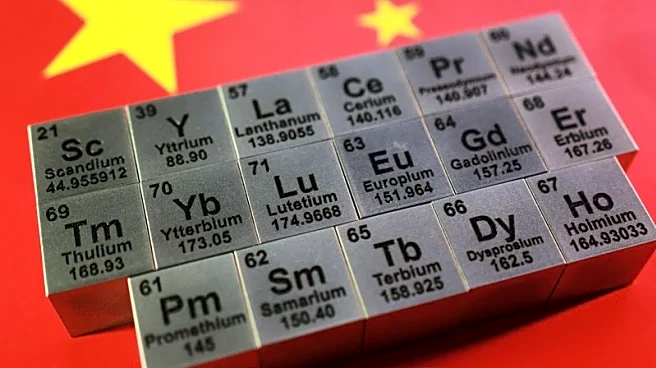
The MP Materials investment sparked concern from some administration officials and members of Congress that funding for a price floor of at least $110 per kilogram for two types of rare earths had not been authorized by Congress, two additional sources familiar with the discussions said.
The economics of mineral markets since the MP investment have shifted. USA Rare Earth said earlier this week it intends to buy those same types of rare earths for $125 per kilogram on the open market.
The MP investment, which included a guaranteed purchase agreement, fueled confusion over whether Washington would guarantee a price floor for others.
As the Trump administration considered other potential equity investments after MP, it recognized that it did not have the congressional authority to fund a price floor, the sources said.
That realization was fueled in part by an inquiry from members of the Senate Armed Services Committee, which asked Pentagon staff last year to meet to explain why MP Materials received price floor support and the administration's strategy around minerals sector investment, according to the two sources.
A committee staffer confirmed the meeting request but declined further comment. MP Materials did not respond to a request for comment.
(Reporting by Ernest Scheyder and Jarrett Renshaw; Editing by Veronica Brown and Lisa Shumaker)