


April 20 (Reuters) - Kevin Warsh, picked by President Donald Trump to succeed Federal Reserve Chair Jerome Powell, has big plans for the central bank once he takes the helm. Regime change. A lower policy rate. A new approach to inflation. A smaller balance sheet. An independent Fed. A narrower remit. More coordination with the Treasury Department. Less "cacophony" from the Fed's 19 policymakers.
As San Francisco Fed President Mary Daly said Friday, "he'll come in with an idea of what he would like
to think about and do. And then the economy will deliver what we actually work on, and that will be the journey of every Fed chair and all the Fed policymakers and all the Fed employees."
Lawmakers at Warsh's Tuesday confirmation hearing will surely have lots of questions about those ideas.
Here is a sampling of what he has said about them:
REGIME CHANGE
"The broad conduct of monetary policy has been broken for quite a long time. The central bank that sits there today is radically different than the central bank I joined in 2006. I don't think we need policy continuity that brought about the greatest mistake in macro economic policy in 45 years, that divided the country, that caused a surge in inflation. I don't think we need continuity when the central bank doesn't have credibility... we need regime change at the Fed." CNBC interview, July 17, 2025
LOWER INTEREST RATES
"Interest rates should be lower." Larry Kudlow interview on FOX Business Network, July 8, 2025
"The Fed’s bloated balance sheet, designed to support the biggest firms in a bygone crisis era, can be reduced significantly. That largesse can be redeployed in the form of lower interest rates to support households and small and medium-size businesses." Wall Street Journal Op-Ed, November 16, 2025
INFLATION
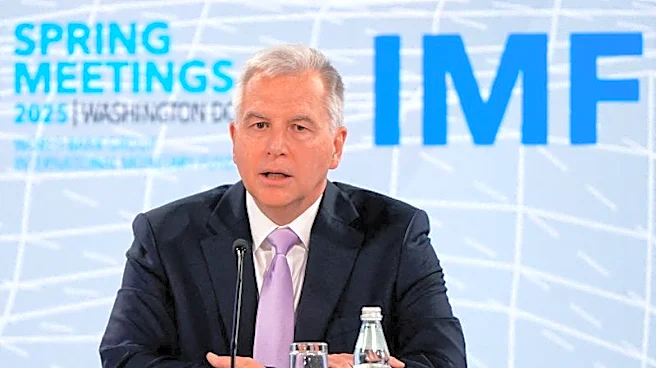
"The intellectual errors that contributed to the Great Inflation include some mix of the following: The central bank came to believe that its price stability objective was largely self-executing…that big, black-box DSGE (dynamic stochastic general equilibrium) models were anchored in reality…that monetary policy had nothing to do with money…that the central bank was a bystander to forces outside of its control…that the surge of Putin and the pandemic were blameworthy for inflation rather than the surge of government spending and printing." International Monetary Fund lecture, April 25, 2025
"AI is going to make almost everything cost less... I think we are probably in the early innings of a structural decline in prices." CNBC interview, July 17, 2025
SMALLER BALANCE SHEET
"My recommendation is a smaller balance sheet... interestingly if you have a smaller balance sheet, you can have lower interest rates... (The Fed's balance sheet) is trillions larger than it needs to be." Reagan National Economic Forum in Simi Valley, California, May 30, 2025
FED INDEPENDENCE
"The Fed's greatest asset is its institutional credibility. This institutional credibility is rooted in its inflation-fighting credibility, but it is broader still. It is tied up in the full range of Fed actions and balance sheet commitments. This credibility is essential. It increases the heft of our communications. It gives weight to our economic assessments. It amplifies the effect of announced changes in the short-term policy rate on longer-term rates. It is, in some sense, the real money multiplier in the conduct of policy....Fortunately, for the asset to be burnished and bestowed upon the current crop of central bankers, it did not demand perfect clairvoyance or infallible judgments. But it did require fierce independence from the whims of Washington and the wants of Wall Street, and from a pernicious short-termism that can undermine the proper conduct of policy." Speech at the Shadow Open Market Committee in New York, March 26, 2010
NARROW THE REMIT
"The more the Fed opines on matters outside of its remit, the more it jeopardizes its ability to ensure stable prices and full employment. And the more vulnerable it becomes to the body politic. The Fed’s expansionist tendencies portend existential risks." IMF Lecture, April 25, 2025
FED AND THE TREASURY
"If we have a new accord, and ... the Fed chair and the Treasury secretary can describe to the markets plainly and with deliberation this is our objective for the size of the Fed's balance sheet, the Treasury can say this is our issuing calendar, and by the end of, let's say, this administration we'll be at an equilibrium rate on the balance sheet, so that markets will know what is coming...It would not be working in conjunction with the administration. It would be working with Treasury on goals that the Fed thinks are important to try and pursue and how would you present that to markets, as such, will be in conjunction." CNBC interview, July 17, 2025
FED TRANSPARENCY AND 'CACOPHONY'
"Under Chairman Greenspan’s leadership, the Federal Reserve took meaningful steps during the past decade to describe and explain its policies with greater transparency. As a result, market volatility is lower, and our capital markets are deeper, broader, and more dynamic than ever before." Senate Banking Committee confirmation hearing, February 14, 2006
The Fed's "'forward guidance,' promising low interest rates well into the future, offers ambiguity in the name of clarity. It licenses a cacophony of communications in the name of transparency." Essay entitled "The Federal Reserve needs new thinking," August 24, 2016.
"Fed leaders would be well-served to skip opportunities to share their latest musings. The swivel chair problem, rhetorically waxing and waning with the latest data release, is common and counter-productive." Wall Street Journal Op-Ed, November 16, 2025
(Reporting by Ann Saphir; editing by Dan Burns and Chizu Nomiyama )