







By Sarah Morland
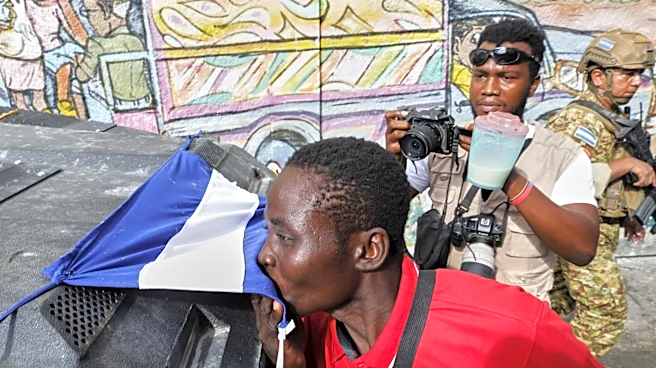
Nov 17 (Reuters) - Haitians marched on Tuesday in support of Salvadoran President Nayib Bukele's troop deployment to Haiti, as analysts warned that high-profile offensives without a long-term strategy could worsen the conflict with armed gangs.
Protesters in several major cities carried signs reading "Long live Bukele" and "Down with the gangs," while Haiti's security minister prepared to meet Bukele in San Salvador. Social media footage indicated thousands turned up.
Haiti's leaders
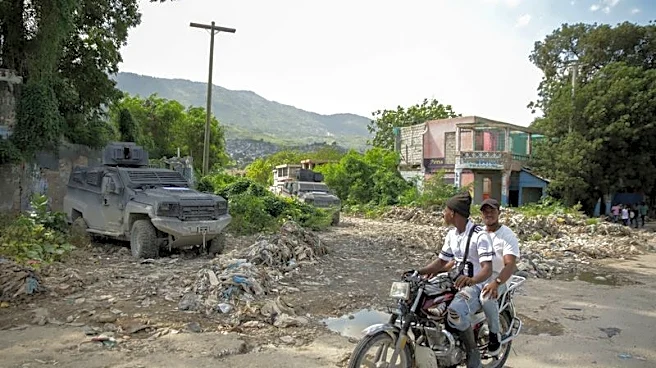
have long appealed for foreign support against heavily armed gangs that control much of Port-au-Prince and surrounding areas. But successive UN-backed missions have struggled to deploy enough personnel or restore security.
After four Salvadoran members of the UN-backed anti-gang force went missing on October 18, Bukele sent more than 2,000 troops to Haiti under a separate bilateral agreement with the Haitian government.
Bukele has since promoted the deployment with dramatic videos, including footage of robot dogs strapped with assault rifles moving through a stadium that Haitian and Salvadoran forces said was reclaimed from gangs in a joint operation.
"How this goes will probably open the door for similar operations in other places," Renata Segura, regional program director at the International Crisis Group, told reporters.
Segura said Bukele's close ties to US President Donald Trump, who 10 days into the deployment said he had approved the mission, highlighted a shift toward security arrangements outside multilateral channels. She warned that sidelining the UN-backed force could weaken safeguards designed to protect civilians.
International Crisis Group analyst Diego Da Rin said the operation had produced few clear gains nearly a month after it began. Without a long-term plan or exit strategy, he said, high-profile raids could backfire.
El Salvador's government did not immediately respond to a request for comment. Its vice-president criticized Amnesty International's call for transparency as "false concern for human rights."
Da Rin said that after a joint operation targeting a gang leader's compound earlier this month, armed groups returned, searched residents' phones and threatened people suspected of sharing information.
"Most forces are now going on the offensive with too little planning for how to sustain their gains and prevent an expected escalation," Da Rin said.
Neither the Haitian government nor the security forces operating in Haiti have disclosed death tolls from recent operations. UN data shows that of more than 4,200 people killed in Haiti this year, more than half died during security operations, including more than 300 civilians.
Haiti's police did not immediately respond to a request for comment.
(Reporting by Sarah Morland in Mexico City, Harold Isaac in Port-au-Prince and Gerardo Arbaiza in San Salvador; Editing by Matthew Lewis)