



By Reinhard Becker and Francesco Canepa
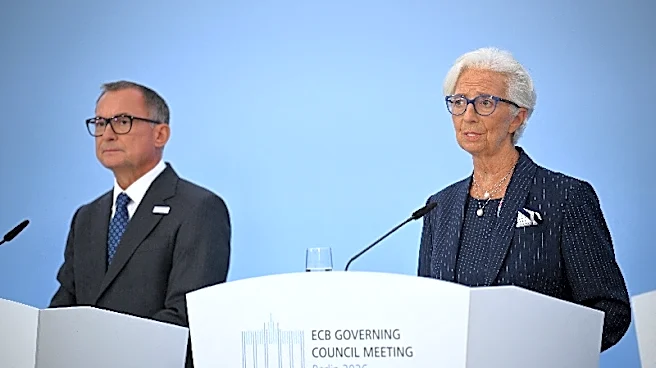
BERLIN, Sept 10 (Reuters) - The European Central Bank raised interest rates on Thursday for the second time this year to quell an energy-driven inflation rise and warned that price pressures could prove lasting, fuelling bets on even more policy tightening.
Attacks since late August by the U.S. and Iran on military, shipping and energy assets across the Middle East have sent oil prices back above $100 a barrel and revived fears about a wave of price hikes in the fuel-importing
euro zone.
The ECB responded by raising its policy rate to 2.50% from 2.25% and warned that the return of inflation to its 2% target, now seen at the end of 2027, could be delayed even further.
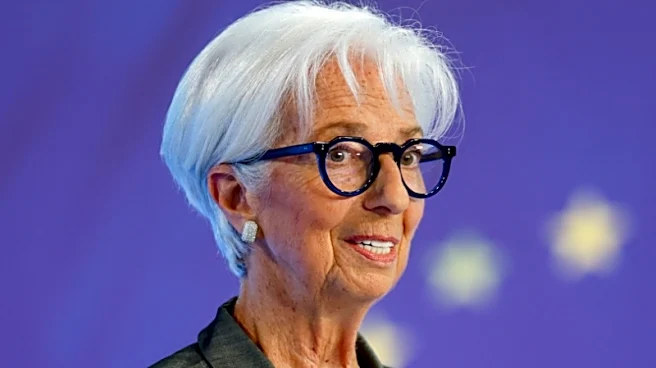
"The outlook remains highly uncertain, with risks to the upside for inflation and to the downside for economic growth," ECB President Christine Lagarde told a press conference.
"We believe inflation will be longer lasting than we had anticipated," she said.
FORECAST MAY ALREADY BE OUTDATED
While the ECB's inflation projections were only bumped up slightly, they did not capture the latest energy price moves as numbers were finalised earlier and some economists consider the freshly published figures already outdated.
Indeed, oil is now trading in line with the ECB's "adverse" scenario while natural gas prices, which could fuel lasting inflation because many European countries rely on it for heating, are even above that level, inching towards "severe".
"Given the recent jump in energy futures prices, unchanged staff forecasts for core inflation for 2026 and 2027 are untenable," Arne Petimezas, director of research at Dutch broker AFS, said. "Expect both to be raised and paired with another quarter point hike in December."
That downbeat price outlook, coupled with the relentless surge in energy costs, bolstered market bets for rate hikes and investors now expect more than three moves over the next 12 months, up from between two and three before the meeting.
Lagarde, however, insisted that further hikes were not obvious and said she could not anticipate what the next move would be, given the uncertainty.
"We have not debated at all any kind of future path," Lagarde said. "Markets do what they have to do and we do what we have to do — which is to provide price stability."
HIGHER GROWTH AND INFLATION EXPECTATIONS
Economists polled by Reuters had expected Thursday's hike to be the ECB's last for now, although views had begun to shift even ahead of the meeting and others changed on Thursday.
"In light of this hawkish tone, we are revising our forecast for December and now expect another 25-basis-point rate hike," Commerzbank economist Jörg Krämer said.
Offering some good news, Lagarde raised growth forecasts for this year and next, arguing that the economy of the 21-country euro zone was proving more resilient than feared.
But this too will put some upward pressure on inflation and bolster the case for more rate increases, which would take them above the so-called neutral level, which neither restricts nor stimulates growth.
"The ECB may need to move into restrictive territory and cannot rule out further rate hikes at this stage," Sylvain Broyer at S&P Global Ratings said. "The inflation outlook has worsened over the summer. Supply shocks are not only multiplying, but it is increasingly likely that demand is also adding to inflation."
But the ECB may not be under pressure to quickly follow Thursday's move with another rise in borrowing costs.
The labour market remains relatively soft, underlying inflation actually fell last month and wage indicators remain benign, pointing to no real danger of a hard-to-break wage-price spiral.
This is why some think the ECB will stick to quarterly moves, with the next hike coming in December, when fresh projections will also be released.
"We maintain our baseline of two further 25 basis point rate hikes at quarterly intervals, with the next one in December and the second in March 2027," Nordea economists Jan von Gerich and Tuuli Koivu said.
(Writing by Balazs Koranyi and Mark John; Editing by Catherine Evans)