



By Mike Dolan
March 26 -
What matters in U.S. and global markets today
By Mike Dolan, Editor-At-Large, Finance and Markets
Despite all the grandstanding on both sides of the Middle East conflict, there’s little change in the situation for energy or financial markets to take solace from. The U.S. claims it’s negotiating a 15-point ceasefire plan, while Iran insists no talks are planned and that it’s merely reviewing the U.S. proposal.
All the while, fighting continues and the Strait of Hormuz remains effectively
shut, with oil prices pushing back up and energy analysts upgrading their full-year crude price estimates further.
I’ll get into that and more below.
But first, check out my latest column on the worrying signs in U.S. Treasury markets and why they matter for broader markets.
And catch today’s episode of the Morning Bid podcast. Subscribe to hear Reuters journalists discuss the biggest news in markets and finance seven days a week.
REALITY CHECK
After falling around 2% on Wednesday, both Brent and WTI crude futures ticked back up on Thursday as traders digested the latest mixed signals from the U.S. and Iran. The benchmarks are now hovering around $105 and $93 per barrel, respectively.
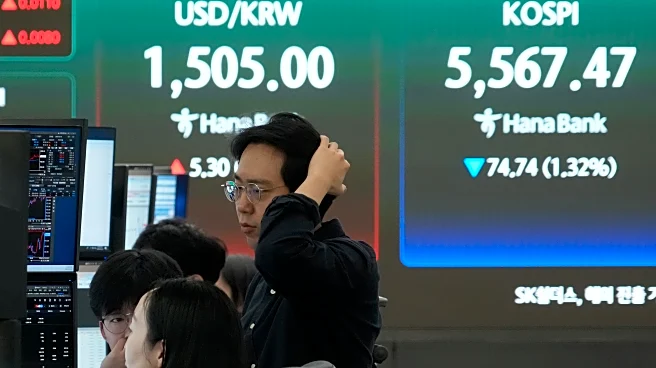
Global shares were unsteady as hopes for an imminent ceasefire faded. In Asia, Japan’s Nikkei lost 0.7%, Hong Kong’s Hang Seng index fell by 1.7% and South Korea’s KOSPI index was down 2.7%.
Europe's STOXX 600 fell on Thursday morning, while U.S. stock futures were also down before the bell.
Gold fell back too, once again failing to register any safety bid and instead shedding some of the recent gains it owed to prospects for a resolution to the energy shock.
Treasury markets were on edge after another series of poor debt auctions and mounting longer-term inflation risks, with Wednesday’s import price data already showing a much bigger jump in February than forecast before the war.
Elsewhere, it was announced that President Trump has re-scheduled his hotly anticipated trip to China for mid-May. Meantime, Alphabet and Meta lost a U.S. court case over whether the design of their social media platforms harm children.
In technology news, Arm Holdings stock jumped over 16% on Wednesday after predicting that its new in-house data-center chip would generate roughly $15 billion in annual revenue in five years. The chip, which is geared toward powering “agentic” AI, marks a departure for Arm, which has previously licensed chip designs to giants such as Nvidia.
Chart of the day
Even before this month's oil shock, U.S. import price inflation had already turned sharply higher, hitting 1.3% in February, well above forecasts. The monthly jump, which exclude tariffs, was the biggest in four years.
It was driven by food and energy prices but also consumer and capital goods. Largely due to the AI infrastructure boom, prices of imported capital goods logged their biggest increase on record. And the core annual rate of import price inflation rose to 3.0%, partly reflecting dollar weakness over the past year.
Today's events to watch
* U.S. weekly jobless claims (8:30 AM EDT)
* U.S. 7-year note auction (1:00 PM EDT)
* Fed’s Stephen Miran, Lisa Cook, Michael Barr and Philip Jefferson all speak
Want to receive the Morning Bid in your inbox every weekday morning? Sign up for the newsletter here. You can find ROI on the Reuters website, and you can follow us on LinkedIn and X.
Opinions expressed are those of the author. They do not reflect the views of Reuters News, which, under the Trust Principles, is committed to integrity, independence, and freedom from bias.
(By Mike Dolan)