







By Luciana Magalhaes
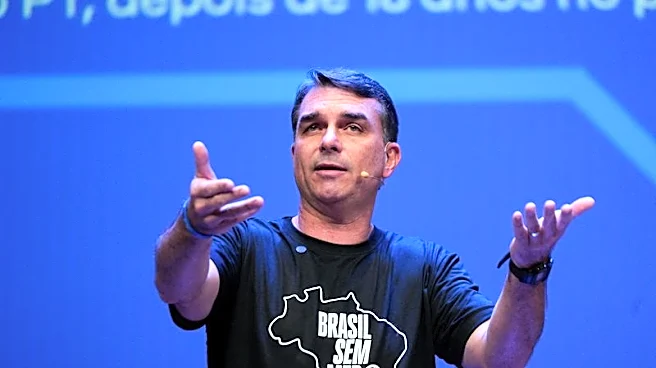
SAO PAULO, July 7 (Reuters) - Brazilian Senator and presidential hopeful Flavio Bolsonaro on Tuesday argued to the U.S. Trade Representative (USTR) against a new 25% tariff on Brazilian goods, distancing himself from a policy that had been used as a cudgel to defend his father.
The son of former President Jair Bolsonaro has been caught between an ideological embrace of U.S. President Donald Trump and Brazilians' resentment of tariffs that Trump first imposed last year in an effort
to derail a trial of the ex-president.
After the U.S. Supreme Court struck down that policy, the USTR proposed a new 25% tariff on imports from Brazil under the Section 301 trade statute, accusing its South American trade partner of unfair practices. The USTR will make its final decision by July 15 after public hearings that began Monday, which were to be attended by Senator Bolsonaro.
In a roughly four-minute speech, Bolsonaro defended Brazil's popular Pix instant payment system, according to people familiar with the matter and a recording by a participant. Washington has called the system an unfair threat to Visa and Mastercard.
"Pix is not a problem to be fixed, it is a solution," he said in audio reviewed by Reuters, referring to the central bank payment system rolled out under his father.
The senator also argued against the timing of proposed tariffs on his country, given the coming October election, where he plans to challenge Brazil's leftist President Luiz Inacio Lula da Silva, a holdout against the growing wave of right-wing Trump allies in the region.
"Within just 90 days, the country's political landscape will look entirely different," Bolsonaro said, according to the recording.
The proposed Section 301 tariffs made public in early June would exempt several categories of Brazilian goods such as beef, coffee, rare earths, other metals and aircraft parts. They would still threaten exports and jobs in Brazilian industries such as footwear and fishing.
Representatives of several trade groups, including the Brazilian Rice Industry Association, the Federation of Industries of the State of São Paulo, and the National Confederation of Industry, are also participating in the public hearings in Washington.
(Reporting by Luciana MagalhaesEditing by Brad Haynes and David Gaffen)