
By Elena Fabrichnaya and Gleb Bryanski
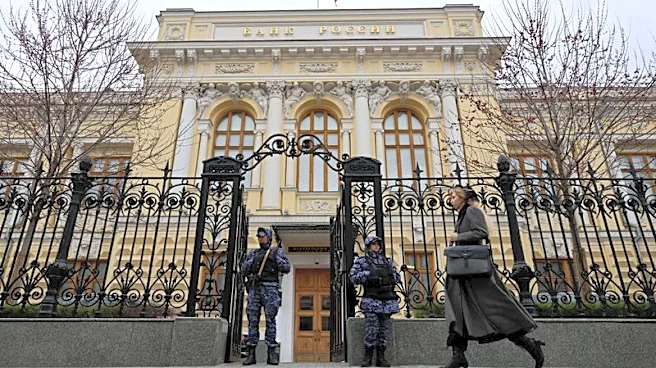
MOSCOW, April 24 (Reuters) - The Russian central bank reduced its key rate by 50 basis points to 14.5% on Friday, as expected by analysts, despite pressure from businesses
to cut faster to boost the economy, which contracted by 1.8% in the first two months of the year.
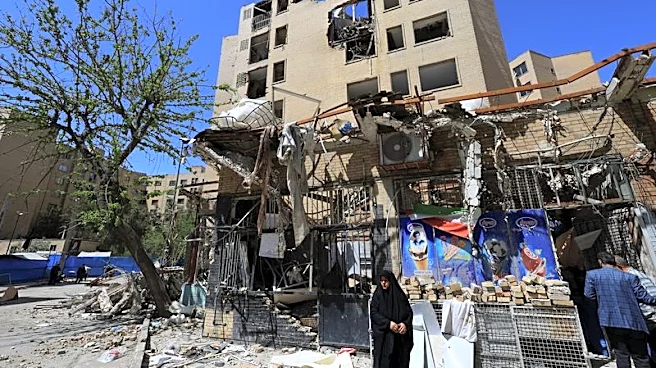
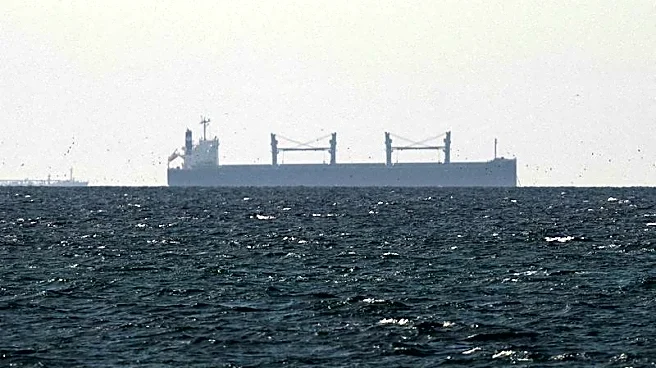
The central bank governor Elvira Nabiullina urged caution on the impact of the Iran war and a blockade of the Strait of Hormuz, which has sent prices for Russia's export commodities soaring even as Russia has had to cut oil output due to Ukrainian drone attacks on ports and refineries.
"If the conflict drags on, the adverse effects for the Russian economy will be strengthening. The implications caused by a global rise in costs might turn out to be more serious than the benefits from larger exports and a stronger rouble," she said.
"The situation in the Middle East remains a factor of uncertainty," she said.
However, the central bank raised its forecast for the average oil price, used for the calculation of budget revenues, in 2026 by 45% to $65 per barrel, and said that the higher price will boost economic growth later this year.
In its statement, the central bank blamed one-off factors such as a value-added tax increase at the start of the year, which hit many small and medium-sized businesses, as well as heavy snowfalls across the country, for the contraction.
"The abnormal frosts and snowfalls at the beginning of this year led to forced downtime in the first quarter, and therefore, construction companies will make efforts to catch up in the next quarter," she said.
NO RISKS OF ECONOMY OVERCOOLING
The central bank added that since the contraction was largely driven by one-off factors, it decided to leave its forecast for economic growth in 2026 unchanged at between 0.5% and 1.5%.
Nabiullina's first deputy, Alexei Zabotkin, said first quarter GDP data, which will be released in May, will be different "for the better" from the data in January and February.
Nabiullina said that she saw no risks of the economy overcooling. She stressed that the central bank will cut faster only if inflation falls below the target level of 4% from the current 5.9% and unemployment starts rising.
"It took humanity 50 years to return to the Moon. We will also return to 4% inflation, I am sure of it, and I am confident that it will happen much faster," she said.
President Vladimir Putin scolded his top officials last week for the economic contraction, urging them to devise new measures to boost growth. Russian businesses see 12% as the key rate level at which economic growth can resume.
Several major companies, including steelmaker Severstal and aluminium maker Rusal reported a quarterly loss or a fall in profit, attributing their results to the central bank's tight monetary policy.
MORE STRINGENT SIGNAL
Nabiullina said that productivity growth was key to the resumption of overall growth, stressing that the central bank saw its role as financial markets regulator in ensuring that capital flows to more productive sectors of the economy.
The central bank said that any potential changes in fiscal policy in favour of accelerated spending and a higher deficit could push it toward keeping the key rate higher for a longer period.
"In case of higher expenditures accompanied by growth in the structural budget deficit, tighter monetary policy will be required than that under the baseline scenario," the central bank said.
As a warning sign, the central bank adjusted its estimate for the average key rate for the year, which analysts watch for an indication of future key rate moves, to between 14% and 14.5% from between 13.5% and 14.5%.
"They are giving us a more stringent signal on the key rate," said Sofya Donets, the chief economist at T-Bank.
(Additional reporting by Vladimir Soldatkin, Darya Korsunskaya; Writing by Gleb Bryanski; Editing by Mark Trevelyan, Sharon Singleton, Philippa Fletcher)