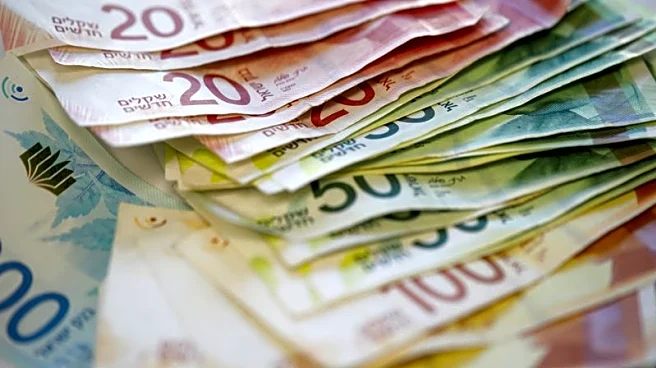




DAVOS, Switzerland Jan 21 (Reuters) - The shekel's rise to around four-year highs against the dollar reflects the resilience of the Israeli economy and comes amid solid export performance, Bank of Israel Governor Amir Yaron said on Wednesday.
Speaking to Reuters on the sidelines of the World Economic Forum in Davos, Yaron said the Israeli currency's strength was also acting as a tailwind that was moderating inflation.
"The appreciation of the shekel represents a lot of the positive fundamentals in
terms of geopolitical developments and certainly post the ceasefire," he said of the October 2025 ceasefire in Gaza.
"We understand the appreciation makes it difficult for exports. But we've seen exports of both goods and services rise in the last two readings," he added of the roughly 12% rise in the shekel against the dollar since the start of 2025.
Asked at what point the central bank would consider intervention to lower the level of the shekel, Yaron said: "The FX tool is part of the toolbox of the Bank of Israel. We have many tools for facilitating our policies."
In the past, the central bank had bought tens of billions of dollars to keep the shekel from appreciating too fast and harming exporters. It sold $8.5 billion of foreign currency at the outset of the Gaza war in October 2023 to defend the shekel, but it has largely stayed out of the market since.
The Bank of Israel unexpectedly cut its interest rate by 25 basis points earlier this month, a second successive cut after lowering it in November for the first time in nearly two years.
It cited the shekel's strength and an improving inflation environment after the ceasefire, which led to an easing of the supply constraints that emerged during the two-year war. The inflation rate currently stands at 2.6%, within an official 1-3% target range.
Yaron underlined that demand in the Israeli economy had remained robust during the conflict and that the bank had not so far seen it surge further as a result of the ceasefire.
"We haven't seen demand erupt the way it did post-COVID," he said.
He noted that the bank's research department had identified a baseline scenario of a further 50 basis points of cuts down to an official rate of 3.5% by the end of this year, notwithstanding the high level of uncertainty facing all central banks.
"We will have to see how much demand picks up, how much supply constraints are mitigating, what is happening with the tailwind from the shekel," he said.
(Reporting by Mark John; editing by Steven Scheer and Hugh Lawsonx x)