







By Promit Mukherjee
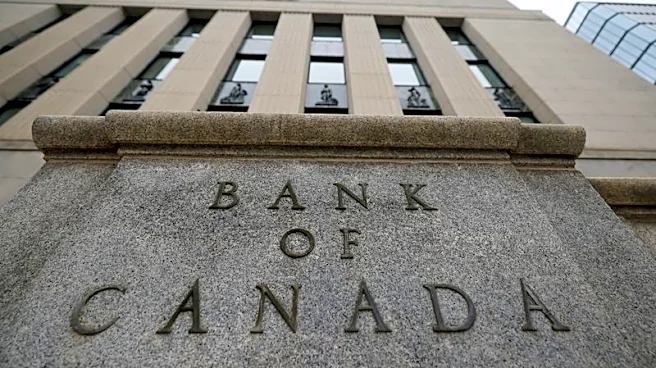
OTTAWA, June 10 (Reuters) - The Bank of Canada is expected to leave interest rates unchanged on Wednesday as strong inflation and labor market data are offset by a weakening economy that slipped into a technical recession in the first quarter.
That decision would mark the fifth consecutive meeting at which the BoC has left its key policy rate at the 2.25% level, as an array of factors have complicated the economic outlook.
U.S. tariffs on steel, aluminum and autos have led to job
losses and delayed investment decisions, but at the same time the knock-on effects have yet to spread through the broader economy.
The U.S.-backed war with Iran, which has sent gasoline prices soaring, has squeezed household budgets, though Canada, as a net exporter of crude oil, is taking in more revenues.
Economists have cited the upcoming review of the North American free trade agreement - the United States-Mexico-Canada Agreement - as the biggest uncertainty hanging over the economy.
"There are two-sided risks around the inflation forecast for Canada, and the Bank of Canada has to walk a fine line between trying to set a monetary policy to balance those risks," said Randall Bartlett, deputy chief economist at Desjardins Group.
He said the higher energy prices resulting from the Iran war could potentially feed into core inflation, while the ongoing disruption as the USMCA review approaches could entrench the uncertainty and hit expenditures, complicating predictions for where inflation could land.
Bartlett predicts the BoC will keep rates on hold for the remainder of 2026.
According to a Reuters poll, 34 economists expect Canada's central bank to leave its overnight rate unchanged on June 10. More than 80% of them, or 28 of 34, predicted it would stay on hold throughout the year, similar to the estimates from the poll in April.
Money markets, however, are still pricing in one 25-basis-point rate hike in December. Those bets were bolstered by a healthy Canadian jobs report last week.
Canada's unemployment rate fell to a five-month low in May as hiring strengthened. Other data, however, showed that Canada's economy entered a technical recession in the first quarter.
"There have been enough cracks in growth and labor market data for the BoC to remain cautious about changing policy rates too quickly in one direction or another," Nathan Janzen, assistant chief economist at RBC, said in a report.
The BoC will announce its policy decision at 9:45 a.m. EDT (1345 GMT).
(Reporting by Promit Mukherjee; Editing by Paul Simao)