







By Sergio Limachi and Andrea Rodriguez
LA PAZ, Aug 26(Reuters) - The marriage of a same-sex couple in Bolivia this month could prompt other couples to seek the same recognition, activists say, potentially opening a new chapter in a years-long push for LGBT rights in the socially conservative Andean nation.
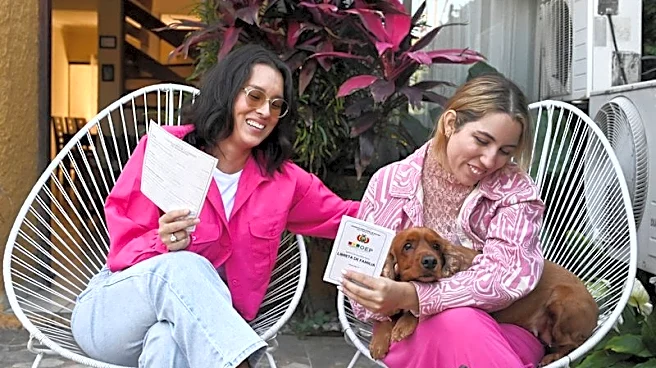
Fabiana Justiniano and Scarlett Rocha applied to marry in October 2022. After nearly four years of legal proceedings and two constitutional appeals, they won a ruling in March 2026 clearing the way
for their wedding — Bolivia's first legally recognized same-sex marriage.
"We had many doubts, a lot of uncertainty ... because the process was so long and during the process there were so many barriers, so many limitations, even on the day of the wedding," Rocha said.
For Justiniano, the union brought a different kind of relief. "For me, marriage means peace," she said, recalling their first night home as a married couple, when she realized everything they had built now belonged "only and exclusively to us."
Nonetheless, the Bolivian court's ruling applies only to their specific case. Same-sex marriage is not yet available nationwide through Bolivia's administrative rules, and future access will hinge on further Constitutional Court rulings.
Mateo Rodrigo, a lawyer with Equal Bolivia who represented the couple, said the ruling has already triggered interest from others.
"Since Fabiana and Scarlett's wedding we have already received quite a few requests, around five to 10 couples have approached us," he said, though many remain hesitant given the nearly four-year fight the couple endured.
Same-sex civil unions similarly moved into legal territory after a landmark case in 2020, when David Aruquipa and Guido Montaño won a two-year legal battle.
It took until 2023 for further court rulings to make the registration of same-sex civil unions broadly available.
Since then, Bolivia has recognized 148 same sex-civil unions, said Paola Tapia, who oversees the vulnerable populations unit at Bolivia's Ombudsman's Office. She added that unions still carry fewer practical protections than marriage.
"With marriage, we're opening many more doors. With civil unions, we opened a few," said Montaño. "The situation now is much better for people who can choose between marriage and a civil union."
Cuba in 2022 became the latest country in Latin America to legalize gay marriage and adoption, but little has changed in the region since.
Same-sex marriage remains illegal or unrecognized across much of Central America, Paraguay, Peru, Venezuela, Guyana, Suriname and parts of the Caribbean.
(Reporting by Sergio Limachi in La Paz and Andrea Rodriguez in Mexico City, Additional reporting by Monica Machicao in La Paz, Writing by Iñigo Alexander, Editing by Daina Beth Solomon and Lincoln Feast.)