







By Andy Bruce
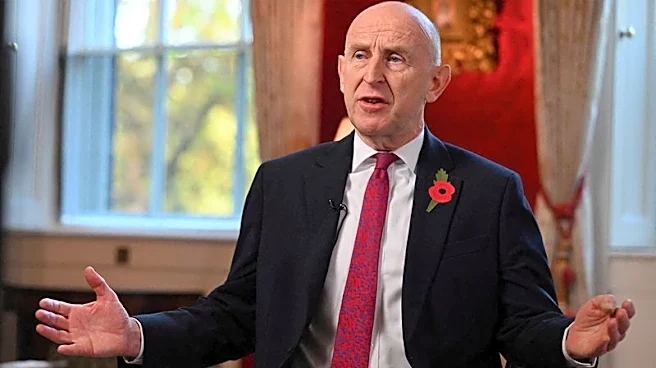
LONDON, Nov 20 (Reuters) - Britain's government borrowed a little less than expected in October and the budget deficit for previous months was revised down in positive news for finance minister John Healey, weeks after his budget.
British public sector net borrowing was £17 billion ($22.3 billion) in October, the Office for National Statistics said on Friday.
Economists polled by Reuters had a median forecast for a budget deficit of £18.0 billion.
The ONS revised down borrowing for the
April to September period of the 2026/27 financial year by £3.6 billion, thanks largely to stronger tax receipt data and after faster-than-expected third-quarter economic growth.
The data marked a modest positive for Britain's public finances against a difficult backdrop.
Exposure to energy markets and high inflation have left Britain with the highest borrowing costs in the Group of Seven wealthy (G7) nations, and Healey has repeatedly stressed his commitment to fiscal discipline.
The current budget deficit, which the fiscal rules state should be wiped out by 2029/30, stood at £72.9 billion for the year to October, down more than 10% on a year earlier and slightly smaller than the OBR's March forecast.
PUBLIC FINANCES REMAIN UNDER STRAIN
The debt interest bill was £11.2 billion in October, up a third on a year earlier and the highest figure for the month since records began. The data are not adjusted for inflation.
Tax receipts in the first seven months of the financial year were £10.2 billion, above the Office for Budget Responsibility's (OBR) March forecast, but spending was £11.4 billion higher than expected, including £5.7 billion more in debt interest.
"With inflation rising, interest rates up, and a further rate rise possible in December, there will inevitably be a knock-on effect on the cost of government borrowing, which will give the Chancellor even less room for manoeuvre," said Henning Diederichs, director for public sector at accountancy body ICAEW.
In his October 28 budget, a cautious set of tax and spending plans, Healey offered households and drivers some help with rising energy bills and fuel costs, while raising taxes on banks, gambling and landlords.
Cumulative borrowing for 2026/27 so far, covering April to October, stands at £111.3 billion. That is £7.3 billion less than at the same point a year ago but £3.3 billion above what the OBR expected in its March forecasts.
The OBR has yet to publish a monthly profile that would match its latest forecast for last month's budget, which predicted borrowing of £133.2 billion for 2026/27 as a whole.
British government bond futures briefly shot lower after the data but were overall little changed.
"Fiscal discipline underpins the decisions this government makes every day. Britain is showing stand-out resilience despite the global impact of the conflict in Iran," deputy finance minister Emma Reynolds said in response to the borrowing data.
($1 = 0.7630 pounds)
(Reporting by Andy Bruce; Editing by Kate Holton and Sharon Singleton)