

By Jamie McGeever
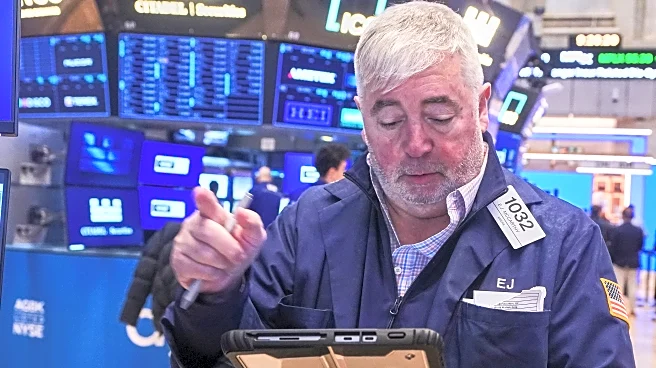
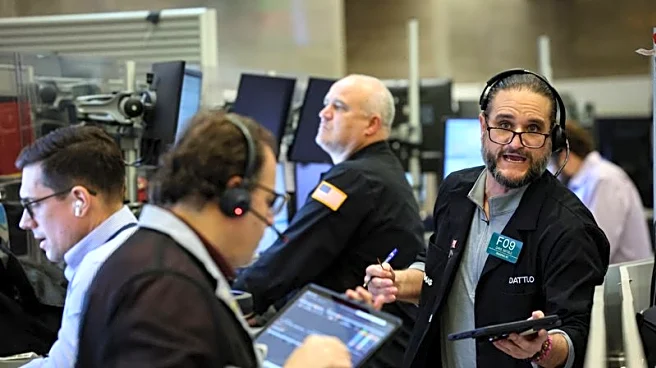
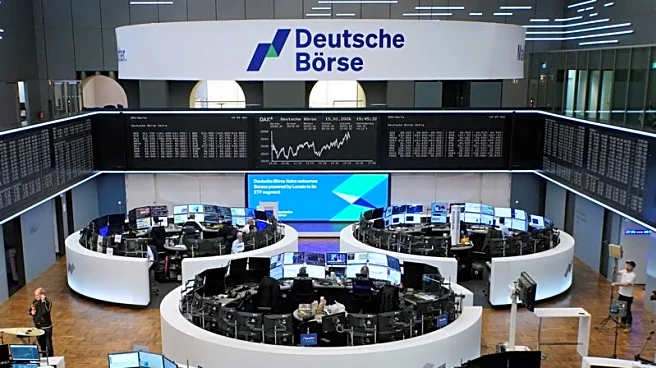
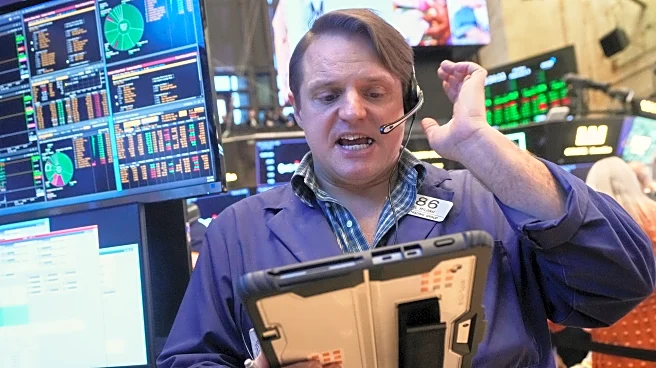
ORLANDO, Florida, Jan 6 (Reuters) - The S&P 500 and many stock indexes around the world clocked fresh highs on Tuesday, propelled by optimism around AI, while copper prices also hit fresh records, as investors brace for a flurry of U.S. jobs data later this week.
More on that below. In my column today I look at one of the motivating factors behind the U.S. military intervention in Venezuela: Washington's desire to maintain the global dominance of the 'petrodollar'.
If you have more
time to read, here are a few articles I recommend to help you make sense of what happened in markets today.
1. Trump offers U.S. oil companies a poisoned chalice inVenezuela: Bousso 2. EXCLUSIVE-Venezuela, U.S. in talks to export Venezuelanoil to U.S., sources say 3. Fed should deliver big rate cuts this year, Miran tellsFox Business 4. China's central bank pledges to cut RRR, interest ratein 2026 5. GRAPHIC-Markets' 2026 watch list: Fed succession,political risk and AI of courseToday's Key Market Moves
* STOCKS: New highs for S&P 500, Dow, Europe, UK, Japan'sTopix, MSCI Asia ex-Japan, MSCI World. * SECTORS/SHARES: Nine of 11 U.S. sectors rise, withmaterials and healthcare up most. Energy -2.5%. Philadelphiasemiconductor index +2.7% to new high as tech leaps. AIG -8%,Tesla -4%, Chevron -4%. * FX: Dollar index +0.3%, Swissie biggest G10 decliner.Chilean peso biggest EM winner, +1%. * BONDS: U.S. yields rise 1-2 bps, euro zone yields fall2-3 bps. 2-year Schatz yield lowest in a month at 2.10%. * COMMODITIES/METALS: Oil -2%, but metals continue to fly- silver, platinum and palladium up ~6%, nickel +10% to fresh18-month peak, copper +2% to new high.Today's Talking Points
* Can AI go up a gear? It can
One might have expected the AI boom that drove Wall Street and world stocks higher in the second half of last year to cool at the start of this year. But it has gone up a gear, renewing the debate around its longevity.
A UBS note on Monday nicely encapsulates the bull case. Generative AI is fueling the largest infrastructure build-out in modern market history - $420 billion in data center investment last year and rising 35% to $570 billion this year, bringing the total since 2022 to $1.4 trillion. That sets the ground for earnings growth to kick in and drive 12% upside for the AI theme, UBS reckons. Too optimistic, or fair?
* A job lot
The next few days could be critical for the U.S. interest rate outlook, with the release of four U.S. employment data reports - private sector ADP jobs and "JOLTS" job openings on Wednesday, weekly jobless claims on Thursday, and non-farm payrolls on Friday.
The job growth figures and unemployment rate on Friday are the most important numbers. Economists expect fairly solid job growth and a dip in the unemployment rate. All told, the labor market picture that emerges will go a long way to determining Fed policy in the coming months.
* Copper-bottomed defense
Investors are shrugging off the U.S. military action in Venezuela and the heightened geopolitical risk that entails - world stocks are hitting record highs, oil and safe-haven gold are up a bit, but the Swiss franc is down. Yet scratch the surface, and "risk-off" - or "war" - trades are emerging.
In three trading days, European defense stocks are up 8%, the iShares aerospace & defense ETF is up 7%, and copper - the industrial metal likely to be lifted more than most by a global wave of defense spending - is soaring to new highs. These markets had a great 2025, but could have an even better 2026.
Trump's Venezuela oil grab revives 'petrodollar' debate
There were likely many motives behind America's capture and arrest of Venezuelan President Nicolas Maduro on Saturday, but one little-discussed factor could be the White House's concerns about the waning global prominence of the "petrodollar."
Venezuela's oil output is currently modest at barely 1 million barrels per day, but its reported reserves of around 300 billion barrels - 17% of the global stock – are the world's largest.
President Donald Trump has made it clear that the U.S. is interested in tapping this enormous potential, stating that he plans to have U.S. energy majors revitalize the Latin American country's flailing oil industry.
Keeping all this future production within the U.S. orbit could impact more than just energy markets, however, as it would create a lot more petrodollars – a tool that has long helped the U.S. maintain its dominance in the global financial system.
RISE AND FALL OF THE PETRODOLLAR
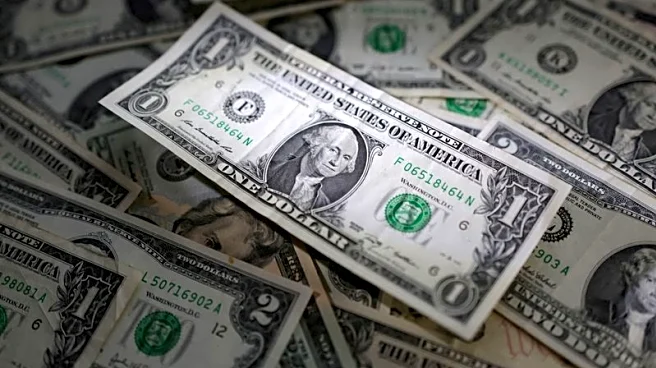
The term "petrodollar" was coined in the mid-1970s when the U.S. and Saudi Arabia agreed that global oil sales would be denominated in dollars, creating a new source of demand for the greenback and cementing U.S. strategic, economic, and political power.
The period between 2002 and mid-2008 - when oil almost reached $150 a barrel – potentially marked the peak of the petrodollar's powers.
At that time, the U.S. was the world's largest importer of crude, enabling oil-producing countries to amass huge trade surpluses, much of which was recycled back into the vast U.S. Treasury market. This put downward pressure on U.S. and therefore, global, bond yields and interest rates.
Fast forward to 2026, and the environment looks very different. Thanks to the shale oil revolution, the U.S. is now the world's largest oil producer and has been a net exporter since 2021.
Meanwhile, many producer nations like Saudi Arabia now use their oil-driven trade surpluses to plug their own widening domestic budget deficits.
Moreover, the rise of China's economic power and new geopolitical rifts have reduced the percentage of the global oil trade denominated in dollars. There are no official figures, but it is estimated that as much as 20% of the world's crude trade is now priced in currencies other than the dollar, such as the euro or Chinese yuan.
The link between the dollar and oil has also shifted.
Analysts at JPMorgan estimate that during the 2005-2013 period, a 1% appreciation of the U.S. trade-weighted dollar reduced the price of Brent crude by about 3%. In the 2014-2022 period, a 1% rise in the dollar reduced the price of Brent by just 0.2%. And last year, the dollar and oil both fell, rather than moving in opposite directions.
So whether one is looking at oil producers' official holdings of Treasuries or oil revenues as a share of global capital flows, it is clear that the power of the petrodollar is on the decline.
TRUMP PUSHES BACK
This mirrors the dollar's slow but steady decline in global status over the past few decades. The greenback's share of foreign currency reserves is currently the lowest in 25 years, and while it remains the preeminent currency of global trade, that position is starting to fray also.
The Trump administration is pushing back, however. While the White House may want the dollar's exchange rate to be lower, it is keen to maintain its dominance in global markets – and the recent events in Venezuela could be part of this wider effort.
Until Trump returned to office almost a year ago, there appeared to be little appetite in Washington to push back against the global tide of geopolitically driven diversification away from the dollar.
But the Trump administration has taken a stronger stance. It is promoting dollar-pegged "stablecoins" to strengthen the dollar's role in digital payments and global finance more broadly. It has also threatened to impose tariffs on countries seeking to develop alternatives to the dollar, most notably the BRICS group of developing nations.
Gaining a degree of control over the world's largest proven oil reserves could be part of this effort, especially as it involves muscling out China and Russia – the Maduro regime's allies - in the process.
"The dollar is still the key currency in the oil market, and the U.S. is trying to preserve this," says Hung Tran, nonresident senior fellow at the Atlantic Council.
Richard Werner, professor of banking and economics at the University of Winchester, agrees that Washington's actions in Venezuela are likely aimed at bolstering the petrodollar system.
Ultimately though, he believes these extreme actions could be seen as a sign of "desperation" that could accelerate the decline of the petrodollar if BRICS nations and others in the "Global South" baulk at Washington's use of military force to maintain currency dominance.
That, of course, remains to be seen.
What could move markets tomorrow?
* Australia inflation (November) * Germany unemployment (December) * Germany retail sales (November) * Euro zone inflation (December, flash) * Canada PMI (December) * U.S. "JOLTS" job openings (November) * U.S. ADP private sector employment (December) * U.S. services ISM (December) * U.S. Federal Reserve Vice Chair for Supervision MichelleBowman speaksWant to receive Trading Day in your inbox every weekday morning? Sign up for my newsletter here.
Opinions expressed are those of the author. They do not reflect the views of Reuters News, which, under the Trust Principles, is committed to integrity, independence, and freedom from bias.
(By Jamie McGeever; Editing by Nia Williams)