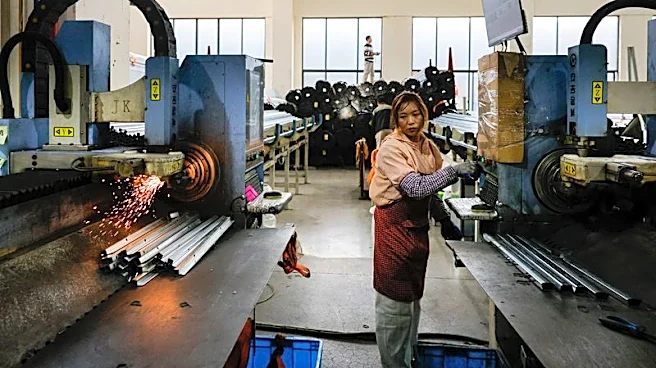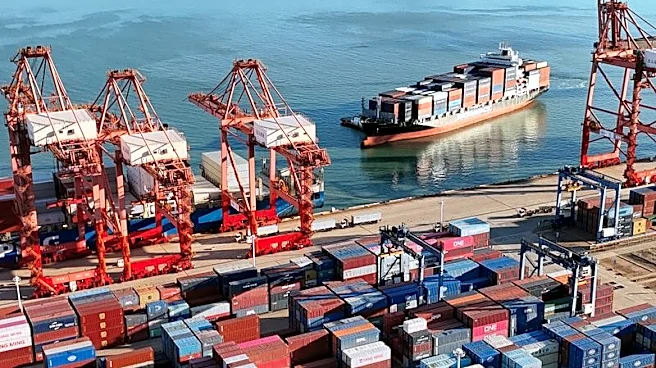

BEIJING, Nov 9 (Reuters) - China's goods exports are expected to have surged by a third in October, a Reuters poll shows, a helpful offset to weak domestic demand even as a year-to-date trade surplus of more
than $1 trillion risks further antagonising trading partners.
The expected 33.5% year-on-year export growth in US dollar terms in the poll is slightly lower than September's 36.3% surge. The trade data will be released on Tuesday.
A global race to expand infrastructure for sophisticated AI models has turbocharged the value of China’s outbound shipments this year.
Imports have also been surging in value terms, with the annual rise in October shipments forecast at 32% to follow September's 31.0% increase.
The median forecast in the Reuters poll is for a trade surplus of $125.8 billion in October, down from $133.53 billion in September but still enough to take the trade gap in the first 10 months of 2026 to more than $1 trillion.
The growing surplus risks intensifying concerns in the European Union, where leaders have called for more forceful measures to balance the bloc's trade with China, as well as keeping trade relations with Washington strained.
The EU reached an agreement with Beijing last month to limit Chinese exports of hybrid vehicles to the bloc over the next few years. But the curb has not taken effect yet and exporters are expected to front-load shipments, which would drive up exports in the near term.
The robust growth in exports has helped China's economy stay on track to reach the government's 4.5-5% annual GDP growth target. However, household consumption remains soft, weighed down by falling property values, poor job security and downbeat sentiment.
Official data last month showed that retail sales rose an annual 1.1% in September, underscoring the imbalance in the economy.
An official survey for factory activity showed that conditions worsened in October for manufacturers from the previous month, with the gauges for new orders and new export orders both showing a contraction.
"The deterioration in new export orders may provide an early warning of a softer AI tech cycle," ANZ analysts said, although other analysts said that the global AI boom would remain buoyant in coming months.
"Key hardware like printed circuit boards, memory chips, and optical transceivers are still facing capacity shortages, which will keep export momentum solid through the rest of the year," said Xu Tianchen, senior economist at the Economist Intelligence Unit.
(Polling by Susobhan Sarkar and Pranoy Krishna in Bengaluru and Jing Wang in Shanghai; Reporting by Yukun Zhang and Ryan Woo; Editing by John Mair)