

By Trevor Hunnicutt and Jasper Ward
WASHINGTON, Jan 27 (Reuters) - President Donald Trump on Tuesday said the United States and South Korea will work out a solution when asked about his surprise Monday announcement that he would increase tariffs on imports from the Asian country to 25%.
"We'll work something out with South Korea," Trump told reporters as he left the White House to give a speech in Iowa. He did not elaborate.
Trump's chief trade negotiator, Jamieson Greer, told Fox Business Network's
"Kudlow" program that he spoke with South Korean officials early Tuesday and would meet with their trade officials in Washington later this week.
"I think that they are getting the message," U.S. Trade Representative Greer said. "We have nothing in particular against Korea. They're an ally. But when it comes to the economics of all of this, it has to be balanced."
Greer said the U.S. trade deficit with South Korea had ballooned to $65 billion during the previous Biden administration and that was "not sustainable and it has to change."
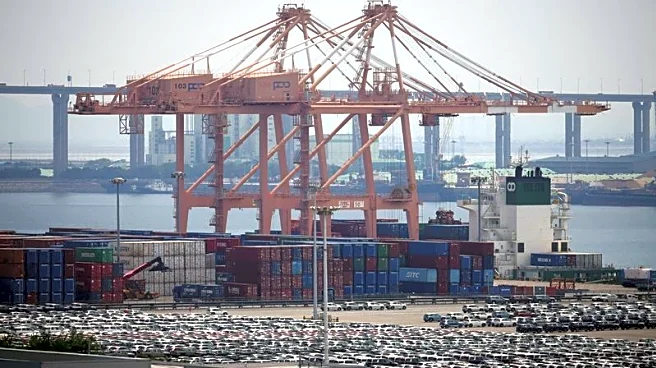
In a social media post on Monday, Trump said he was raising U.S. duties on imports of South Korean autos and other goods because the Asian ally's parliament had not lived up its part of a deal he had reached with its president last year.
The news rattled officials in Seoul who said they were caught by surprise and left them scrambling to find a response to what could be a blow for the export-heavy country.
Greer told Fox Business that the U.S. had reduced its tariff rate on South Korean goods to 15% from the 25% rate initially planned in exchange for Seoul's pledge to invest $350 billion in the United States, allow more U.S. cars into South Korea, and eliminate some non-tariff barriers on agriculture.
"But, in the meantime, they haven't been able to get a bill through to do the investment," Greer said, adding that Seoul had also failed to meet its commitments on agriculture and industry.
"And so it's hard to continue to hold up our end of the bargain while they have not moved forward swiftly enough on their end," he said.
South Korea's parliament is not expected to sit for plenary session until February when members normally vote on bills. Currently five bills that would entact the U.S. investment are pending and ruling Democratic Party members have expressed hope to approve them in February.
Earlier this month, South Korea's Finance Minister Koo Yun-cheol told Reuters the government planned to implement the investment package as soon as possible, while noting that uncertainty over a U.S. Supreme Court ruling on Trump's tariffs expected soon could affect the process.
But highlighting how the timeline may be stretched, he said the planned investment of $350 billion was unlikely to kick off in the first half of 2026, given the weakness in the won.
(Reporting by Trevor Hunnicutt and Jasper Ward in Washington and Jack Kim in Seoul; writing by Andrea Shalal; Editing by Chris Reese, Franklin Paul and Michael Perry)