




By Karen Lema and Nestor Corrales
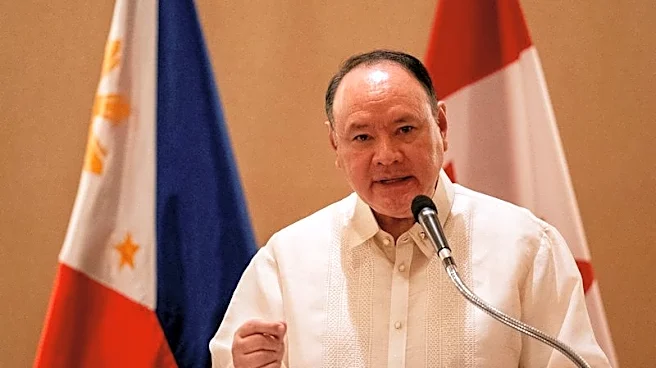
MANILA, April 28 (Reuters) - The Philippines is not worried about any reduction in U.S. deterrence capabilities in the Indo-Pacific due to the war in the Middle East, its defence secretary said on Tuesday, although he warned China could try and seize any perceived opening.
Gilberto Teodoro's comments came in an interview with
Reuters amid annual joint military drills with the United States
that have drawn the largest ever number of participating countries, including
Japanese combat troops for the first time.
China's recent actions in the South China Sea and the Taiwan
Strait were "not surprising", Teodoro added, saying Beijing
looked to take advantage when it thought rival powers were
preoccupied elsewhere.
China has recently increased its naval presence around Taiwan, including the transit of an aircraft carrier through the strait. It also installed a barrier this month at the mouth of the Scarborough shoal in the South China Sea, according to satellite images reviewed by Reuters.
Manila and Beijing have been locked in a series of maritime confrontations in the South China Sea in recent years, which China claims almost entirely as its own despite a 2016 arbitral ruling that invalidated those claims.
"It is not surprising that any opportunity they see,
perceived opportunity, or with a perceived weakness or a
perceived opening, they will take advantage," Teodoro said.
Teodoro said he had full confidence in the Mutual Defence Treaty, the long‑standing security pact between Manila and Washington, and was not worried by concerns that the Iran war could weaken U.S. strategic bandwidth in Asia.
"I'm not concerned at all about reduced deterrence," he said, pointing to the Balikatan military exercises as a sign of Washington's commitment.
China has previously criticised the joint military exercises conducted by the Philippines and its allies, saying they raise regional tensions. Its embassy in Manila did not immediately respond to a request for comment on Teodoro's remarks.
Teodoro said the expanded participation in Balikatan reflects Manila's broader push to build defence resilience through a network of like‑minded partners, in the face of China's increasingly assertive stance in the region.
The Philippines and Japan are discussing a potential acquisition of frigates at both the secretary and ministerial levels, Teodoro said, adding that could be raised during upcoming talks with Japanese Defence Minister Shinjiro Koizumi, who is due to visit next week to observe the ongoing exercises.
Teodoro said the Philippines will take advantage of Japan’s decision to scrap long‑standing restrictions on arms exports, a policy shift that broadens Manila's access to defence equipment at a time of mounting security challenges in the region.
"The Japanese have a track record of affordable, high-quality equipment, which I do not see why they cannot extend to the defence space," Teodoro said. "Since this space is opening up, we're very excited."
Japan has scrapped restrictions on overseas arms sales, opening the way for exports of warships, missiles and other weapon. The move has been welcomed by several U.S. allies as President Donald Trump wavers on security commitments to allies and the wars in Iran and Ukraine strain U.S. weapons supplies.
(Reporting by Karen Lema and Nestor Corrales; Editing by John Mair and Raju Gopalakrishnan)