
By Jessica Donati and Clement Bonnerot
Feb 10 (Reuters) - Blackwater founder Erik Prince deployed a private security force to operate drones and help Democratic Republic of Congo's army secure the strategic
city of Uvira against Rwanda-backed rebels, four people briefed on the mission said.
The AFC/M23 rebels briefly seized the city on the border with Burundi in December in a major blow to ongoing U.S. and Qatar-backed peace negotiations. They withdrew after Washington threatened to retaliate.
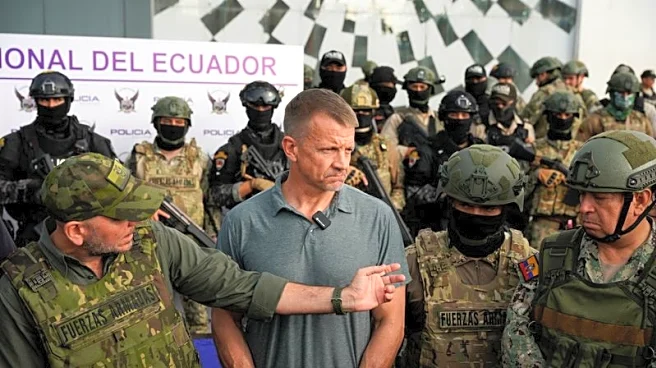
Prince, a supporter of U.S. President Donald Trump and who founded the now defunct private security firm Blackwater, had been hired by the government in Kinshasa to help secure and improve tax revenue collection from Congo's vast mineral reserves.
However, the operation to help elite forces recapture Uvira from AFC/M23 rebels is the first known involvement of Prince's private security forces on the frontline in Congo, widening his role in the decades-long conflict.
A spokesperson for Prince declined to comment. The Congolese presidency and a local army spokesperson did not respond to queries.
US OFFERS HELP IN EXCHANGE FOR MINERALS ACCESS
One of the sources, a senior security official in Congo, said the presence of U.S.-linked contractors would likely act as a deterrent to AFC/M23 forces, which may be unwilling to risk direct confrontation with Prince's personnel.
The U.S. has offered Congo support brokering an end to the conflict in return for access to the nation's critical mineral resources.
While it is not clear whether the involvement of Prince on Congo's frontlines was endorsed by Washington, the operation to help the Kinshasa government retake Uvira followed U.S. calls for the rebels to withdraw.
The U.S. State Department said it did not hold any contracts with Prince or any of his companies.
The Congolese security official said the operation is "in line with the minerals-for-security deal".
Prince's team in Congo deployed to Uvira at Kinshasa's request, one of the sources said, to bolster their efforts at a critical time. The team has since withdrawn and returned to its primary mission, which is improving revenue collection from mining.
“They needed help recapturing Uvira and pulled in every resource they could. Focus is back on the tax police project now,” said the person briefed on the operation.
Another source said Prince's team may continue to deploy to the frontline when requested by Kinshasa.
One of the sources said Prince’s contractors provided drone support to Congolese special operations forces and the army against M23 rebels in Uvira and the South Kivu highlands. The sources declined to be named due to the sensitivity of the matter.
ISRAELIS IN CONGO WITH A TRAINING MANDATE
Prince's contractors operated in coordination with Israeli advisers who were involved in training two Congolese special forces battalions on day and night operations, according to a fifth source briefed on the operation.
"Their mandate (the Israelis) is training only," one of them said, without elaborating further on why the Israelis had joined the operation.
The Israeli embassy in Luanda, which covers Congo, and the Israeli Foreign Ministry did not respond to requests for comment.
Fighting in the decades-long conflict flared early last year, with M23 fighters making rapid gains in the east, which is rich in tantalum, gold, lithium and other minerals.
The United Nations and Western powers say Rwanda backs M23, even exercising command and control over the group, though Rwanda denies this.
Rwanda and Congo signed a U.S.-brokered peace agreement in June last year. However, the accord did not involve the AFC/M23.
Congo's conflict is rooted in the 1994 genocide in Rwanda, when remnants of a Hutu militia that slaughtered over a million mostly Tutsi people fled across the border, chased by Tutsi-led Rwandan forces. Rwanda denies having troops in Congo.
(Reporting by Jessica Donati and Clement Bonnerot; Editing by Silvia Aloisi and Sharon Singleton)