





By Jiaxing Li and Ankur Banerjee
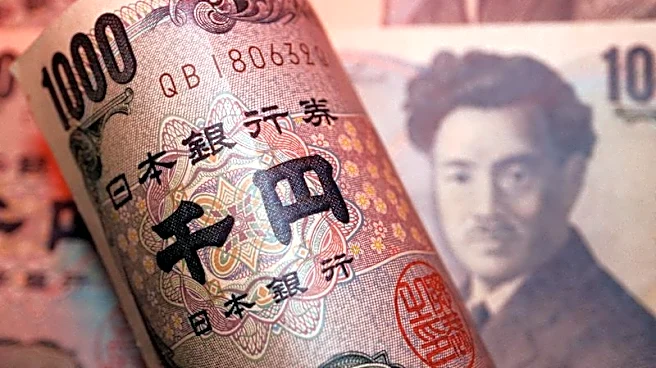
HONG KONG, July 31 (Reuters) - The yen stayed under pressure on Friday after the Bank of Japan held rates steady, paring some of the sharp gains sparked by coordinated intervention overnight as markets tested Tokyo's resolve to support the sagging currency.
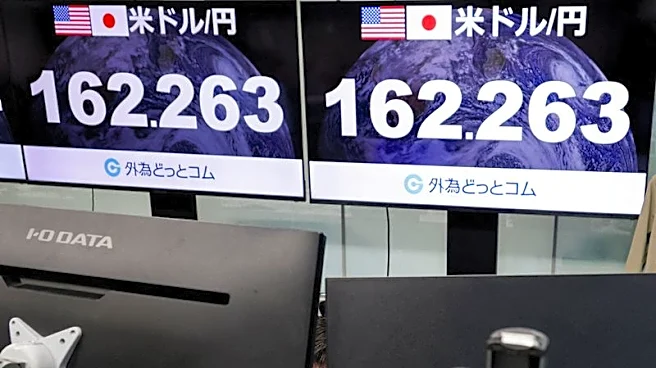
The dollar last traded 0.75% stronger at 160.670 yen, after a 2.4% fall in the previous session in its biggest one-day drop since January 2023.
The BOJ kept short-term interest rates steady at 1% in a widely expected
move after a hike to a 31-year high last month, but warned for the first time that underlying inflation could exceed its target, signalling further rate hikes.
Ahead of the rate decision, Japan conducted yen-buying, dollar-selling market intervention in the New York session overnight, a market source told Reuters, pulling the currency away from four-decade lows but failing to give it a sustained boost.
Tokyo was also receiving support from the U.S. that "goes beyond psychological support", Japan's top foreign exchange diplomat said on Friday.
Nikkei reported U.S. authorities conducted rate checks. The New York Federal Reserve declined to comment.
"A combination of intervention risk and a potentially accelerated BOJ normalization path should place a soft cap on further yen weakness, even if rate differentials continue to dominate near-term trading," said Masahiko Loo, senior fixed-income strategist at State Street Investment Management.
The overnight move showed policymakers remain uncomfortable with excessive yen weakness, he said, adding that the next major yen move may ultimately be higher.
In a rare coordinated move, South Korea also conducted dollar-selling intervention on Thursday to support its currency, a market source told Reuters.
The won rose to a nine-month high before paring some gains, last down roughly 1% to stand at 1,438.1 against the dollar.
BOJ TAKES THE SPOTLIGHT
The BOJ highlighted inflationary pressures from robust global AI demand and said concern over the Middle East conflict was receding, underscoring its focus on inflation risks that could warrant higher rates.
The language in its latest quarterly outlook report was stronger than that used in April, and investors now await BOJ Governor Kazuo Ueda's press conference at 0630 GMT for more cues.
Japan's slow pace of rate hikes has been blamed for pushing the yen to 40-year lows, and most analysts polled by Reuters expect the BOJ to raise rates again to 1.25% by year-end.
Speculators have amassed large bearish bets on the yen, with weekly data from a U.S. regulator showing net short positions worth $11.65 billion, near the highest in two years.
If the BOJ was reluctant to materially speed up tightening, the direction of the yen remains at the mercy of U.S. forces more than Japan-specific ones, said Kerry Craig, global market strategist at J.P. Morgan Asset Management.
"Defending foreign currencies through intervention might spark bursts of yen strength, but this on its own is unlikely to set the currency onto a sustained path higher," he said.
The BOJ meeting followed the U.S. Federal Reserve's decision to leave interest rates unchanged, which bruised the dollar as traders questioned whether the Fed's new chair was serious about containing inflation.
That put the dollar on the defensive. The U.S. dollar index, which tracks the currency against six major peers, was a touch higher at 100.22 after the previous session's fall of 0.8%.
It was heading for a weekly drop of 1.2% and a loss of 0.9% for the month.
The euro stood at $1.1509, down 0.18% so far in Asia after the previous session's six-week high. Sterling was flat at $1.3446.
The Aussie and Kiwi dollar were little changed at $0.7030 and $0.5868, respectively.
(Reporting by Jiaxing Li in Hong Kong and Ankur Banerjee in Singapore; Editing by Kate Mayberry, Clarence Fernandez and Jamie Freed)