


By Nora Buli and Gwladys Fouche
OSLO, Oct 6 (Reuters) - The Nobel Peace Prize committee is closely watching the reshaping of a world order in turmoil, and those fostering new ways of cooperating that match the award's goals, its secretary says.
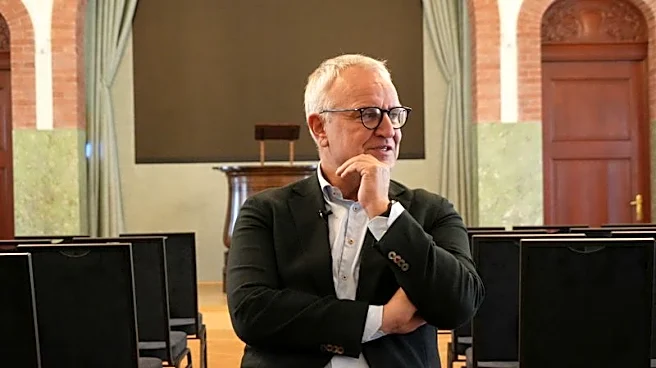
Kristian Berg Harpviken, secretary of the five-member Norwegian Nobel Committee, prepares its dossiers and joins the deliberations but does not vote. This year's announcement is on Friday.
Speaking in general terms about the committee's work in an interview on
Monday, Harpviken said it was closely following the changes in the international order.
"We know what we're leaving behind, we don't know how much of it will survive, and in what form, and we certainly don't know what will come," he said.
"That is something that the committee, of course, takes very seriously in its discussions, also because some of the trends we are seeing internationally are trends that are threatening to many of the values that the Nobel Peace Prize has upheld throughout its history."
Created by Swedish industrialist Alfred Nobel in 1895 in his will, the Peace Prize goes to the person "who has done the most or best to advance fellowship among nations, the abolition or reduction of standing armies, and the establishment and promotion of peace congresses".
Asked whether the committee could at some stage name a laureate concerned with how this new world order should look, Harpviken said:
"Of course, it's clear that people who are able to, within the transition period we are now seeing, start to stake out new institutions, new initiatives, new ways of working, that would be in harmony with the very objectives that Alfred Nobel defined in his will.
"Because, ultimately, that is of course the yardstick for what the committee does. That would obviously be something that the committee would be looking for."
The fact that the world is in upheaval does not mean that there is a want of candidates, or that the Peace Prize is losing its relevance, Harpviken said, adding:
"I'm not worried about the prize, but I am worried about where the world is heading."
(Reporting by Nora Buli and Gwladys Fouche in Oslo; Editing by Kevin Liffey)