



By Jihoon Lee and Yena Park
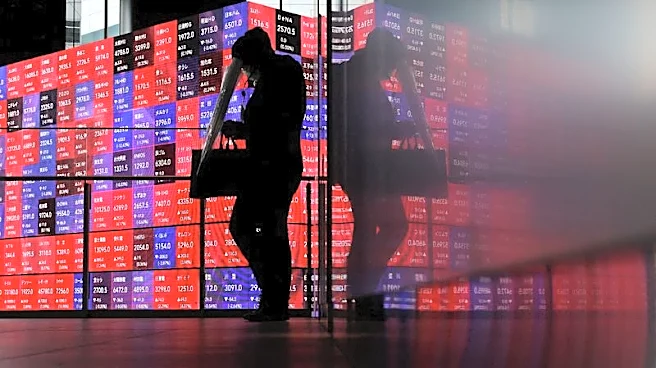
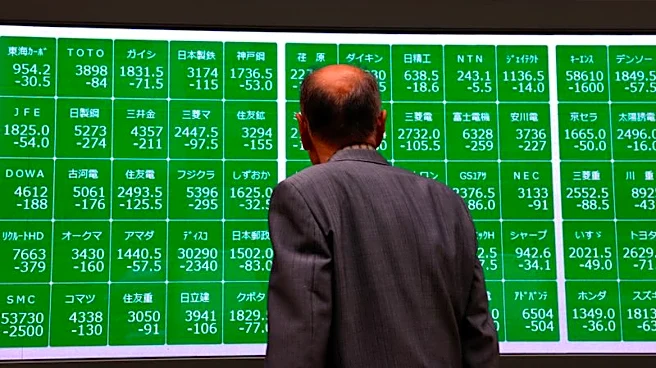
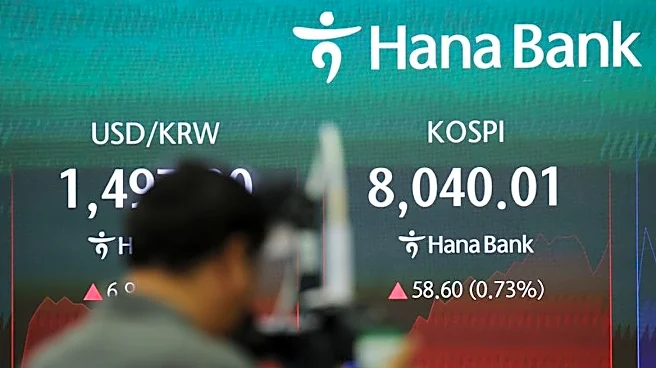
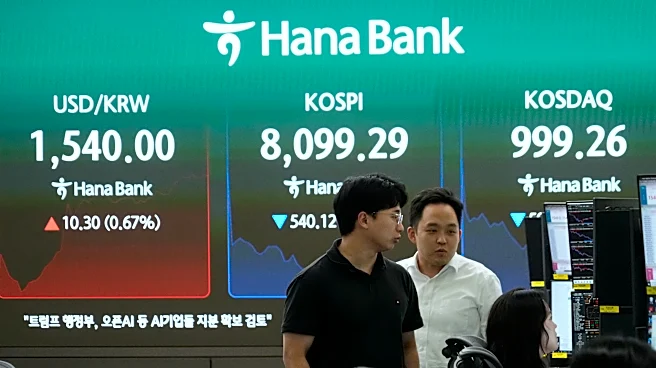
SEOUL, June 8 (Reuters) - South Korea's stock benchmark plunged nearly 9% on Monday, tripping circuit breakers, after robust U.S. jobs data lifted bets on a Federal Reserve rate hike and unleashed a selloff in the tech‑heavy market that had powered the broader AI rally.
The KOSPI fell as much as 8.8% in early trade, as chip heavyweights Samsung Electronics and SK Hynix dropped more than 10% each.
The two chipmakers have been the driving force behind the index's world‑beating
surge, buoyed by record profits. Their market capitalisations this year alone have jumped more than 150% and 200%, respectively, now accounting for over half of the benchmark and propelling them into the $1 trillion club.
Circuit breakers were activated at 0003 GMT, halting trading for 20 minutes for the first time in three months. It was the third time they were triggered this year, and the ninth in history.
Another "sidecar" trading curb was activated as soon as circuit breakers were lifted, cutting the KOSPI's losses to 5.9% as of 0448 GMT.
The won was up 0.7% at 1,548.9 per dollar, rebounding from Friday's 1,615.0 - its weakest since March 2009 - after authorities convened an emergency meeting and vowed firm action against speculative trading.
Foreign exchange officials on Monday renewed their warning, with traders suspecting authorities to be conducting dollar-selling intervention to cap the won's losses. "However, we will have to see if the 1,550 level will be defended," one trader said.
The selloff in stocks followed a torrid session on Wall Street on Friday. The Nasdaq fell 4.2% after strong payrolls data killed any hopes of further interest rate cuts, while the Philadelphia Semiconductor Index slumped 10% and iShares MSCI South Korea ETF plunged 14%.
"A surprise in U.S. employment data triggered bond yield rises and provided an excuse for correction in an overheated market amid accumulated pressure from the surge in semiconductor stocks," said Han Ji-young, an analyst at Kiwoom Securities.
"Increased volatility is inevitable, but it is unlikely that the rout will go on for several days, given that the KOSPI's valuation pressure has been lowered by recent correction and earnings momentum remains robust for semiconductor stocks," Han said.
In a press conference marking his first year in office on Monday, President Lee Jae Myung, who has rolled out a range of policies to boost the domestic stock market since taking office in June 2025, said the market was "still undervalued."
Lee described the current exchange rate as temporary and abnormal, pointing to foreign investors selling local stocks for portfolio rebalancing as the primary factor weighing on the won in the near term.
Shares of SK Hynix, a major supplier of advanced chips to Nvidia, cut losses to 3.8%, after the U.S. AI chipmaker's CEO, Jensen Huang, said the company remains its "biggest partner" while unveiling new deals during his trip to South Korea.
E-commerce firm Naver was a rare outlier among index heavyweights, rising 14.1% on a deal with Nvidia.
Foreigners were net sellers of local shares worth 1.2 trillion won ($773.89 million), extending their selloff to 21 consecutive sessions.
Despite Monday's losses, the KOSPI is up 83% year-to-date. In 2025, it rose 76% for its biggest gain since 1999 and the top performance among major global markets last year.
($1 = 1,552.1000 won)
(Reporting by Jihoon Lee, Yena Park and Joyce Lee; Editing by Tom Hogue and Shri Navaratnam)