



By Dietrich Knauth and Diana Novak Jones
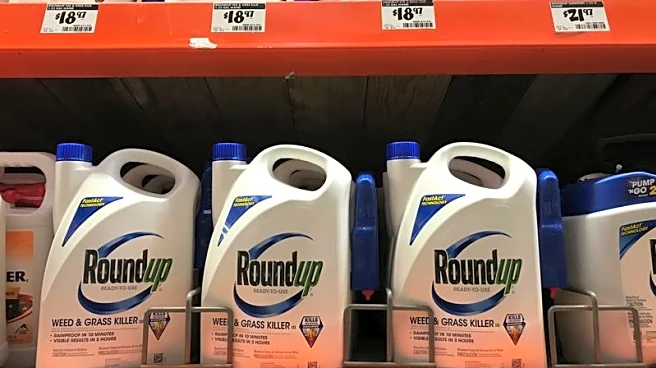
Feb 19 (Reuters) - Bayer’s Monsanto unit has proposed a $7.25 billion nationwide class settlement to resolve both current and future lawsuits alleging that its Roundup weedkiller caused cancer, billing it as a long-awaited path toward ending years of litigation. Here's a look at whether it could deliver the legal certainty Bayer needs.
WHAT IS BAYER PROPOSING?
The settlement, which still needs a court's approval, would make payments over up to 21 years, funding
a long-term claims program for people who allege Roundup exposure caused non-Hodgkin lymphoma, an often-fatal cancer of the lymphatic system.
Individual payments would vary depending on the age of the person, their exposure and the severity of their cancer. Some patients with occupational exposure diagnosed with aggressive non-Hodgkin lymphoma before age 60 could receive an average of $165,000.
Patients older than 78 with a qualifying diagnosis would receive $10,000. The settlement would cover the majority of the existing 65,000 claims Bayer faces in state and federal courts and would also compensate people who have been exposed to Roundup and develop non-Hodgkin lymphoma in the future.
HOW MANY PLAINTIFFS SUPPORT THE DEAL?
It's not clear yet. Bayer can terminate the deal if too few plaintiffs sign on, but the company won't say how many can opt out before the agreement is canceled. Bayer says numerous law firms representing Roundup plaintiffs support the settlement, but it has not disclosed how many, leaving open the question of whether the proposed settlement will have enough support to win court approval.
The firms that negotiated the settlement are seeking to serve as representatives for all current and future claimants, rather than committing specific numbers of their own clients in support of the deal. Some lawyers familiar with the litigation said Bayer's strategy of trying to supersede existing cases by creating a new class action instead of addressing those claims directly could draw objections from people with claims or the judge.
Many law firms with large numbers of clients are still reviewing the deal, and at least one has signaled opposition to the settlement offer.
WHAT DOES THE 21-YEAR CLAIMS PROGRAM MEAN FOR LEGAL CERTAINTY?
The lengthy period is designed to sweep in future cancer claims and offer payouts to people who used Roundup before February 17, 2026, and develop cancer. The company did not remove glyphosate — the active ingredient in Roundup that plaintiffs allege is carcinogenic — from its residential products until 2023. The latency period for non-Hodgkin lymphoma may be 10 years or more, so new claims could arise for several years, according to the settlement.
The settlement requires annual notice and advertising to alert future claimants, who will have two years from their cancer diagnosis to decide whether to participate.
Bayer is betting that future claimants will opt into the settlement rather than take the risk of litigating. But because they could opt out, Bayer could still face future jury trials—and past verdicts show the stakes are high. The company has prevailed in a series of Roundup trials, but plaintiffs have won several large judgments, including a $2.1 billion award by a Georgia jury in 2025 and a $332 million California verdict in 2023.
WHAT ROLE DOES THE US SUPREME COURT PLAY?
Bayer has a case before the U.S. Supreme Court slated for oral arguments on April 27 that is a key part of the company's effort to defeat these claims. The court will decide whether Bayer can be sued under state law for failing to warn about the alleged cancer risks associated with Roundup, when federal regulations do not require a warning label on the product.
A ruling in Bayer's favor could cut off thousands of claims — worth potentially billions in damages — brought under a failure-to-warn theory that underpins most of the current litigation. But even if the Supreme Court cuts off that route, plaintiffs could still attempt to pursue other theories of liability, making the settlement necessary to cover other potential exposures.
DOES THE PROPOSED DEAL GUARANTEE CLOSURE?
No, the deal could fall apart if it does not get enough support, or the court could reject it. Even if it is finalized, there is no way to force all claimants to opt in. Current and future plaintiffs can opt out of the settlement if they choose and pursue their claims on their own.
If the settlement is approved and the U.S. Supreme Court sides with the company, plaintiffs would face increased pressure to resolve their claims. The settlement could offer a quicker payout, especially if the Supreme Court has made it more difficult to sue.
(Reporting by Dietrich Knauth in New York and Diana Jones in Chicago, Editing by Alexia Garamfalvi and Lisa Shumaker)