
By Greg Bensinger, Diana Novak Jones and Jonathan Stempel
OAKLAND, California, Aug 25 (Reuters) - The top executive at Instagram denied encouraging employees or knowing of a company policy to keep negative
information away from the public, testifying at a trial on Tuesday over whether Meta Platforms designed Instagram and Facebook to addict children without proper regard for their safety.
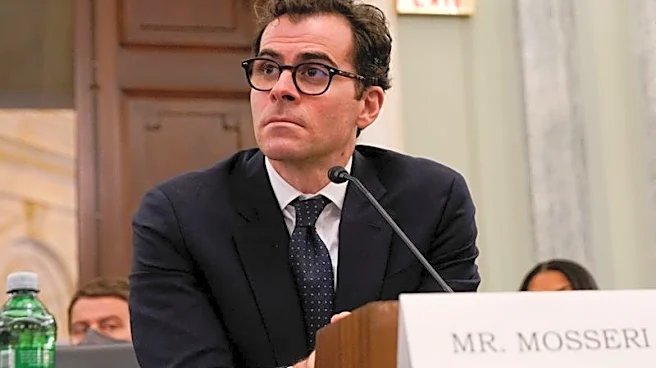
Adam Mosseri, the head of Instagram since 2018, is a central witness in the lawsuit by 29 U.S. states, in what experts call the biggest legal test yet of social media's effects on young users.
Four of the states — California, Colorado, Kentucky and New Jersey — have accused Meta of designing the platforms to hook young users, fueling anxiety, depression and even suicide, while misleading consumers about their safety.
All 29 states say Meta violated federal law by improperly collecting and using personal data of children under 13 while they used its platforms.
The states have indicated they could seek nearly $200 billion in civil penalties.
On the trial's fourth day, Mosseri rejected a suggestion by Jason Slothouber, a lawyer for Colorado, that he knew of an alleged Meta policy for lawyers to review internal presentations to scrub information from them, or shield him from problems.
Mosseri said it was important to the public that any information from Instagram about children's safety be high-quality, and backed by experts.
"I am not trying to encourage my team to hide anything," Mosseri said. "I want to understand how things work. I can't think of any time that I've encouraged people to bring less information to me."
Mosseri also said Instagram took greater care with sensitive research following the 2021 leak of the so-called Facebook Files by Frances Haugen, a whistleblower who said Meta knew its products were unsafe for children but did nothing in order to pursue higher profit. Meta restricted access to sensitive research about teenagers to a single team, Mosseri said.
“We no longer gave access to people who didn't work on those projects."
Meta has rejected accusations it sought to addict children in pursuit of profit, and said its research showed no clear link between adolescents' social media use and a lack of well-being.
DESIGN CHIEF REVEALS SAFETY DATA REMOVAL
The trial in the Oakland, California, federal court is expected to continue through much of September.
Jurors are expected to issue an advisory verdict. U.S. District Judge Yvonne Gonzalez Rogers will decide whether Meta is liable and, if so, determine any civil penalties and changes to Facebook and Instagram.
Prior to Mosseri's testimony, Instagram's director of product design, Francesco Fogu, testified about a presentation on teenagers' safety that his team prepared in 2023 for Instagram leadership.
Under questioning from Slothouber, Fogu acknowledged the removal of data from a slide showing that teenage Instagram users saw 1.5 times more bullying, suicide, hate, nudity and violent content than adult users.
He also said Instagram knew that fewer people would use its "take a break" feature by not making it the default setting.
In February, Mosseri testified in a Los Angeles trial where a jury ordered Meta and Alphabet's Google to pay $6 million to a 20-year-old woman who said she became addicted to Instagram and YouTube as a child. Jurors found Meta and Google negligent in designing their platforms.
Mosseri disputed suggestions that Instagram did not care about children's safety, and defended its design choices against accusations by company insiders that its features were harmful.
He said Instagram's products and policies evolve, and "we try to focus on the most important issues."
Earlier this month, a New Mexico judge ordered Meta to pay $567 million to address teenagers' mental health after that state's attorney general called its platforms a public nuisance.
Tennessee is also suing Meta, raising similar claims about Instagram, in a case on trial in Nashville.
(Reporting by Diana Novak Jones in Chicago, Greg Bensinger in Oakland, California and Jonathan Stempel in New York; Additional reporting by Nathan Frandino in Oakland and Deborah Sophia in Bengaluru; Editing by Noeleen Walder and Matthew Lewis)