


By Amina Ismail and James Mackenzie
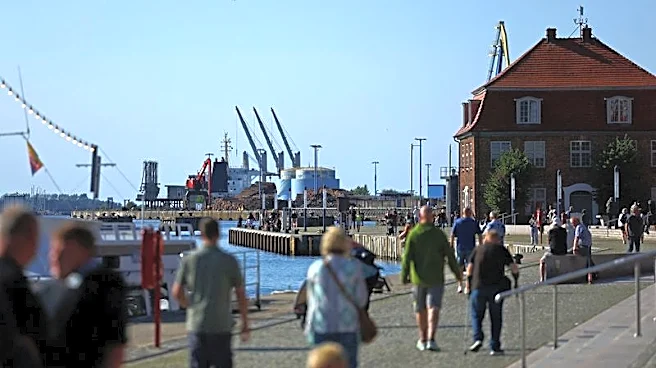
ROSTOCK, Germany, Sept 19 (Reuters) - Shahd Najeeb still remembers the trauma of fleeing Islamic State fighters during Syria's civil war. More than a decade after finding refuge in Germany, she now fears she may no longer be welcome there.
"When I think about the time we left Syria, I still don't know how we managed to get through it," she told Reuters in her home in Rostock, on Germany's Baltic coast. "It was like a nightmare."
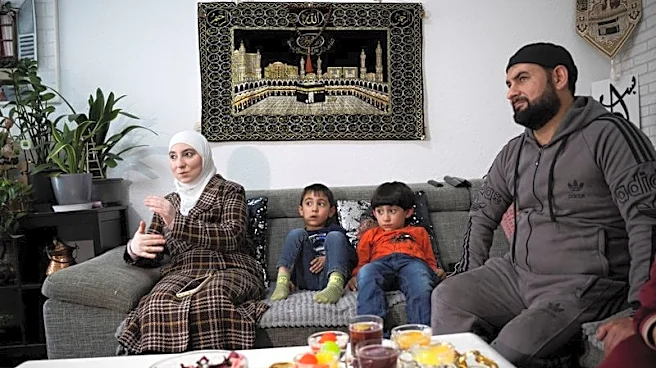
Najeeb and her husband, Mahmoud Hmouech,
fled their home in Deir al-Zor in eastern Syria and rebuilt their lives in Germany, where he works in a barber shop and she serves meals in local schools. They have two young children.
"We are grateful to the German people for welcoming us and giving us peace and security," Hmouech said. "The work we do is a small way of showing our gratitude."
They are among more than 900,000 Syrians living in Germany, most of whom arrived as asylum seekers during the civil war.
But as the far-right Alternative for Germany (AfD) gains support and migration returns to the centre of political debate, migrants say hostility towards foreigners is growing.
Reuters spoke to 20 people of migrant background in Rostock and the nearby city of Schwerin, many of whom have become German citizens and have lived in Germany for years.
Most said they had encountered more anti-immigrant abuse in recent years, ranging from muttered remarks to demands that they return to their countries of origin. One woman said a neighbour poured foul-smelling water on her from a balcony.
Their concerns come as the AfD gains momentum across eastern Germany.
In Najeeb and Hmouech's home state of Mecklenburg-Western Pomerania, in the formerly communist east, opinion polls suggest the AfD is set to become the biggest party in an election on Sunday.
Earlier this month, the party, which wants to restrict immigration and talks about "remigration" - or sending foreigners back to their home countries - won its first major regional election in Saxony-Anhalt, another eastern state.
Several interviewees, including people working in healthcare, tourism, education and food services, said they would consider leaving Rostock or Schwerin if the climate continued to worsen.
'THIS COUNTRY IS FOR GERMANS'
Sitting in the family's small apartment in northern Rostock, where their children's drawings cover one wall and toys are neatly stacked in corners of the living room, Najeeb spoke as her children, aged 6 and 4, played nearby.
Najeeb, who studied physics in Baghdad and later worked as a jewellery designer in Syria, recalled stopping at a grocery store after collecting her children from school when, she said, an elderly man in a wheelchair shouted that she did not belong in Germany.
"This country is for Germans," he yelled.
"The pain I experienced in Rostock is a new kind of pain that I have never felt before," Najeeb said.
"You feel the injustice because you have done nothing wrong. I worked hard to build a life for myself and then someone comes along and treats you like garbage," she said, her voice cracking.
She recalled her son asking: "Mama, why is he insulting you? What did you do to him?" Unsure how to explain, she told him the man was perhaps unwell.
LABOUR FORCE
The AfD began as a eurosceptic party in 2013 and its anti-immigrant tone sharpened markedly after former Chancellor Angela Merkel's decision in 2015 to open Germany's borders temporarily, admitting around one million migrants and refugees, around a third of them Syrians fleeing the civil war.
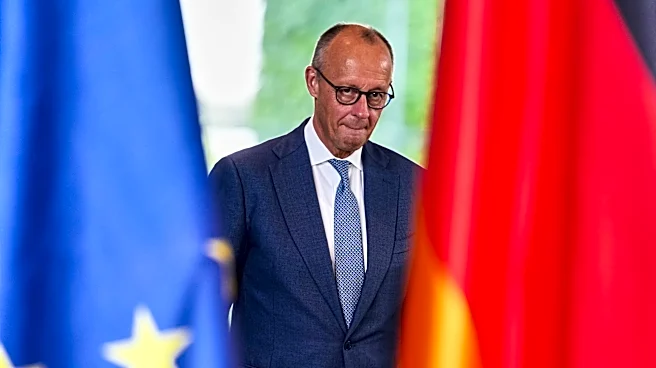
Since then, it has grown from a fringe movement into Germany's most popular party, leading Chancellor Friedrich Merz's conservatives in national polls.
Leif-Erik Holm, the AfD's main candidate in Sunday's election, says he has "absolutely no objection" to immigration by skilled workers. He says those who should be deported are the more than 250,000 foreigners who have no legal right to stay in Germany.
But critics say the broader problem is the atmosphere created by rhetoric they say targets foreigners in general.
During a televised debate on Wednesday, Social Democrat state premier Manuela Schwesig accused the AfD of "causing widespread fear with its statements on remigration and workers from different cultural backgrounds."
"I think it's terrible that people who work here, who make their contribution and pay their taxes and social security contributions, are afraid and don't feel at ease," she said.
During the debate, she and Holm took a question from a design engineer concerned at the risk of losing a valued Moroccan draughtsman because of the racist insults he said he encountered regularly on the street.
Holm said it was "naturally a shame that there's such a mood". But he blamed the government for allowing illegal immigration and failing to deport more than a fraction of foreigners formally required to leave the country.
The debate carries economic implications as well.
Around 50,000 people with a migration background work in Mecklenburg-Western Pomerania. Economists have warned that like other eastern states with low birth rates and an ageing population, it will need more skilled workers.
According to data from Germany's labour office, around 316,000 Syrian nationals - not including Syrians who have acquired German nationality - work in Germany, most in full-time jobs that pay social security contributions.
Their unemployment rate is above 30%, but data show the longer people stay, the more likely they are to find work. Figures from 2023 indicate that among those who have been in Germany for seven years or longer, more than 60% have a job.
Many Syrians say they hope to return home if conditions improve. Others, including Najeeb and Hmouech, increasingly see their future in Germany.
Whether the AfD's rise changes that calculation remains an open question.
Hmouech says he does not want his children to grow up feeling rejected by the society they call home.
"At the end of the day, family comes first," he said.
(Reporting by Amina Ismail in Rostock and Schwerin, Oliver Denzer in Rostock and James Mackenzie in Berlin, Editing by Ros Russell)