



BEIJING, Sept 29 (Reuters) - China's factory activity likely swung back to growth in September after two months of contraction, a Reuters poll showed on Tuesday, though a cabinet meeting on Monday underscored the need for further policy support to shore up the economy.
The official manufacturing purchasing managers' index (PMI) is expected to rise to 50.1 in September from 49.8 the previous month, ending two straight months of contraction, according to a Reuters poll of 29 economists.
The 50-point
mark separates expansion from contraction.
The reading, which is based on company surveys, will be released by the National Bureau of Statistics on Wednesday.
The private RatingDog manufacturing PMI, compiled by S&P Global, is also due on Wednesday and is likely to edge up to 51.6 from 51.5 in August, according to the Reuters poll.
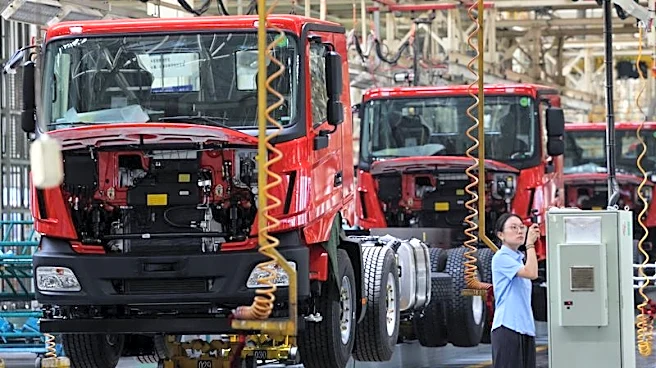
The improvement reflects expectations that China's vast manufacturing sector recovered from August, when heavy rain and typhoons disrupted factory operations in some regions.
Advanced manufacturing and exports have outperformed other parts of the economy this year. China is due to release third-quarter gross domestic product data and September activity indicators later this month, with officials saying the economy remains on track to meet its annual growth target of 4.5% to 5%.
However, recent retail sales and investment data have pointed to weakening momentum. Households have remained cautious about spending amid uncertain income prospects and concerns about the impact of artificial intelligence on employment.
A State Council meeting chaired by Premier Li Qiang on Monday said the government will "launch a package of pragmatic and effective incremental policy measures" to address rising economic strains, signalling greater urgency to shore up growth.
"[We will] study and roll out measures to stabilise the property market, promote employment and increase income," state media Xinhua reported, citing the meeting.
"Incremental policy measures laid out by Premier Li pointed to targeted and measured easing — primarily through fiscal and credit channels — rather than broad-based, significant stimulus," said Lisheng Wang, an economist at Goldman Sachs, in a note.
The investment bank expected the Ministry of Finance to approve an additional 500 billion yuan ($74.57 billion) or more in local government bond issuance quotas in coming weeks, but maintained a forecast of no policy rate cuts for the remainder of 2026, given narrow bank net interest margins.
Policymakers are grappling with tepid domestic demand and a property downturn. But strong exports have continued to provide an important buffer for the world's second-largest economy.
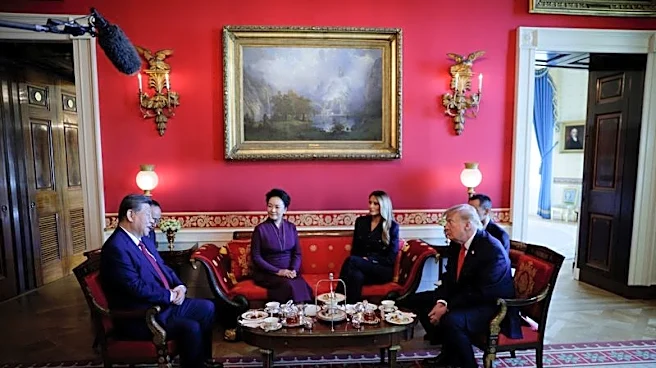
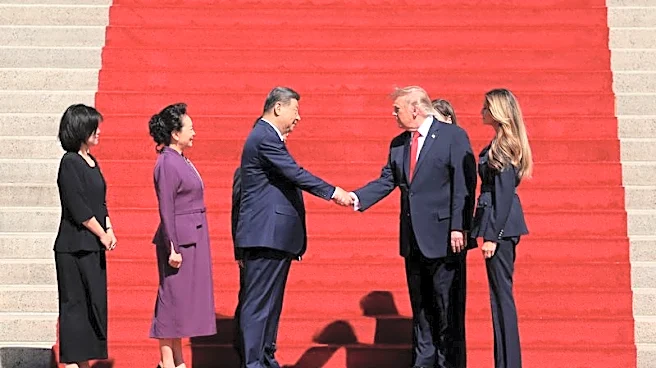
China and the United States agreed this week to lower tariffs on $60 billion of each other's goods, covering products ranging from US corn and cosmetics to Chinese toys and household appliances.
Analysts said, however, that the limited agreement was unlikely to fundamentally alter the countries' fraught trade relationship.
($1 = 6.7051 Chinese yuan renminbi)
(Polling by Susobhan Sarkar in Bengaluru and Jing Wang in Shanghai; Reporting by Ellen Zhang and Kevin Yao; Editing by Sonali Paul)