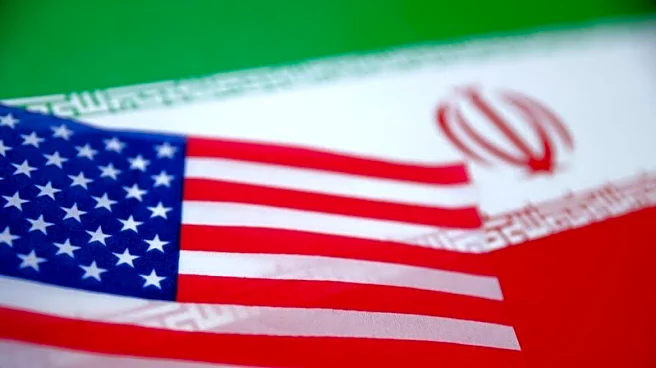


Dec 23 (Reuters) - The United States and Iran traded barbs at the United Nations Security Council on Tuesday over conditions for reviving nuclear talks, with the U.S. saying it remains ready for direct negotiations and Iran rejecting Washington's terms.
The two countries held five rounds of nuclear talks prior to a 12-day war between Iran and Israel in June, which Washington joined by striking Iranian nuclear sites.
The talks faced major stumbling blocks, notably over uranium enrichment on Iranian
soil — a practice Western powers want eliminated to minimize the risk of weaponization, but which Tehran has firmly rejected.
"The United States remains available for formal talks with Iran, but only if Tehran is prepared for direct and meaningful dialogue," Trump's deputy Middle East envoy Morgan Ortagus told the Security Council on Tuesday.
"We have been clear, however, about certain expectations for any arrangement. Foremost, there can be no enrichment inside of Iran, and that remains our principle," Ortagus said.
Iran's U.N. Ambassador Amir Saeid Iravani told the meeting the U.S. was not pursuing fair negotiation by insisting on a zero enrichment policy.
"We appreciate any fair and meaningful negotiation, but insisting on zero enrichment policy, it is contrary to our rights as a member of the NPT, and it means that they are not pursuing the fair negotiation," he said, referring to the Treaty on the Non-Proliferation of Nuclear Weapons.
"They want to dictate their predetermined intention on Iran. Iran will not bow down to any pressure and intimidation."
The United Nations reinstated an arms embargo and other sanctions on Iran over its nuclear program in late September, following a process - known as snapback - triggered by European powers. Russia and China disputed the move.
Britain, France and Germany initiated the snapback process at the Security Council over accusations Iran had violated a 2015 deal aimed at stopping it from developing a nuclear bomb.
Iran denies seeking nuclear weapons and says its motives are peaceful.
The 2015 nuclear deal is enshrined in a Security Council resolution adopted the same year. The 15-member council has met twice a year since then to discuss implementation of the resolution.
Britain, France, the United States, Denmark, Greece, Slovenia and South Korea requested Tuesday’s briefing. But Russia and China argue that all the provisions in the resolution expired on October 18 and on Tuesday objected to the meeting being held, though it proceeded as planned.
(Reporting by Daphne Psaledakis; Additional reporting by Michelle Nichols; Editing by Howard Goller)