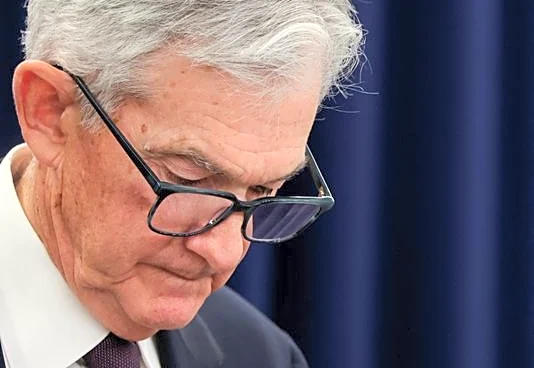



Jan 28 (Reuters) - Federal Reserve Chair Jerome Powell spent 45 minutes on Wednesday answering reporter questions about the U.S. central bank's decision to keep short-term borrowing costs unchanged despite tremendous pressure from the White House to cut them.
He touched on a range of topics including the outlook for the economy, threats to the Fed's independence, and the price of gold. Here are some key quotes from the news conference:
RISKS HAVE DIMINISHED
"The upside risks to inflation and the downside
risks to employment have diminished. But they still exist. So there's still some tension between the mandates. Are they fully in balance? Hard to say, hard to say. And, again, we think our policy is in a good place ... I just would say that I'm not making a judgment about how one of them is more at risk than the other, just that the risks to both of them have diminished."
GROWTH OUTLOOK HAS IMPROVED
"The outlook for economic activity has improved, clearly improved since the last meeting, and that should matter for labor demand and for employment over time...You've got strong consumption that's been happening before -- financial conditions have been supportive, but before the fiscal effects really are shown. So essentially, the economy has once again surprised us with its strength, not for the first time. Consumer spending, although it's not even across income categories, consumer spending overall: numbers are good. And we're benefiting from the AI buildout of data centers. That's another thing we're benefiting from. But the economy overall: growth is on a solid footing, and it's not just those things."
LABOR MARKET SITUATION CHALLENGING
"We saw data coming in which suggests some signs of stabilization. I wouldn't go too far with that, but some signs of stabilization -- and also some signs of continued cooling....Part of the payroll jobs softening is that both the supply and demand for labor have come down; growth in those two has come down. So that makes it a difficult time to read the labor market....Imagine they both (labor supply and labor demand) came down a lot to the point where there is no job growth. Is that full employment? In a sense, it is. If demand and supply are in balance, you know, you could say that's full employment. But at the same time, do we really feel like that's a maximum employment economy? You know, it's a challenging, it's a very challenging and quite unusual situation."
INFLATION IS ELEVATED, AFFORDABILITY IS KEY
"We have a vast network through the Reserve Banks and also through the Board of Governors where we talk to small and large businesses and households, and so we do hear a lot about affordability, and we take that very seriously. And we take it to heart because our job is, one of our jobs is price stability. And so, the best thing we can do for people who are feeling that squeeze is to keep inflation under control and, frankly, to finish the job of getting inflation back down to 2%."
FED GOVERNOR COOK'S CASE
"That case is perhaps the most important legal case in the Fed's 113-year history. And as I thought about it, I thought it might be hard to explain why I didn't attend. In addition, Paul Volcker went to a Supreme Court case famously, and I guess in 1985 or so. So it's precedented, and I thought it was an appropriate thing, and I did it."
THE DOJ PROBE, HIS FUTURE AT THE FED AFTER HIS CHAIR TERM ENDS
"I have nothing for you on that today."
THE DROP IN THE DOLLAR
"We don't comment on the dollar."
THE RECORD PRICE OF GOLD
"We don't take much message macroeconomically. The argument can be made ... that we're losing credibility or something. It's simply not the case. If you look at where inflation expectations are, our credibility is right where it needs to be. So we look at those things. We don't get spun up over particular asset price changes, although we do monitor them, of course."
(Reporting by Ann Saphir, editing by Deepa Babington)