







By Sameer Manekar
June 25 (Reuters) - Short bets on the Indonesian rupiah and the Indian rupee retreated from multi-month peaks, a Reuters poll showed on Thursday, as normalising oil prices and central bank measures to attract foreign capital eased some pressure off the currencies.
Bears remained entrenched on most Asian units, mainly the South Korean won and the Thai baht, while long bets on the Chinese yuan were trimmed to early April lows, a fortnightly survey of 10 economists, analysts, and traders
showed.
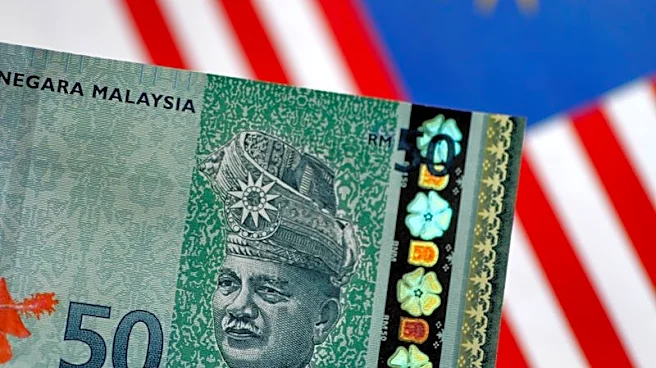
Poll participants also turned slightly bearish on the Singapore dollar for the first time in seven months, while short bets on the Malaysian ringgit jumped to their highest in more than 16 months amid expectations of higher U.S. interest rates and domestic political risks.
Negative sentiment on the Indonesian rupiah was at its lowest since mid-April, though it remained firmly bearish, after 100 basis points of rate hikes in a month helped the currency stabilise and improve its carry profile.
Concerns around fiscal discipline, central bank autonomy, and the threat of an MSCI downgrade to frontier market status were key overhangs on Indonesian markets for the respondents.
The responses were received prior to the MSCI deferring its decision, in the early hours of Wednesday, on Indonesia's emerging market status until November. A downgrade would trigger tens of billions of dollars in outflows from index-tracking funds.
Bearish view on the Indian rupee also improved, with short bets at their lowest in 11 months, as the central bank unveiled measures to defend the currency and attract dollar inflows. Short bets on the Philippine peso also slid to mid-March lows.
Vishnu Varathan, head of economics and strategy at Mizuho Bank, said the drop in crude prices following the Iran-U.S. peace deal and the re-opening of the Strait of Hormuz have provided a welcome relief for Asia ex-Japan currencies, further accentuated by short-covering and policy interventions.
However, he warned that a hawkish U.S. Federal Reserve adds a layer of pressure on Asian currencies, "especially where policy tightening has lagged as higher U.S. Treasury yields overwhelm softer oil impact".
Markets are pricing in a 33% chance for a rate hike of at least 25 bps at the Fed's July meeting, according to CME FedWatch. For September, the chance of a rate rise stands at 64%.
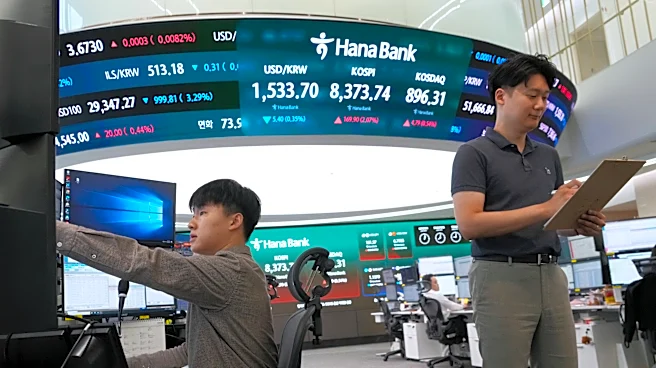
The South Korean won replaced the rupiah as the most out-of-favour currency in the latest poll. The won has weakened over 7% since late February pressured by foreign capital outflows.
"Worse, there may be a further drag if sustained AI shakedown on Korean equities threatens to spillover more broadly," Varathan said.
Bearish bets crept higher on the Thai baht, as a weakening dollar and narrowing yield differentials cloud prospects, while those on the Taiwan dollar were largely unchanged.
The Asian currency positioning poll is focused on what analysts and fund managers believe are the current market positions in nine Asian emerging market currencies: the Chinese yuan, South Korean won, Singapore dollar, Indonesian rupiah, Taiwan dollar, Indian rupee, Philippine peso, Malaysian ringgit and the Thai baht.
The poll uses estimates of net long or short positions on a scale of minus 3 to plus 3. A score of plus 3 indicates the market is significantly long U.S. dollars.
The figures include positions held through non-deliverable forwards (NDFs).
The survey findings are provided below (positions in U.S. dollar versus each currency):
DATE USD/ USD/ USD/ USD/ USD/ USD/ USD/ USD/ USD/
CNY KRW SGD IDR TWD INR MYR PHP THB
25-Ju -0.9 1.63 0.17 1.56 0.61 0.54 0.59 1.05 1.08
n-26 6
11-Ju -1.2 1.69 -0.1 2.11 0.58 1.23 0.13 1.24 0.98
n-26 5 9
28-Ma -1.4 0.95 -0.6 1.84 0.15 1.43 -0.7 1.35 0.75
y-26 3 3
14-Ma -1.3 0.33 -0.8 1.73 0.15 1.63 -0.8 1.3 0.65
y-26 5 3
30-Ap -1.0 0.49 -0.6 1.6 0.38 1.43 -0.7 1.53 1
r-26 8 9 7
16-Ap -1.0 1.19 -0.5 1.49 0.77 1.53 -0.6 1.45 1.02
r-26 5 7 7
2-Apr -0.5 1.83 -0.1 1.51 1.3 1.93 -0.5 1.68 1.59
-26 6 7 3
19-Ma -1.0 1.39 -0.1 1.41 0.83 1.25 -1.1 1.04 1.15
r-26 2 8
5-Mar -1.4 0.58 -0.5 1.32 0.37 1.2 -1.3 0.14 -0.4
-26 1 7 6
19-Fe -1.5 0.16 -1.1 1.21 0.12 0.95 -1.7 0.1 -0.7
b-26 8 9 3 9
(Reporting by Sameer Manekar in Bengaluru; Editing by Harikrishnan Nair)