


By Andrea Shalal
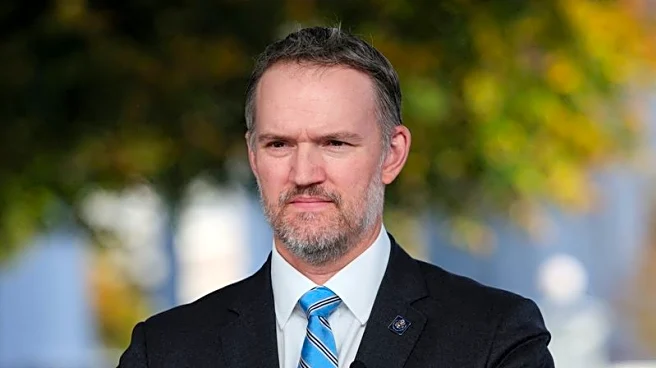
WASHINGTON, Dec 10 (Reuters) - The United States can use other measures to recreate the roughly $200 billion in revenues it is collecting under tariffs based on a 1977 law if the Supreme Court strikes down use of that law, U.S. Trade Representative Jamieson Greer said on Wednesday.
Greer, speaking at an event hosted by the Atlantic Council, said it would make sense for Congress to legislate new rules for U.S. trade in the longer term.
He declined to provide any details on the Trump
administration's backup plan if the highest court upholds a lower court ruling that tariffs based on the International Emergency Economic Powers Act were illegal, but indicated Washington would turn to other laws to justify new tariffs.
"I'm confident that with other tools we have related to unfair trade practices, we can produce the revenues we need," Greer said, adding, "It is a lot of money ... It's a big deal."
Asked about how long companies would have to wait to receive refunds, if the tariffs were invalidated by the Supreme Court, Greer said that would be up to Treasury and Customs and Border Protection, adding that he met the CBP director on Tuesday, but was uncertain of the timeline.
Greer said the U.S. was seeking a constructive relationship with China, dodging a question about the national security implications of a Trump administration decision to allow Nvidia to ship its second-most advanced AI chip to China.
Greer, who served in U.S. President Donald Trump's first term, defended the Republican's use of tariffs to address imbalances in U.S. trade with many trading partners. He said the overall U.S. trade deficit was higher than it was last year given that many companies were front-running tariffs, but data since August showed a significant decrease.
The U.S. bilateral trade deficit with China would be down by about 25% this year if it continued at the current pace, he said. Investments in manufacturing were heading higher and should increase more next year, he said.
He said manufacturing jobs paid more and the U.S. should not "turn up its nose" at producing even goods like pencils or dolls, which had moved offshore in recent years.
Greer, whose staff met with a European Union technical delegation this week, also addressed relations with the EU, saying he was disappointed that Brussels had shown "zero moderation" in its position on U.S. technology firms, despite agreeing in July to refrain from such attacks.
Trump on Monday called an EU fine on Elon Musk's social media company X "nasty" and thrashed European leaders in an interview with Politico.
Greer said U.S. policymakers were still discussing how to regulate digital technology companies, but Washington would not allow the EU to impose its plans on U.S. companies.
"It would be one thing if they had their own champions, right, but they don't, so it's a real problem," he said. "What I will say is we're not going to allow that regulation to be outsourced, so I'm hopeful we'll have constructive discussions with our friends in the EU on this."
(Reporting by Andrea Shalal, Editing by Franklin Paul and Andrea Ricci )