
By David Lawder and Rodrigo Campos
WASHINGTON, Jan 15 (Reuters) - The International Monetary Fund said on Thursday that any re-engagement with Venezuela following the U.S. capture of Venezuelan President
Nicolas Maduro would depend on member countries representing a majority of IMF voting power recognizing a successor government.
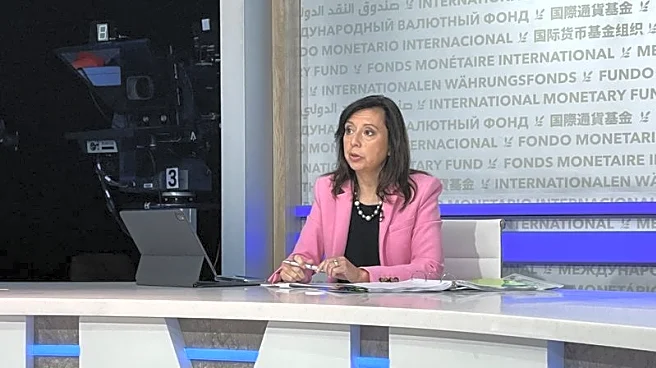
IMF spokesperson Julie Kozack told a regular news briefing that the Fund would follow the same protocols on engagement with other countries that have had irregular government changes, and assess whether majority-voting countries recognize Venezuela's government as legitimate.
If the Fund restores ties with Venezuela, the South American oil exporter would have access to about $4.9 billion worth of IMF Special Drawing Rights reserve assets. These have been frozen since the IMF suspended dealings with Venezuela in 2019 over the lack of recognition of Maduro's government.
BESSENT: ASSETS COULD HELP BOOST ECONOMY
U.S. Treasury Secretary Scott Bessent told Reuters on Friday the Trump administration would be willing to convert Venezuela's SDRs to dollars for use in helping rebuild the country's economy as more sanctions on the country are lifted. SDRs are comprised of dollars, euros, yen, sterling and yuan.
The IMF's largest shareholder, the U.S., has not been clear about recognizing a successor to Maduro.
U.S. President Donald Trump, who ordered Maduro's January 3 capture in a daring military raid, is due to meet on Thursday with Venezuelan opposition leader Maria Corina Machado at the White House.
Trump has previously called Machado a "freedom fighter" but dismissed the idea of working with her after Maduro's ousting, saying she did not have enough support within Venezuela. A classified CIA assessment presented to Trump concluded that Maduro loyalists, including interim President Delcy Rodriguez, were best positioned to maintain stability.
The IMF, shunned by Maduro's predecessor in Venezuela, Hugo Chavez, has not performed an annual "Article IV" assessment of Venezuela's economy since 2004.
But Kozack described Venezuela's economic situation as "dire," with rising poverty.
"Since late 2024, our assessment is that imbalances and vulnerabilities have re-emerged, driven by lower oil revenue, a widening fiscal deficit, which has prompted increased monetary financing for the fiscal deficit and a scarcity of U.S. dollar liquidity," Kozack said. "Inflation is estimated to be in the triple digits, and rapid currency depreciation is under way."
(Reporting by David Lawder and Rodrigo CamposEditing by Rod Nickel)