





By Johann M Cherian and Ragini Mathur
July 28 (Reuters) - The Nasdaq fell on Tuesday, mirroring a cautious mood across global markets toward AI chip stocks on concerns about hefty corporate spending and rising Chinese competition, ahead of earnings from some of the biggest companies on Wall Street.
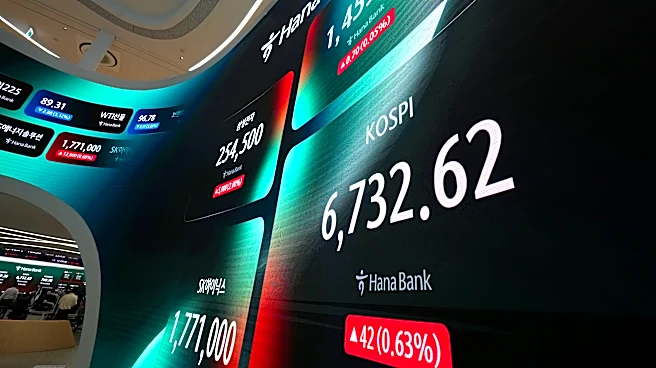
Chip majors such as Micron slid 6.4%, Nvidia dropped 1.2% and Intel shed 5%, while U.S.-listed shares of Taiwan's TSMC and South Korea's SK Hynix fell 2.7% and 6%, respectively.
Global markets have become
increasingly volatile this month as investors scrutinize the need for more corporate spending on AI infrastructure such as semiconductors that underpinned strong gains in chip stocks in the previous quarter.
Roundhill's Memory Exchange Traded Fund fell 10% to an over two-month low on Tuesday, and has been trading below its 50-day moving average for the past two weeks, reflecting weak short-term momentum, while the Philadelphia SE Semiconductor Index was down 4% and it has fallen over 20% from its all-time high hit in June.
Signs that Wall Street's biggest companies such as Alphabet and Tesla are running out of cash to fund their ambitions have also made markets nervous, while China showcases cheaper AI models and deepens its presence in the competitive semiconductor industry.
"The market is extremely concerned about the level of spending that's been going on from the hyperscalers. These huge dollar amounts feel irresponsible at this point," Robert Pavlik, senior portfolio manager at Dakota Wealth, said.
When AI hyperscalers Amazon.com, Meta, Apple and Microsoft report earnings later this week, investors will be keen to see if their investments, worth over several hundred billion dollars, are yielding returns.
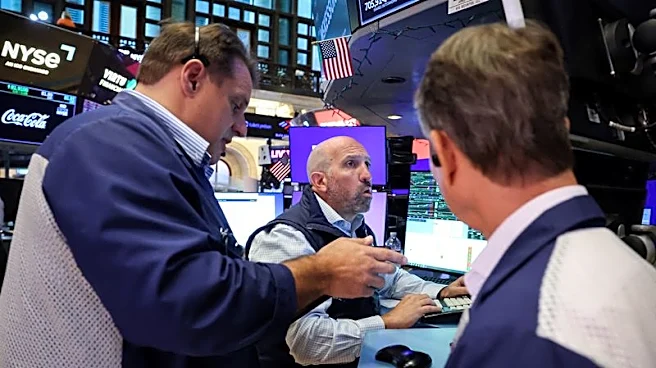
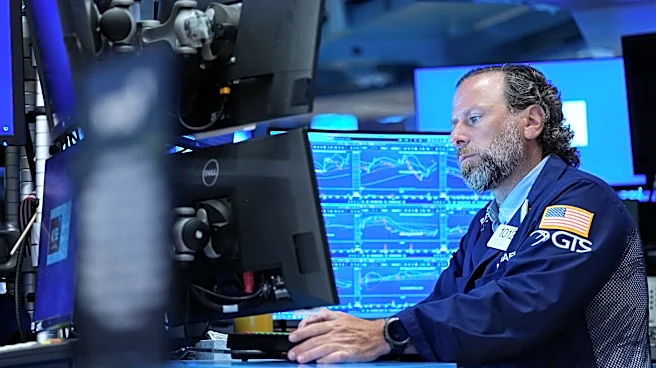
At 9:49 a.m. ET, the Dow Jones Industrial Average rose 354.49 points, or 0.68%, to 52,564.57, the S&P 500 lost 19.98 points, or 0.27%, to 7,393.20 and the Nasdaq Composite lost 290.20 points, or 1.16%, to 24,641.89.
Dow component Coca-Cola gained 6.3%, as the beverage company raised its annual revenue and profit forecasts.
Gains in Coca-Cola also helped in lifting the S&P 500's consumer staples index, which was up 3.1%.
Information technology was the weakest group, down 1.9%.
Boeing gained 3.2% after the airplane maker generated positive free cash flow as its turnaround plans gained momentum.
The Federal Reserve is due to announce its interest-rate decision on Wednesday. Traders see a 37% chance of a rate hike this week, according to LSEG data, and expect borrowing costs to rise by at least 25 basis points by year-end.
Higher rates could further pressure AI companies that are becoming more dependent on debt financing.
Oil prices offered some relief, falling 2.4% to a one-week low as a fragile U.S.-Iran ceasefire appeared to hold despite reports of drone attacks in Saudi Arabia, Jordan and Iraq. President Donald Trump said the U.S. was having "good talks" with Iran and that a deal to end the conflict was possible.
Advancing issues outnumbered decliners by a 1.15-to-1 ratio on the NYSE, while declining issues outnumbered advancers by a 1.36-to-1 ratio on the Nasdaq.
(Reporting by Johann M Cherian, Ragini Mathur and Utkarsh Tushar Hathi in Bengaluru; Editing by Shinjini Ganguli and Maju Samuel)