







By Anton Zverev and Christian Lowe
LONDON, April 10 (Reuters) - Sophisticated online operators are posting coordinated waves of content in the Telegram messaging app to spread fear about what will happen if Hungarian Prime Minister Viktor Orban loses Sunday's parliamentary election, according to research by Vox Harbor, a data analytics firm.
Content creators and distributors who are Russian or affiliated to Russia account for a significant share of the pro-Orban content disseminated via Telegram, according
to the research, which Vox Harbor shared with Reuters.
Researchers said they identified multiple cases where identical phrases appeared on several different Telegram channels over a short time-frame, a pattern consistent with an orchestrated messaging campaign.
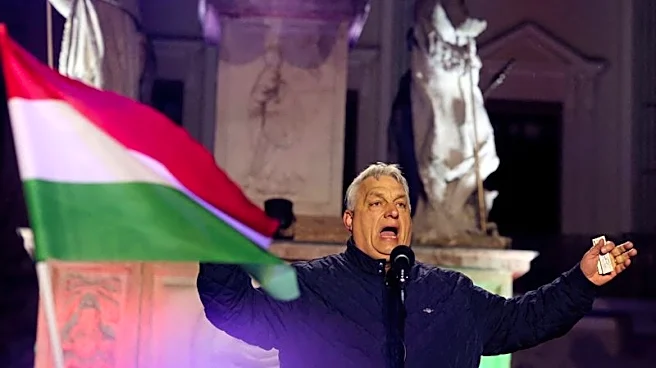
Opinion polls indicate Orban, a nationalist who has clashed repeatedly with Brussels and maintains friendly ties with the Kremlin, could be ousted after 16 years by a former lieutenant turned opposition leader.
DISINFORMATION CAMPAIGN
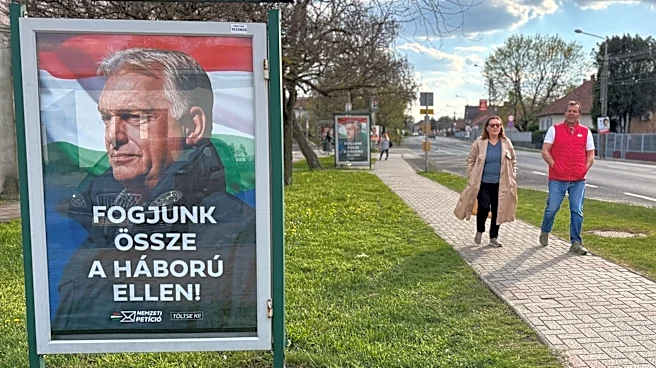
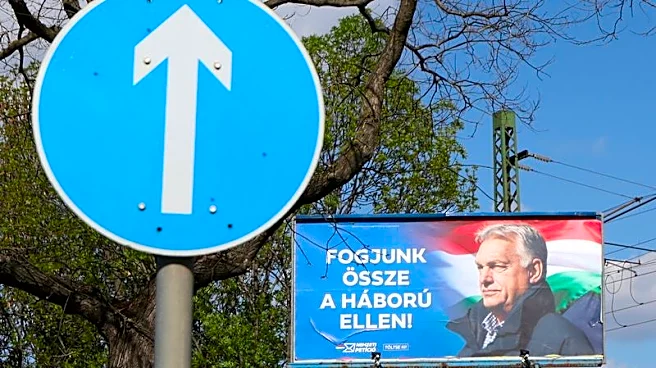
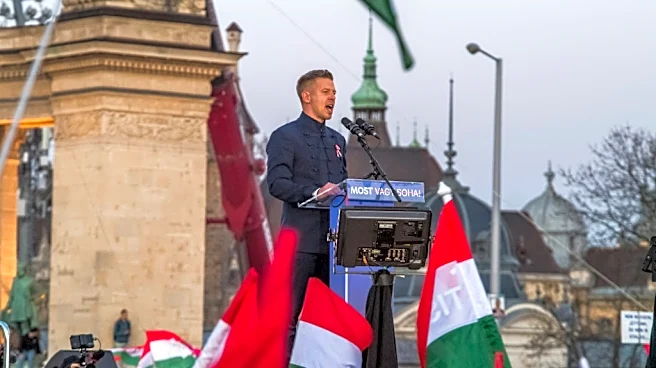
Hungary’s opposition say Orban and his Fidesz party have mounted a no-holds-barred disinformation campaign – using traditional media, social media, and AI-generated content – to whip up fear about the country’s future if the pro-European Union opposition, led by Peter Magyar, wins Sunday’s vote.
Orban and his supporters say they are simply presenting the facts to Hungarian voters, and allege that the veteran prime minister's opponents themselves benefit from a massive propaganda campaign supported by Brussels.
Western governments have accused Moscow of running covert influence campaigns to try to skew the results of elections in its favour, an allegation the Kremlin has previously denied.
Neither the Kremlin nor Hungarian government spokesman Zoltan Kovacs responded immediately to Reuters' requests for comment on the Vox Harbor findings.
Contacted by Reuters, Telegram said it was a politically neutral platform that supported everybody's right to peaceful free speech.
The Vox Harbor research was based only on messages in Telegram, which is less popular in Hungary than platforms such as Facebook and TikTok.
However, the researchers said Telegram acts as an "incubator" for pro-Orban narratives, which then feed into other parts of social media. Reuters sampled posts in Facebook and Twitter and found hundreds that followed the same themes as those in Telegram, and often had identical headlines.
Peter Kreko, director of the Hungary-based think tank Political Capital, said he and partner organisation the Hungarian Digital Media Observatory had conducted analysis of content on TikTok and Facebook.
After Reuters summarised for him the Telegram research, Kreko said: "The narratives are absolutely the same. Also, we found quite a lot of coordinated behaviour, both on TikTok and on Facebook... We have found that in many cases it seems to be Russian content that is just translated."
The Vox Harbor research was based on an analysis of over 628,000 messages posted by more than 30,000 groups this year, up to April 7.
ORBAN'S TALKING POINTS
Many of the narratives reflect Orban's own talking points: that the EU wants to undermine Hungary's sovereignty, that outside forces seek to draw Hungary into the Ukraine-Russia war, and that Kyiv's pro-EU leaders are plotting against Orban.
A recurring narrative, the research found, is that anti-Orban forces could try to manipulate the election result to deny him victory.
Reuters was able to independently corroborate that messages conforming to these narratives are widespread on Hungarian Telegram channels.
The biggest single source of messaging in the Hungarian Telegram ecosystem, based on the number of times posts were forwarded, is a right-wing German-language platform called Uncut-News.ch, according to the Vox Harbor research.
The next six biggest sources, according to the research, are all connected to Russia, including Ukraina.ru, an arm of Russian state media group Rossiya Segodnya.
Outside content is fed into the Hungarian Telegram sphere by operators who translate it and curate it for a Hungarian audience. One of the most significant operators, the research found, is a Telegram channel called Oroszok Az Igazság Oldalán, which translates as "Russians on the Side of Truth".
The biggest source of content forwarded by the channel comes from the Hungarian arm of Rybar, a blogger closely aligned with the Russian military.
(Additional reporting by Krisztina Than in BudapestEditing by Gareth Jones)