




NEW YORK, June 10 (Reuters) - U.S. consumer inflation increased at its fastest pace in three years in May as the Middle East conflict raised the price of gasoline and other energy products, giving more ammunition for the Federal Reserve to keep interest rates unchanged into 2027.
The Consumer Price Index increased 4.2% in the 12 months through May, the largest gain since April 2023, the Labor Department's Bureau of Labor Statistics said on Wednesday. The CPI advanced 3.8% year-on-year in April. Prices
increased 0.5% on a monthly basis after climbing 0.6% in April.
Economists polled by Reuters had forecast the CPI increasing 4.2% year-on-year and gaining 0.5% on a monthly basis.
The third straight month of strong increases in the CPI highlighted mounting pressure on households as evidence suggests more consumers are dipping into savings to finance their spending. Inflation outpaced wage growth for a second consecutive month, which could weigh on overall economic growth.
MARKET REACTION:
STOCKS: U.S. stocks slipped at the open, with the Nasdaq composite declining 0.6% and the S&P 500 down 0.5%.
BONDS: Treasury prices were flat. The 2-year Treasury yield fell 1 basis point to 4.11% and the 10-year Treasury yield was unchanged at 4.52%.
FOREX: The dollar index fell 0.2% to 99.85.
COMMENTS:
STEVE KOLANO, CHIEF INVESTMENT OFFICER, INTEGRATED PARTNERS, WALTHAM, MASSACHUSETTS:“My immediate reaction to the CPI report this morning is that the report doesn’t do anything to reduce the probability of a possible rate hike at some point this year. The headline showed acceleration from the previous report as did the Core CPI YoY. With energy processes remaining elevated and the Iran conflict still being unresolved, the expectation is that inflation will also remain elevated for the near future. The probability of a rate hike, or even hikes, has been growing in the last few weeks, especially after the job data last week, and this report does nothing to reduce that probability.”
MICHAEL ROSEN, CHIEF INVESTMENT OFFICER, ANGELES INVESTMENT ADVISORS, SANTA MONICA, CALIFORNIA:
“No surprises in the CPI report. Headline inflation is 4.2% over the last 12 months, a 3-year high. The Fed risks losing credibility if it continues to stick to its 2% inflation goal while taking no action in monetary policy.”
ADAM SARHAN, CHIEF EXECUTIVE, 50 PARK INVESTMENTS, NEW YORK:
"The CPI tells us what happened last month, but the market is looking forward. If you look at core prices, they matched expectations. Even with the escalation in the Middle East, oil is still around $90 a barrel; it's not back at $100. So that's still relatively under control.
“More importantly, food prices, if you look at corn, soybeans, wheat, coffee - a lot of these futures have fallen a lot in the last four to five weeks. So, the next CPI for June my guess, based on core prices – food and energy – is going to be lower than May. As long as we're trending down, that is a net positive for the market. It's a matter of the future direction of inflation."
BRIAN MADDEN, CHIEF INVESTMENT OFFICER, FIRST AVENUE INVESTMENT COUNSEL, TORONTO:
"The U.S. inflation numbers came in higher month over month, but no worse than expected. At 4.2% inflation, that's roughly double what the Federal Reserve's target is. It's increasing from last month at 3.8%. And even the core, which excludes energy and food and stuff and volatile items, is also uncomfortably high.
“So, the net of it all is that it makes it more difficult for the Federal Reserve when they meet next week to lower interest rates from restrictive levels where they now are."
BRIAN JACOBSEN, CHIEF ECONOMIC STRATEGIST, ANNEX WEALTH MANAGEMENT, BROOKFIELD, WISCONSIN:
“Just because the inflation numbers came in consistent with expectations doesn’t mean they were good.
“The headline of 4.2% inflation obscures that there isn’t a lot of evidence yet that the 40.6% increase in energy commodities is seeping into core prices.
“The clock is ticking loudly to get the Strait of Hormuz open, either through force or through a truce. The Fed isn’t going to try to guess when that will happen, so President Trump needs to deliver them certainty before they meet.”
ALEXANDER LIS, CHIEF INVESTMENT OFFICER, SD VENTURES, LIMASSOL, CYPRUS:
"CPI numbers were largely in line with consensus expectations. Both the headline and core. Not a hot print. But it wasn't enough to reassure the markets.
"It was the last inflation print before the next FOMC meeting. So, the most important thing right now is the Fed reaction.
"Next week, we will know whether inflation is high enough to prompt the Fed to signal a possible rate hike. It could determine the market movement for months ahead."
PETER CARDILLO, CHIEF MARKET ECONOMIST, SPARTAN CAPITAL SECURITIES, NEW YORK:
“These numbers are right in line with what I was looking for, except for the year on year for top line inflation. They are not that bad. They indicate that there has been no acceleration in inflation from the previous month. Of course, a lot depends on energy prices. And I suspect that if oil prices don't move much beyond $100 a barrel, that it's safe to say that maybe inflation has peaked. Of course, the wild card remains the war factor.
“On a year-to-year basis, the numbers suggest that inflation is still a problem. But the fact that the core is below 3%, I think is a good sign that maybe - and it, of course, all depends on the war - that energy inflation may have peaked.”
ART HOGAN, CHIEF MARKET STRATEGIST AT B RILEY WEALTH, NEW YORK:
"The CPI report is a tale of two cities. While it is very much in line with expectations, it's still moving in the wrong direction. That hasn't changed the narrative around what the Fed will do at their next meeting. But the overarching consensus is that the Fed will hold steady and there's only one rate hike priced into the fed funds futures.
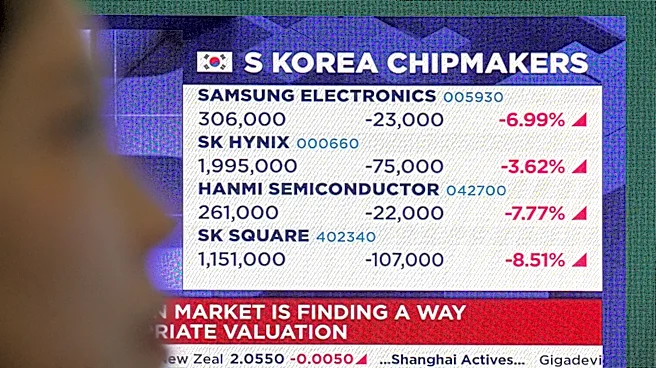
"So all of that in total is likely what's helping pare some of the losses coming into the day after some significant settling pressure in the chip stocks and technology in general."
TIM URBANOWICZ, CHIEF INVESTMENT STRATEGIST, INNOVATOR ETFS, GOLDMAN SACHS ASSET MANAGEMENT, CHICAGO:
“While the recent spike in both headline and core inflation is meaningful and a headwind for the economy and more cyclical sectors, tailwinds from the AI investment cycle, potential benefits from the Big Beautiful Bill, and the lagged impact of Fed rate cuts are all still providing meaningful support. If the Iran conflict drags on and inflationary pressures continue to build, there could come a point where that balance shifts, but we don’t see that today.”
BRENT SCHUTTE, CHIEF INVESTMENT OFFICER, NORTHWESTERN MUTUAL WEALTH MANAGEMENT, MILWAUKEE: “Today’s inflation information does little to resolve the reality that the last mile of inflation has been difficult for the Fed to defeat. The reality is that inflation has been persistently stuck above their 2 percent target for the past few years with little to no progress. The weak labor market has provided the Fed the cover to cut rates despite this reality. With the labor market healing investors are rightfully pondering if the Fed will have to refocus on actually meeting their inflation mandate.”
(Reporting by Lucia Mutikani, Laura Matthews, Tharuniyaa Lakshmi, Caroline Valetkevitch, Saeed Azhar, Joel Jose, Medha Singh, Stephen Culp, Twesha Dikshit; editing by Colin Barr)