


By Andrea Shalal and Libby George
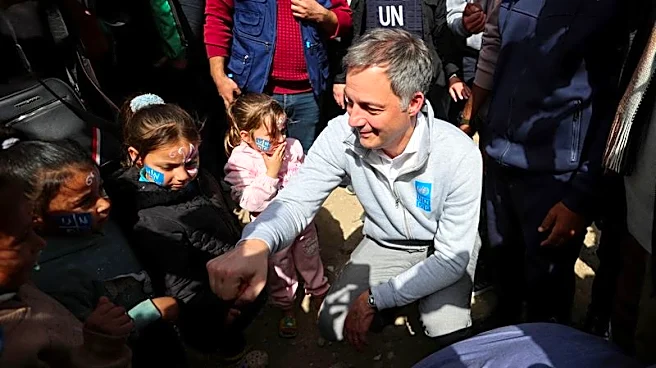
WASHINGTON, April 15 (Reuters) - Investing just $6 billion into targeted cash payments or energy subsidies to offset energy prices sent soaring by the war in the Middle East could prevent 32 million people worldwide from slipping into poverty, United Nations Development Program Administrator Alexander De Croo told Reuters.
De Croo, a former prime minister of Belgium, said six weeks of war had wiped out decades of gains in development, but a relatively small investment
could ensure that millions were not pushed into poverty by the war.
"Step one, of course, would be to end the war," he said, followed by a resumption of trade. But a targeted and timely policy response was also needed, including through time-limited cash disbursements, or by subsidizing energy costs, although that was generally less effective, he said.
De Croo's remarks come amid concerns raised by top finance officials during the spring meetings of the International Monetary Fund and World Bank in Washington this week, who have warned against broad measures that could exacerbate inflation. Many developing countries have little fiscal space and high debt levels.
The IMF on Tuesday cut its growth outlook due to war-driven energy price spikes and supply disruptions, warning that the global economy could be driven to the brink of recession if the conflict drags on and oil stays above $100 per barrel through 2027.
De Croo said $6 billion was "not a small amount. But from our perspective, it's an investment, because the economic upside of doing it is quite tangible, and the economic cost of not doing it is way, way bigger."
The war, he said, was having a more global impact given the surge in energy costs and problems with fertilizer trade.
Providing cash payments has gotten easier for governments over the past two decades given big increases in the number of people with mobile money accounts.
Global money account ownership increased by 28 percentage points between 2011 and 2024, with the rise among low- and middle-income economies even higher at 33 percentage points, with 75% of the population in those countries now owning such an account, a UNDP official said.
GSMA, a global organization that tracks the mobile ecosystem, reported last month that mobile money accounted for $2 trillion in transactions in 2025, double the amount reported just four years earlier. Most new accounts came from Sub-Saharan Africa, which is among the regions hardest hit by the war's impact, especially through disruptions to fertilizer supplies.
(Reporting by Andrea Shalal and Libby George; Editing by Andrea Ricci )