








By Mariam Sunny and Suzanne McGee
April 22 (Reuters) - The U.S. administration is expected to reclassify marijuana as a less dangerous drug as soon as Wednesday, Axios reported, citing an official familiar with the matter.
President Donald Trump had in December last year signed an executive order directing the loosening of federal regulations on marijuana to reclassify it from a Schedule I to a Schedule III substance.
Trump's order directed his attorney general to quickly move ahead with reclassifying
marijuana, according to senior administration officials, a process that could lead to the psychoactive plant being listed alongside common painkillers, ketamine and testosterone as a less dangerous drug.
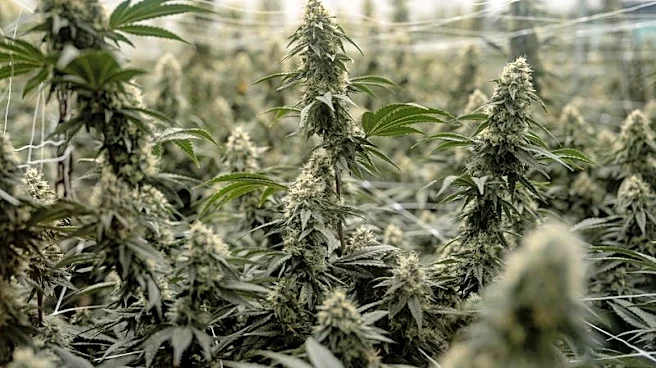
The reclassification, possibly the biggest policy shift in marijuana regulation since 1970, would likely reshape the pot industry by lowering tax burdens and making it easier for firms to secure funding, as well as help accelerate clinical research.
Cannabis-linked companies such as Canopy Growth,, Organigram Global, SNDL, Aurora Cannabis, Trulieve Cannabis and Tilray Brands are likely to benefit from this move.
Here is what such a move could mean for companies.
WHAT DOES RECLASSIFYING ENTAIL?
Under the U.S. Controlled Substances Act, marijuana is listed as a Schedule I substance, such as heroin, meaning it has a high potential for abuse and no current accepted medical use.
Last year, the Biden administration asked the Department of Health and Human Services to review marijuana's classification, and the agency recommended moving it to Schedule III, a category for substances with a moderate to low risk of physical or psychological dependence, such as steroids.
The Drug Enforcement Administration must review the recommendation and decide on the reclassification.
WHAT WOULD BE THE TAX IMPLICATIONS?
One of the biggest benefits of a reclassification would be that cannabis firms would no longer be subject to Section 280E of the U.S. federal tax code.
That provision prevents businesses dealing in Schedule I and II controlled substances from claiming tax credits and deductions for business expenses.
WHAT HAPPENS TO THE INDUSTRY?
A Class III classification could unlock banking access for pot producers, attract institutional investors, reduce taxes and spur mergers and acquisitions.
Securing funding remains one of the biggest challenges for cannabis producers, as federal restrictions keep most banks and institutional investors out of the sector, forcing pot producers to turn to costly loans or alternative lenders.
Congress has also been debating further action for some time. The Secure and Fair Enforcement Regulation Banking Act (SAFER) bill, introduced in 2023, would ensure that all businesses, including state-sanctioned cannabis businesses, have access to deposit accounts, insurance, and other financial services.
WHAT COMES NEXT?
Experts say critical questions such as the size of the addressable market, number of players, scientific validation, regulatory impact, and whether profits will be sustainable will determine the long-term outlook for cannabis stocks.
(Reporting by Mrinalika Roy, Arunima Kumar, Mariam Sunny, Puyaan Singh, Christy Santhosh and Padmanabhan Ananthan in Bengaluru; Editing by Saumyadeb Chakrabarty, Rashmi Aich and Shinjini Ganguli)