




By Indradip Ghosh
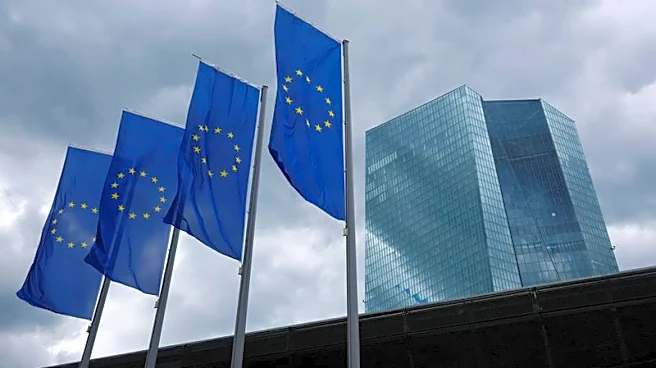
BENGALURU, June 3 (Reuters) - The European Central Bank is set to raise its deposit rate to 2.25% on June 11, with another increase likely in September, as it balances energy-driven inflation against a weakening economy, a Reuters poll of economists showed.
Inflation stood at 3.2% in May, well above the ECB's 3.0% target. More worryingly, core inflation - which excludes energy and food - rose faster than expected to 2.5%, suggesting the impact of the Iran war is feeding into prices.
Recent indicators, including PMI surveys and official data, point to a slowing economy. The outlook may worsen as the war stretches beyond three months with no clear resolution in sight and the Strait of Hormuz - a key global energy artery - remains largely clogged.
Most policymakers have signalled a June hike is certain, and even a peace deal is unlikely to prevent it. Still, a weaker economy, softer labour market and already higher rates compared with the 2022 inflation surge argue against aggressive tightening, economists say.
In the May 29 to June 3 poll, more than 90% of economists, 74 of 80, expected a 25-basis-point increase next week to 2.25%, up from around 85% last month and just over half in April.
"The ECB doesn't want to make the same mistake of underestimating inflation again. The cost of holding rates in terms of credibility as an inflation fighter is probably higher at this stage than the risk of hiking," said Bas van Geffen, senior macro strategist at Rabobank.
"I think for now it's just one or two hikes. But of course if the situation lasts longer then the ECB may have to go further."
More than 60% of respondents, 49 of 80, expected one additional rate increase this year, likely in September, broadly in line with market pricing. Last month, there was no clear consensus on where rates would be by end-2026.
Nearly a third saw one or no hikes, while only a handful expected three or more.
"It probably makes sense to move interest rates from the bottom to the top of the neutral range just to ward off any threats there could be more inflation pressure building in the pipeline," said Dean Turner, chief euro zone and UK economist at UBS Global Wealth Management.
"I'm not viewing it as a policy move to deliberately slow the economy because everyone's panicking about second-round effects. It's more of a risk management exercise."
That outlook hinges on inflation. With Brent crude futures about 40% above pre-war levels, inflation is seen averaging 3.3% per quarter for the rest of this year and 2.9% in 2026, poll medians showed - a fourth straight monthly rise in forecasts.
The economy is expected to expand 0.7% in 2026, a third consecutive downgrade to forecasts since early March and the weakest outlook since 2023.
In a separate question, two-thirds of economists said the risk of stagflation - weak growth, high unemployment and elevated inflation - was high. That contrasts with ECB President Christine Lagarde, who said in April the term described the 1970s, not today's economy.
"We've got a stagnation scenario for the next few quarters. At the same time, energy prices will push up inflation across the euro zone. It does have the attributes of a stagflationary scenario," said Rabobank's van Geffen.
(Other stories from the Reuters global economic poll)
(Reporting by Indradip Ghosh. Polling by Anant Chandak and Aman Kumar Soni. Editing by Mark Potter)