
By Andrew MacAskill, Kate Holton and Ben Blanchard
LONDON, Jan 20 (Reuters) - By approving China's plans for a mega-embassy in London, British Prime Minister Keir Starmer has gambled on winning closer trade
ties and investment from China at the risk of angering politicians in Britain and the United States.
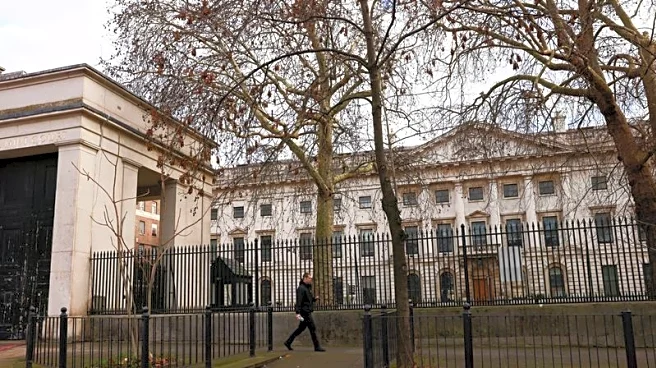
Beijing's desire to build China's biggest embassy in Europe in the heart of historic London had become a flashpoint in relations, testing Britain's ability to navigate the security risks and trade potential of a relationship with China.
The government ignored warnings from British and U.S. politicians, local residents and British-based Hong Kong pro-democracy campaigners who said the new building could be used as a base for espionage and to intimidate Chinese dissidents.
Since taking office in 2024, Starmer has made reviving Britain's economy his priority and wants closer relations with China to boost foreign investment and deliver on an election pledge to improve living standards.
Some U.S. politicians objected to the new embassy location, near sensitive underground communication cables, questioning whether there would be security implications for one of Washington's partners in the Five Eyes alliance with Canada, Australia and New Zealand.
"This will be seen for what it is, which is a base for hostile activity inside the United Kingdom," Tom Tugendhat, security minister in Britain's last Conservative government, told Reuters. "This is, I am afraid, further indication that this British government has no idea of the CCP (Chinese Communist Party) it is dealing with."
LARGER EMBASSY FUELS SPYING CONCERNS
China has 146 registered diplomats in Britain, second to the United States, British government records show.
Opponents of China's plans to build a much bigger embassy say it will mean more diplomatic staff and therefore more spies, with the new site serving as a symbol of China's power and as a warning.
Local residents said they would seek a legal challenge, saying Tuesday's decision would be unlawful if British officials privately gave China assurances the project would be approved before the planning process had been completed.
Six current and former British officials told Reuters most of the espionage fears were exaggerated or could be managed. They said the consolidation of China's existing diplomatic premises, spread across London, could make it easier to track suspected spies.
Two of the former officials said security services could typically look for the unexpected loss of signals within the cables to see whether they were being tapped, other cables could be re-rerouted and sensitive information encrypted.
They said much of Beijing's spying activity was conducted from China, such as cyberattacks, and many of its spies work in business, think tanks or academia rather than at the embassy, where officials are easier to track.
China's embassy in London has accused British officials of exaggerating fears about Chinese spies and cyberattacks.
SOME BRITISH AND US LAWMAKERS OPPOSE DECISION
The embassy decision shows the trade-offs Britain faces navigating relations with China, a powerful adversary but possible source of economic help at a time when the U.S. - Britain's biggest single trading partner - has threatened to impose new tariffs as it tries to acquire Greenland.
Starmer is expected to travel to China this month, alongside a business delegation, after Beijing made clear the trip was conditional on approval for the new embassy, British and Chinese officials said.
Approval of the new embassy could leave Starmer vulnerable to criticism in Britain and alienate London's most powerful ally when opinion polls suggest he is Britain's least popular prime minister.
In a parliamentary debate last week, 30 members of the chamber spoke out against the embassy expansion plans. None spoke in favour.
Julian Lewis, a former chair of parliament's intelligence committee, said that in almost three decades in parliament he had never seen such an occasion "where every question asked on both sides of the House was deeply hostile".
Mike Johnson, Speaker of the U.S. House of Representatives, is among U.S. politicians who have raised concerns about the embassy expansion.
Nicholas Eftimiades, a former U.S. intelligence officer and specialist on Chinese intelligence, said British security services might be underestimating the risks.
"The U.S. has intelligence capabilities several orders of magnitude larger than the UK and yet is unable to effectively counter China's intelligence collection," he said.
Hong Kong pro-democracy campaigners who fled the former British colony are among vocal opponents of expanding the embassy.
Chloe Cheung, who received a special British visa to move from Hong Kong and has a bounty on her head from China on charges of incitement to secession, subversion and collusion with foreign forces that she denies, said she felt betrayed.
She said the new embassy with its Regency-style columned facade and huge flags would look like a little Chinese "castle" and send the message that "the Chinese government is very powerful", intimidating Chinese dissidents.
"I thought the UK would be a safe haven," she said.
($1 = 7.7979 Hong Kong dollars)
(Additional reporting by Michael Holden, Editing by Elizabeth Piper and Timothy Heritage)