
By David Shepardson
WASHINGTON, Jan 6 (Reuters) - A U.S. House of Representatives committee will hold a hearing on January 13 on legislation that aims to make it easier to deploy autonomous vehicles without
human controls.
As robotaxi testing has expanded, Congress has been divided for years about whether to pass legislation to address deployment hurdles. The National Highway Traffic Safety Administration has left safety rules in place, and has not approved requests from major automakers for exemptions. Current law allows NHTSA to exempt up to 2,500 vehicles annually per automaker if a company can prove it would be safe. Consumer groups and the Teamsters union have been leery of self-driving.
Major automakers in June called on the Trump administration to move faster.
The House Energy and Commerce subcommitee's planned hearing will consider several draft proposals including one that would lift the cap to 90,000 per year of vehicles that could be deployed without human controls and other proposals to address automaker complaints about barriers to robotaxi deployment. For instance, automakers say safety standards such as those requiring rear-view mirrors or steering wheels in vehicles may not be necessary for robotaxis.
One bill under discussion would ban states from setting rules on autonomous driving systems while another would require NHTSA to establish guidelines for calibrating advanced driver assistance systems.
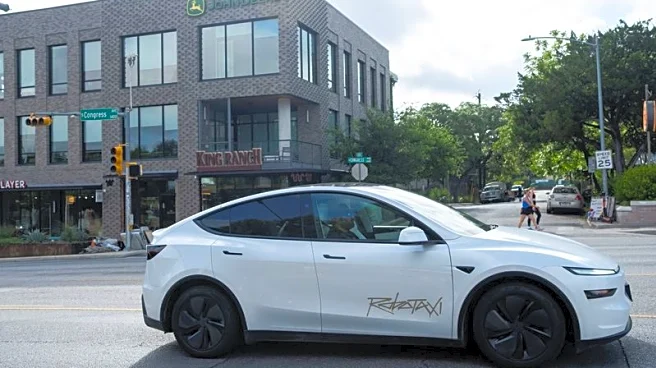
Tesla launched a small robotaxi service with safety monitors in Austin, Texas, last year and Alphabet's
U.S. Transportation Secretary Sean Duffy said in April that a new department framework to boost autonomous vehicles would help U.S. automakers compete with Chinese rivals.
The industry faced significant scrutiny after a pedestrian was seriously injured in October 2023 by a General Motors , opens new tab unit Cruise vehicle, while NHTSA has opened a number of investigations into self-driving vehicles operated by Waymo and Amazon.com's Zoox.
Last year NHTSA said it would speed reviews of requests from automakers to deploy self-driving vehicles without required human controls. In 2017, the House passed legislation to speed adoption of self-driving cars and bar states from setting their own performance standards, but the bill never passed the U.S. Senate.
(Reporting by David Shepardson in Washington; Editing by Chris Reese and David Gregorio)