






By Andrew Chung
May 4 (Reuters) - The U.S. Supreme Court temporarily reinstated on Monday a federal rule allowing the abortion pill to be prescribed through telemedicine and dispensed through the mail, lifting a judicial decision that had blocked the regulation and narrowed access to the medication nationwide.
Justice Samuel Alito issued an interim order pausing a decision by the New Orleans-based 5th U.S. Circuit Court of Appeals to re-impose an older federal rule requiring an in-person clinician
visit to receive mifepristone. The 5th Circuit acted in a challenge to the rule by the Republican-led state of Louisiana.
The Supreme Court's action, called an "administrative stay," gives the justices more time to review emergency requests by two manufacturers of mifepristone to ensure that the drug can be provided via telehealth and the mail while the legal challenge plays out in lower courts.
Alito ordered Louisiana to respond to the drugmakers' requests by Thursday and indicated that the administrative stay would expire on May 11. The court would be expected to extend the interim stay or formally decide the requests by that time.
Alito, a member of the court's 6-3 conservative majority, acted because he is designated by the court to oversee emergency matters that arise in a group of states including Louisiana.
The case puts the contentious issue of abortion back in front of the justices, who must confront another effort by abortion opponents to scale back access to mifepristone, with the November U.S. congressional elections looming.
The court in 2024 unanimously rejected an initial bid by anti-abortion groups and doctors to roll back FDA regulations that had eased access to the drug, ruling that these plaintiffs lacked the necessary legal standing to pursue the challenge.
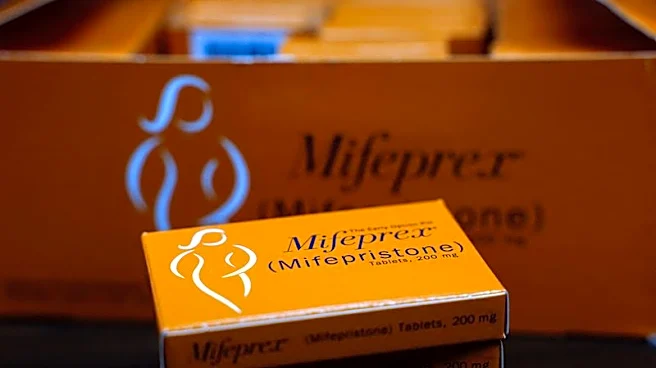
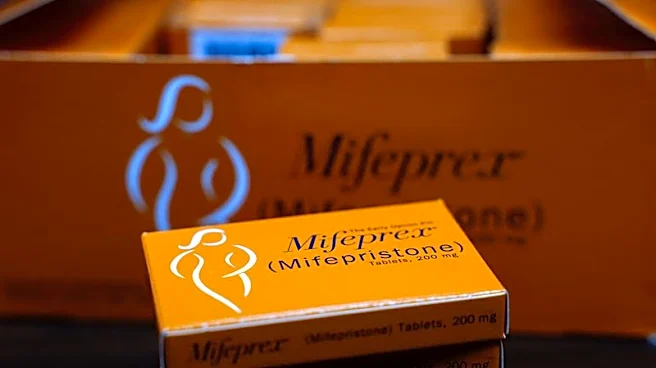
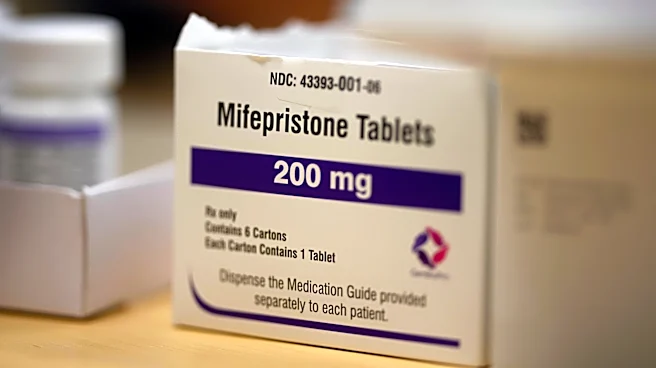
Mifepristone, given FDA regulatory approval in 2000, is taken with another drug called misoprostol to perform medication abortions, a method that now accounts for more than 60% of all abortions in the United States.
The ongoing battles over abortion rights follow the court's 2022 ruling that overturned its 1973 Roe v. Wade precedent that had legalized abortion nationwide. That ruling has prompted 13 states to enact near total bans on the procedure, while several others have sharply restricted access.
Louisiana sued the U.S. Food and Drug Administration in 2025 claiming that a rule adopted during Democratic President Joe Biden's administration in 2023 that eased access to mifepristone by eliminating the in-person dispensing requirement is illegal and undermines the state's near-total abortion ban.
The pill's manufacturer, Danco Laboratories, and GenBioPro, which makes a generic version, intervened in the litigation to defend the 2023 regulation. Republican President Donald Trump's administration, citing an ongoing review of safety regulations concerning mifepristone, opposed the state's challenge.
In April, U.S. Judge David Joseph in Lafayette, Louisiana, declined to block the regulation but agreed with the administration to put the case on hold pending the review. The 5th Circuit blocked the rule on May 1.
(Reporting by Andrew Chung in New York; Editing by Will Dunham)