







By Marcela Ayres
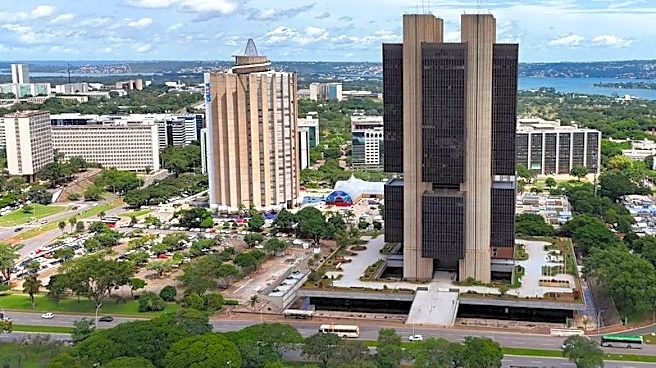
BRASILIA, Nov 10 (Reuters) - Brazil's central bank signaled on Tuesday that slowing economic growth could help limit the inflationary impact of a series of supply shocks, reinforcing expectations that policymakers will keep interest rates on hold despite a worsening price outlook.
Minutes from last week's meeting, when the central bank paused its easing cycle and left the benchmark Selic rate at 13.75%, showed that policymakers saw below-potential growth and weak demand as factors
that could prevent those shocks from triggering more persistent inflation.
The central bank cited four such shocks: higher oil prices, El Nino-related pressures, the impact of ending the 44-hour workweek, a change passed by President Luiz Inacio Lula da Silva's government, and a weaker currency driven by domestic policy uncertainty.
"The classification and emphasis on these developments as supply shocks reinforces our view that the bar for further rate hikes by the committee is particularly high," said Diogo Guillen, a former central bank director who is now the chief economist at Itau.
Major banks have sharply downgraded their growth forecasts for next year, with many now expecting the economy to expand only marginally amid tight financial conditions and expectations that interest rates will remain elevated for longer.
"Given these signals, we are reiterating our call for the Selic rate to remain at 13.75% through at least the end of 2027," ABC Brasil, a bank, said in a note to clients.
The outlook deteriorated after Lula's surprise reelection on October 25 triggered a broad market selloff.
The Brazilian real weakened sharply, long-term borrowing costs jumped and stocks tumbled as investors questioned the prospects for fiscal adjustment sufficient to stabilize public debt under the leftist leader, who has also pledged new spending measures.
Under Lula's current term, Brazil's gross public debt has risen by more than 10 percentage points to 82.9% of GDP.
TURNING POINT
JPMorgan analysts said the minutes suggested policymakers were unlikely to respond aggressively to an expected burst of inflation in the coming months.
However, they cautioned that a continued depreciation of the real, which was down more than 1% against the US dollar on Tuesday, could eventually leave the central bank with "little alternative but to tighten," given already elevated inflation and inflation expectations.
The minutes also struck a more pessimistic tone on economic activity, with policymakers warning that the moderation in domestic growth "may intensify, according to more recent high-frequency indicators."
"The results of surveys on retail performance indicate a turning point, particularly in the segments that are more sensitive to credit," the central bank said.
"This is expected in the context of a restrictive monetary policy that keeps interest rates on non-earmarked credit at very high levels for both household and corporate sectors."
Policymakers also pointed out that headline and underlying inflation measures had risen above the upper limit of the target range, while inflation expectations had moved further away from the 3% target.
(Reporting by Marcela Ayres;Editing by Ros Russell and Paul Simao)