

By Mei Mei Chu and Tim Kelly
BEIJING/TOKYO, Nov 20 (Reuters) - As President Donald Trump sought to reshape the world order around great powers this week, two US allies looked beyond Washington. Canada found an opening in Beijing. Japan, at odds with China, turned to partners elsewhere in Asia.
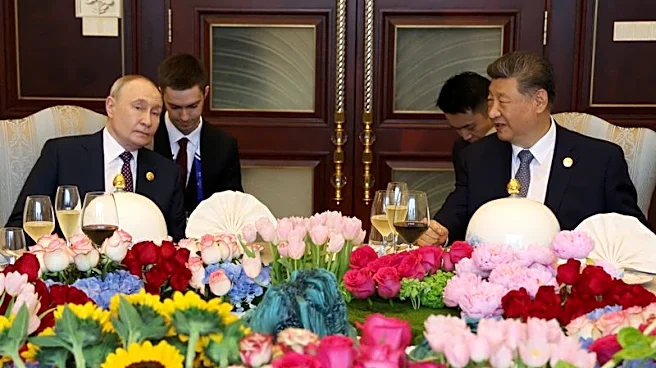
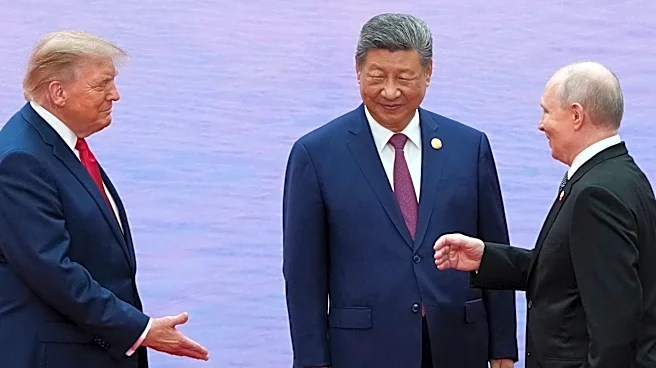
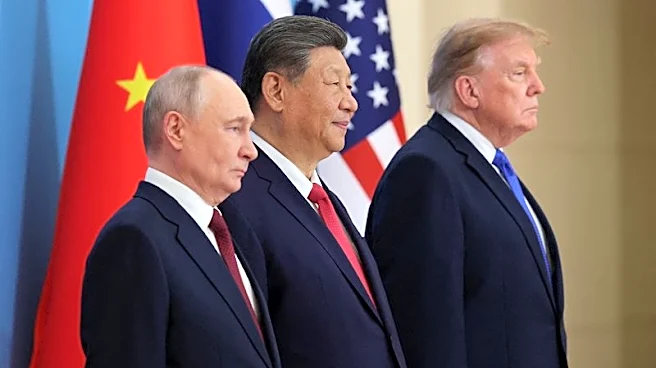
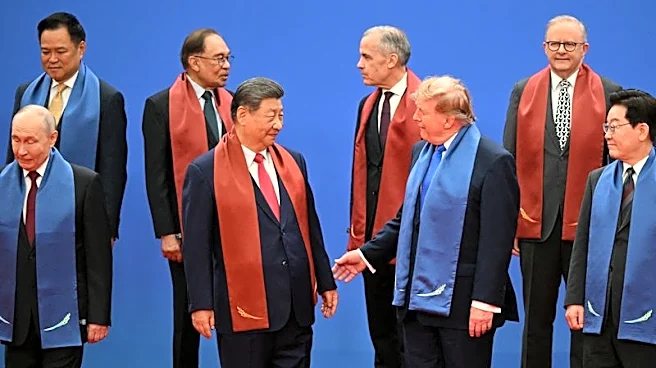
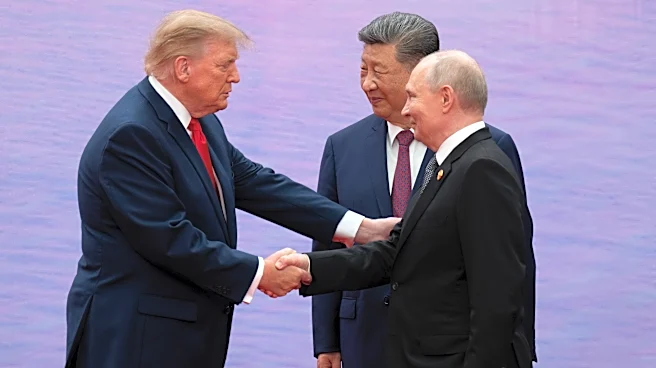
Their middle-power diplomacy was overshadowed on Thursday when Trump joined Chinese leader Xi Jinping and Russian President Vladimir Putin at a lakeside villa in Shenzhen for a meeting that dominated the APEC
leaders' summit.
Trump boasted it was "bigger than Yalta", the 1945 conference at which the United States, Britain and the Soviet Union divided up postwar Europe.
The meeting's symbolism mattered even without a substantive agreement, said Alejandro Reyes, an adjunct professor at the University of Hong Kong.
"This is the first time the leaders of the three largest nuclear powers have sat down together," he said.
But Tokyo and Ottawa's efforts to forge new alliances show how middle powers can reach for alternative markets and suppliers to help maneuver around Washington's tariffs or Beijing's trade restrictions, while new defence partnerships give them more options on security.
"Countries want to reduce dependence on China's supply chains and economy. But they are also de-risking against the US," said Zhao Minghao, an international relations expert at Shanghai's Fudan University.
Canada and Japan show those efforts are gaining traction but also how geography and geopolitics shape which partners they can turn to.
CARNEY PUSH
Canadian Prime Minister Mark Carney, a vocal critic of Trump, has taken the lead in forging middle-power deals.
Ten months after urging the world’s middle powers to make common cause, Carney went into APEC having concluded free-trade talks with the Philippines and moved closer to a separate economic pact with the Association of Southeast Asian Nations (ASEAN).
In Shenzhen, the Canadian leader agreed with Xi to extend a tariff deal through 2028 in which Beijing expanded relief on a further C$400 million ($279.39 million) in Canadian goods, including on pork and prawns. Ottawa lowered barriers on imports of some Chinese steel and aluminium.
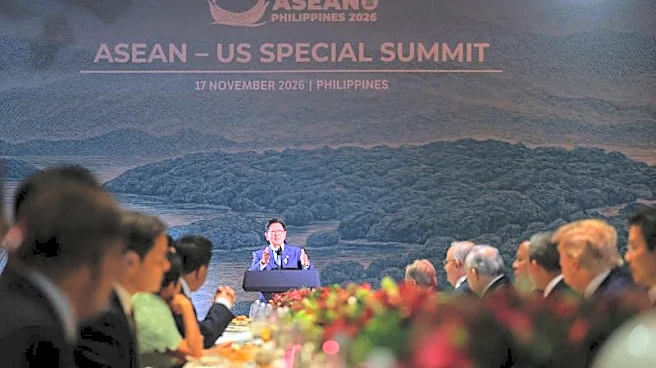
In Manila, Prime Minister Sanae Takaichi sought new supplies of critical minerals to ease Japan's reliance on China and adopted a joint statement on economic resilience with ASEAN. She also agreed to strengthen cooperation with South Korea on supply chains and energy.
Japan and Canada are also working together on critical minerals and building ties in Europe.
Canada and the European Union launched a partnership on energy and technology last month. Japan is building an advanced fighter jet with Britain and Italy, and last year secured a deal for heavy rare earths from a French refinery.
JAPAN'S OPTIONS
For Takaichi, hedging against uncertainty over US support by striking deals in Beijing is not an option.
Japan relies heavily on US military power to deter threats from nuclear-armed neighbours, including China, Russia and North Korea. It hosts the biggest concentration of US military firepower deployed overseas and it stays close to Washington.
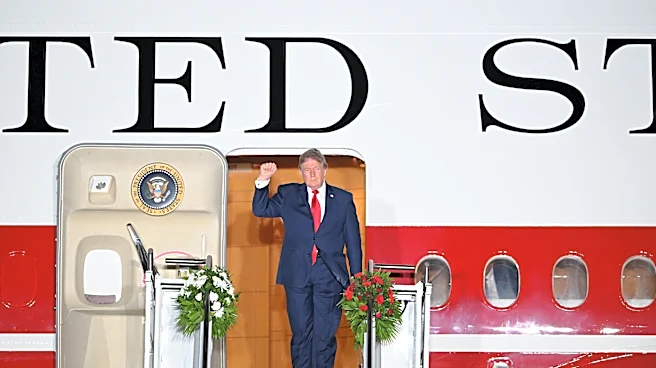
Tokyo's relations with China are also at their worst in years. The chill was on display at APEC, where Takaichi received a low-key welcome that contrasted with the fanfare for Trump.
Trump's wooing of Xi reinforced concerns within Takaichi's administration about Washington's commitment to its longtime ally, a senior Japanese government official told Reuters, asking for anonymity because they are not authorised to talk to the media.
"I think Prime Minister Takaichi's trip abroad this time made that explicit. Japan has no choice but to live by its own strength as a middle power," the official said.
China's treatment of Japan could spur further middle-power cooperation, said Narushige Michishita, a professor at Japan's National Graduate Institute for Policy Studies.
"Japan may be the target today, but other countries can see that they could find themselves in the same position tomorrow," he said. Cooperation won't replace US influence but it "will increase resilience," he added.
($1 = 1.4317 Canadian dollars)
(Reporting by Mei Mei Chu, Tim Kelly, Tamiyuki Kihara, Nobuhiro Kubo, Joyce Zhou, Ellen Zhang, Heejin Kim and Alasdair Pal; Editing by Saad Sayeed)