
By Paritosh Bansal
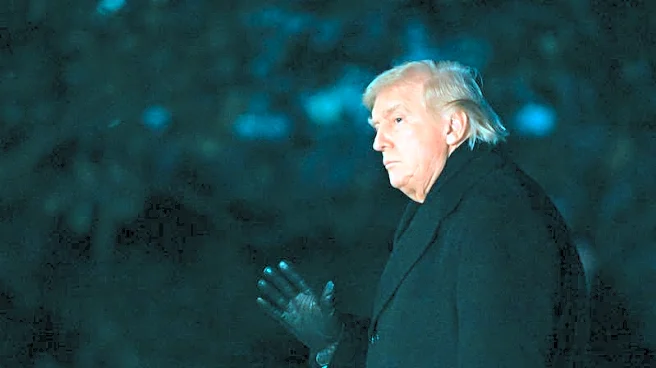
DAVOS, Switzerland Jan 27 (Reuters) - U.S. President Donald Trump bemoaned last week his issue with naming the next Federal Reserve chair: The problem, he said, is they change once they have
the job. Wall Street is counting on it.
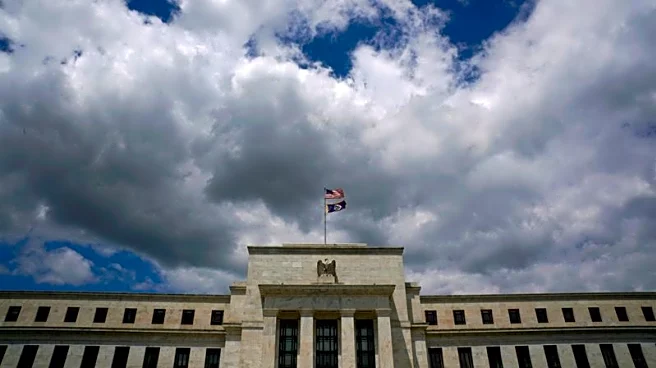
With questions swirling around the Fed’s resilience in the face of the Trump administration’s multi-pronged assault on the institution, including probes into chair Jay Powell and governor Lisa Cook, some global banking executives told me on the sidelines of the World Economic Forum in Davos that they have been gaming out various scenarios as they assess the impact of a potentially less independent central bank on the economy, inflation and their balance sheets.
Their takeaway: The next chair would likely be predisposed to lowering interest rates, which could increase the probability of higher inflation and longer-term rates. But they held on to the hope that once in office and faced with hard evidence, the new chair would eventually be led by data and not politics.
One top executive at a global bank said the Fed under a new chair is going to be less likely to react quickly when they see early signs of inflation building up, but they are not going to cut rates and “put gasoline on a fire” either. Another executive at a major U.S. bank read the president’s comment about people changing once they had the job as Trump giving the next chair “permission to be independent.”
It’s a view that’s gaining wider ground. In a research note ahead of the Fed's monetary policy meeting this week, David Doyle, head of economics at Macquarie Group, noted "the potential for an incoming Fed Chair to sway the committee in a more dovish direction."
"However, we believe this risk is mitigated by a potential shift in the new Chair's incentives once they assume the role,” Doyle wrote.
FED INDEPENDENCE IS CRITICAL TO ECONOMY, MARKETS
This belief that a new chair would be able to withstand pressure from the president to lower rates had better prove to be true for the sake of the economy and markets. The Fed’s ability to set monetary policy independent of political pressure is a crucial concept that has far-reaching implications for economic stability. An independent Fed setting monetary policy based on data has credibility with investors and is a bulwark against runaway inflation, which is something that can sink both politicians and markets.
Top Wall Street bank CEOs, including JPMorgan’s Jamie Dimon and Bank of America’s Brian Moynihan, have underscored the need for Fed independence as the Trump administration has taken steps that are seen as chipping away at it. The most recent move – and calls to preserve independence - came earlier this month, when Powell said the Justice Department had threatened him with a criminal indictment over Congressional testimony he gave last summer about a Fed building project. He called the action a "pretext" to gain more influence over the central bank and monetary policy.
Trump is expected to soon announce his nominee to succeed Powell, whose term as chair ends in May. The worries about Fed independence are showing up in market pricing, with some analysts pointing to it as one factor behind recent weakness in the dollar.
TRUMP CHALLENGES ECONOMIC ORTHODOXY
In my interviews, it wasn't clear what gave these bankers comfort that the Fed would be able to preserve its independence other than taking Trump administration officials at their word.
Some of the bankers argued their belief was based on the need for the Fed chair to respond to economic data and checks that might come from other members of the committee that sets interest rates, even though the administration has challenged economic orthodoxy.
In a panel discussion in Davos, for example, Commerce Secretary Howard Lutnick criticized the "classic" approach of raising interest rates during periods of high growth and lowering them as the economy slowed, saying it defined "mediocrity."
"President Trump thinks quite differently. We are the best credit in the world. Why are we paying a higher rate than all the other credits in the world? It makes no sense," Lutnick said. But when asked what that meant for Fed independence, Lutnick said Trump "will pick the governors, and the outcomes will be set by the Fed governors." The seven members of the board are nominated by the president and confirmed by the Senate for staggered 14-year terms.
One of the bankers pointed to Lutnick's comments, saying he understood the president's intent as wanting more "like-minded thinkers" on the Fed's board of governors rather than controlling it. "It doesn't mean they're not independent once they're there. And the Fed is built to not have anybody have that much impact," this person said.
BANKS ARE STRESS TESTING PORTFOLIOS JUST IN CASE
Despite the hope that the next chair would act in the best interest of the economy when it really mattered, some of the banking executives said they were stress testing their balance sheets to make sure they were prepared.
One of the sources said their bank was examining different economic outcomes -- from stagflation and recession to an environment marked by high growth and inflation.
A less independent Fed would play more directly into a stagflation or high-growth high-inflation scenarios, and the source said it would then be a question of how it managed its interest rate risk. That, the source said, was possible to do more rapidly through hedges. But he added that the view that the next Fed chair would be predisposed to easier monetary policy increased the probability of the scenario where inflation was high.
One of the other banking executives said they were waiting to see what happens, but his bank had substantially reduced interest rate risk on its balance sheet over the past five years in general to be more resilient against unexpected shocks. The bank stress tests how its portfolio would perform if interest rates swing in very short order by as much as a 100 basis points over what’s priced by the market, the source said.
That helps the bank account for tail risk, such as the COVID-19 pandemic or what could have happened had Trump ordered that Greenland be taken over by force, the executive said.
(Reporting by Paritosh Bansal; Editing by Anna Driver)