





By Ankur Banerjee
SINGAPORE, June 29 (Reuters) - Asian stocks wobbled on Monday as Iran and the United States agreed to halt recent hostilities that had cast a shadow over an interim peace deal, with oil prices buoyed by uncertainty and the dollar standing tall near a one-year high.
A return to diplomacy in the Middle East would follow several days of tit-for-tat strikes since an Iranian projectile hit a cargo vessel in the Strait of Hormuz last week, with both sides accusing each other of breaking
an interim ceasefire.
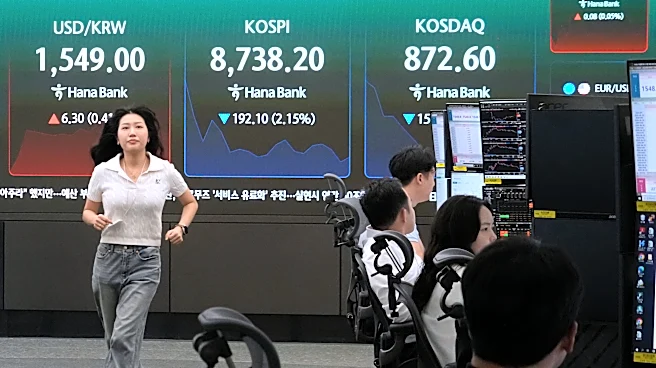
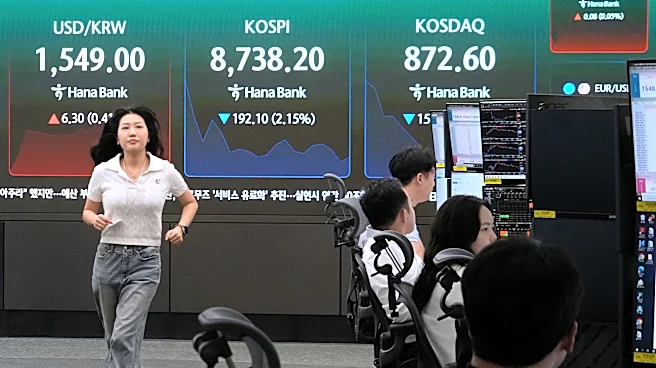
Futures for S&P 500 and Nasdaq gained 0.4% in early trading. South Korea's KOSPI fell nearly 2%, while Japan's Nikkei slipped 1%, leaving MSCI's broadest index of Asia-Pacific shares down 0.4%.
"It feels like we are lacking a bit of direction," said Nick Twidale, chief market strategist at ATFX Global in Sydney.
"We may get a shot in the arm later today from more positive news out of the Middle East...but at the moment I think it's going to be a bit of a flow-driven day without major moves to either side."
Worries over the future of the peace deal lifted oil prices. Brent crude futures climbed 0.85% to $72.6 a barrel while U.S. West Texas Intermediate crude rose over 1% to $70.01 a barrel.
Oil has given up almost all its gains from the war as markets quickly reprice the prospect of easing supply.
The 14-point interim peace accord agreed on June 17 was meant to halt the fighting, which the U.S. and Israel started on February 28, and reopen the strait while talks proceeded on issues such as Iran's nuclear programme.
But the latest strikes stoked worries of escalation, although traders broadly expect a resolution.
"Markets enter July with a ceasefire that nobody quite trusts," said Marc Chandler, chief market strategist at Bannockburn Capital Markets.
TECH WORRIES LINGER
Investor concern that valuations for AI-related companies have become stretched following years of gains has weighed on markets, with Micron's strong earnings forecast and Apple's price hikes last week underscoring the contrasting challenges.
Markets are undergoing a tactical rotation away from mega-cap AI into smaller, more cyclical segments, marking early signs of broadening after extreme concentration, strategists at BofA Global Research said in a note.
Tony Sycamore, market analyst at IG, pointed to renewed investor unease over the enormous AI-related capital expenditure being undertaken by the biggest firms and increasing uncertainty about when those investments will translate into earnings growth that justifies current valuations.
Analysts also say that month-end and quarter-end rebalancing flows might have spurred some of the weakness in big tech firms, which have outperformed for much of the second quarter.
Easing oil prices may help reduce some inflation pressure but elevated prices are likely to keep the U.S. Federal Reserve under pressure to raise interest rates with investors pricing in at least one rate increase this year.
Rising odds of a rate hike have lifted the dollar, with the dollar index, which measures the U.S. currency against six other units, at 101.33, just below the one-year high it touched last week.
The Japanese yen was languishing at 161.77 per U.S. dollar as fears of another bout of intervention from Tokyo kept the fragile currency from breaking through its lowest in 40 years.
The strengthening dollar has weighed on gold, which was down 0.4% at $4,072 per ounce. The yellow metal is set for a 13% decline in the second quarter, its biggest quarterly drop since 2013. [GOL/]
(Reporting by Ankur Banerjee in Singapore; Editing by Jacqueline Wong)