



By Humeyra Pamuk
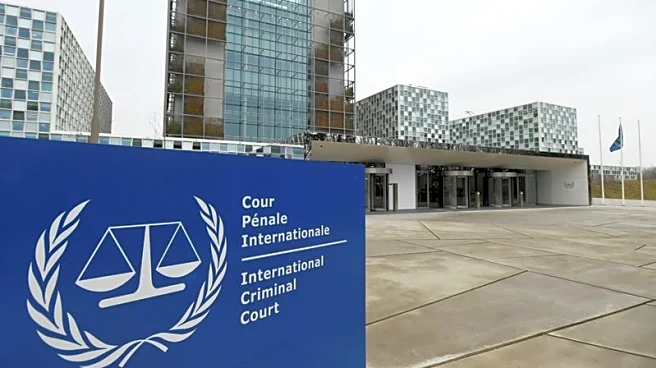
WASHINGTON, Dec 10 (Reuters) - President Donald Trump's administration wants the International Criminal Court to amend its founding document to ensure it does not investigate the Republican president and his top officials, a Trump administration official said, threatening new U.S. sanctions on the court if it did not.
If the court does not act on this U.S. demand and two others - dropping investigations of Israeli leaders over the Gaza war and formally ending an earlier probe of U.S. troops
over their actions in Afghanistan - Washington may penalize more ICC officials and could sanction the court itself, the official said.
Sanctioning the court would significantly escalate the U.S. campaign against the ICC, which has long been criticized by U.S. officials including both Republicans and Democrats, who say the court infringes on U.S. sovereignty.
The Trump administration official, speaking on the condition of anonymity, said Washington has communicated its demands to ICC members, some of whom are U.S. allies, and has also made them known to the court. The United States is not a party to the Rome Statute that established the ICC in 2002 as a court of last resort, with the power to prosecute heads of state.
The demand and the threat to resume the U.S. sanctions campaign towards the court have not been previously reported.
WASHINGTON FEARS ACTION AFTER TRUMP'S TERM ENDS
ICC judges issued arrest warrants for Israeli Prime Minister Benjamin Netanyahu, former Israeli defense chief Yoav Gallant, and Hamas leader Ibrahim al-Masri last November for alleged war crimes and crimes against humanity during the Gaza conflict.
In March 2020, prosecutors opened an investigation in Afghanistan that included possible crimes by U.S. troops. Since 2021, the court has deprioritized looking into the role of the U.S. but it has not formally ended its probe.
To force the war tribunal to drop these charges, the U.S. earlier this year slapped sanctions on nine ICC officials, including judges and prosecutors. But it has stopped short of imposing sanctions on the court as an entity, which would severely disrupt the tribunal's work.
"There is growing concern ... that in 2029 the ICC will turn its attention to the president, to the vice president, to the secretary of war and others, and pursue prosecutions against them," the Trump administration official said.
"That is unacceptable, and we will not allow it to happen."
The White House had no immediate comment on the matter.
Any effort to change the Rome Statute to accommodate the U.S. demand would be slow and difficult, requiring approval of two-thirds of countries that have ratified the Rome Statute.
"Amendments to the Rome Statute are within the prerogative of States Parties," the ICC's public affairs unit, which speaks on behalf of the court and its presidency, said in response to Reuters' questions. It did not address a question on whether Washington has reached out to seek a prosecution immunity for Trump.
Sanctions applied to the court as an entity could affect its basic day-to-day operations, from its ability to pay staff to access to bank accounts and routine office software on its computers.
'OPEN CHATTER' ABOUT TARGETING TRUMP
The ICC is the world's permanent war crimes tribunal with 125 member states, including the entire EU but excluding major powers China, Russia and the United States, among others.
The court's mandate allows it to prosecute individuals for alleged crimes committed by them or nationals under their command on the territory of a member state, including sitting heads of state.
The Trump official did not say what issues the administration worries could become the subject of an ICC investigation. But the official cited "open chatter" in the international legal community that the court could target Trump and his top officials in 2029, when the Republican president's term ends.
"The solution is that they need to change the Rome Statute to make very clear that they don't have jurisdiction," the official said.
Starting in September, the U.S. military has waged a campaign of deadly strikes against suspected drug vessels in the Caribbean and off the Pacific coasts of Latin America, killing more than 80 people.
Members of Congress have said they will investigate whether the U.S. military broke the law by allegedly killing two survivors of a strike on a suspected drug trafficking vessel in the Caribbean. The White House has defended the strike as lawful.
When asked if the administration was making this demand from the ICC over concerns that the court might pursue charges against U.S. leaders over its conduct in Venezuela, the official declined to elaborate.
The ICC's two deputy prosecutors told Reuters on Friday they had not received any requests to investigate U.S. actions regarding Venezuela.
The U.S. official also declined to say when Washington began conveying this demand to the court and member states.
Enshrining blanket immunity for specific individuals would be seen as undermining the court's founding principles and would need approval by the court's governing body, the Assembly of States Parties.
While most amendments require the support of two-thirds of members to pass, fundamental changes to the court's jurisdiction would require an even larger majority to be implemented, according to the court's statute.
(Additional reporting by Anthony Deutsch and Stephanie Van den Berg in the Hague, Reporting by Humeyra Pamuk; Editing by Don Durfee and Deepa Babington)